
Reducing the environmental footprint of composites with bio-based and recycled materials
The European project SUSPENS has developed bio-based resins, recycled fibres and more sober manufacturing processes to design sustainable composites for the automotive, nautical and aeronautics industries.

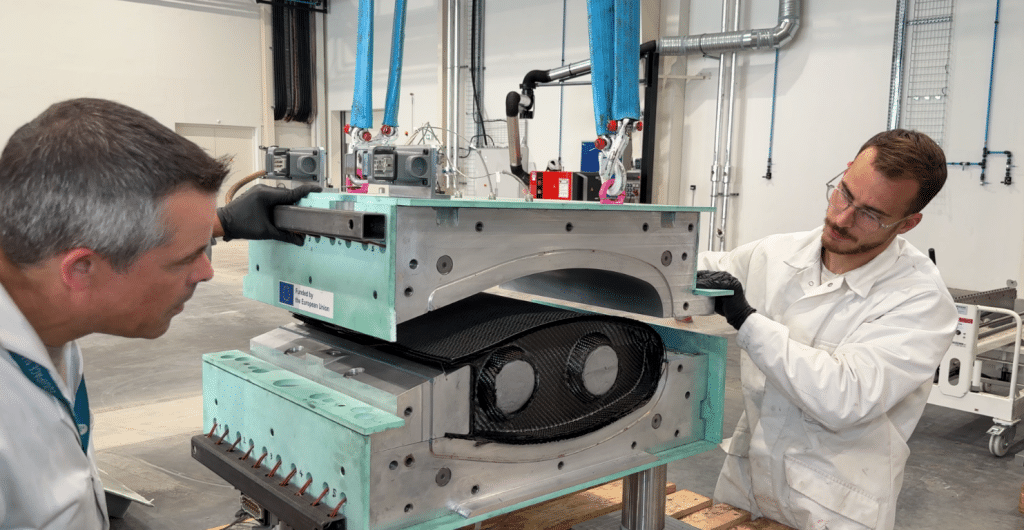
- Launched in January 2023 for a period of 42 months, the European project SUSPENS was coordinated by IRT Jules Verne alongside 11 partners from 6 European countries. Funded 100% by the European Union's Horizon Europe programme, with a total budget of €4.99 million, it aimed to reduce the environmental footprint of composite structures used in the automotive, boating and aeronautics industries.
- The consortium worked on bio-based epoxy and polyester resins, natural or recycled fibrous reinforcements, as well as more energy-efficient manufacturing and recycling processes. These developments have been validated on three industrial demonstrators: a battery tank cover for the automotive industry, a sailboat deck for the nautical industry and a hollow structure for the aeronautics industry. The project was completed in June 2026.
The industrial challenges of the SUSPENS Project
Composite materials make it possible to lighten structures and reduce the fuel consumption of vehicles, but their manufacture is based on petroleum-based resources, which consume energy and are difficult to recycle. The SUSPENS project was built around several objectives:
- developing epoxy and polyester thermosetting resins that are more than 95% bio-based, without compromising on performance;
- strengthen the mechanical properties of bio-based and recycled fibres (cellulose, lignin-based fibres, recycled carbon and glass fibres);
- reduce CO2 emissions from the manufacture and recycling of composite structures by at least 20%;
- To demonstrate the industrial feasibility of these materials in three transport applications: automotive, boating and aeronautics.
A consortium of 12 partners, academic and industrial, covered the entire value chain, from raw materials to end-of-life recycling.
The technologies developed in the SUSPENS Project
SUSPENS has advanced several complementary technological building blocks, from resins and fibers to recycling processes:
- bio-based polyester resins with reduced styrene content, with a bio-based component content increased by up to 50%, tested in a formulation compatible with the SMC (Sheet Moulding Compound) process;
- an epoxy resin that is more than 97% biosourced, based on phloroglucinol from brown algae, combined with bio-based hardeners and compatible with chemical recycling by solvolysis;
- a bio-based flame retardant resin formulation achieving UL-94 V-0 classification while maintaining a glass transition temperature above 100 °C;
- a non-thermal process for recovering glass fibres from wind turbine blades at the end of their life, with mechanical properties close to those of virgin fibres;
- a recycled carbon fibre yarn obtained from aeronautical production scraps, with a carbon content of more than 90%;
- cellulose fibers regenerated from used cotton towels, transformed into continuous filaments thanks to the Ioncell® process;
- carbon precursor fibres obtained by hot spinning bio-based lignin-polyamide blends;
- A pilot line combining carbonization and pyrolysis to recycle carbon composites while reducing energy consumption.
Project results and industrial impacts
The materials developed were implemented in three demonstrators representative of the sectors targeted by the project:
- in the automotive sector, a battery tray cover for electric scooters made of bio-based SMC, achieving the UL-94 V0 fire classification, even if the formulations tested have not yet met all the requirements of the automotive industry, in particular on the glass transition temperature;
- in the nautical sector, a sailboat deck made from recycled glass fibers and bio-based resin, validated during sea trials;
- in aeronautics, a hollow wing box-type structure, manufactured in a single operation from recycled carbon yarns and a bladder-assisted RTM process;
- a reduction in greenhouse gas emissions of up to 76% for recycled carbon fibers and 18% for recycled glass fibers, compared to virgin fibers, according to the life cycle analysis conducted on the project;
- the publication of five scientific papers and the presentation of the results at international conferences such as JEC World 2026 and ECCM22;
- a contribution to the dynamics of the European EcoComposites cluster, which brings together six Horizon Europe projects dedicated to sustainable composites.
These results confirm that bio-based and recycled composites can meet the performance requirements of the transportation sectors, while reducing their environmental impact.
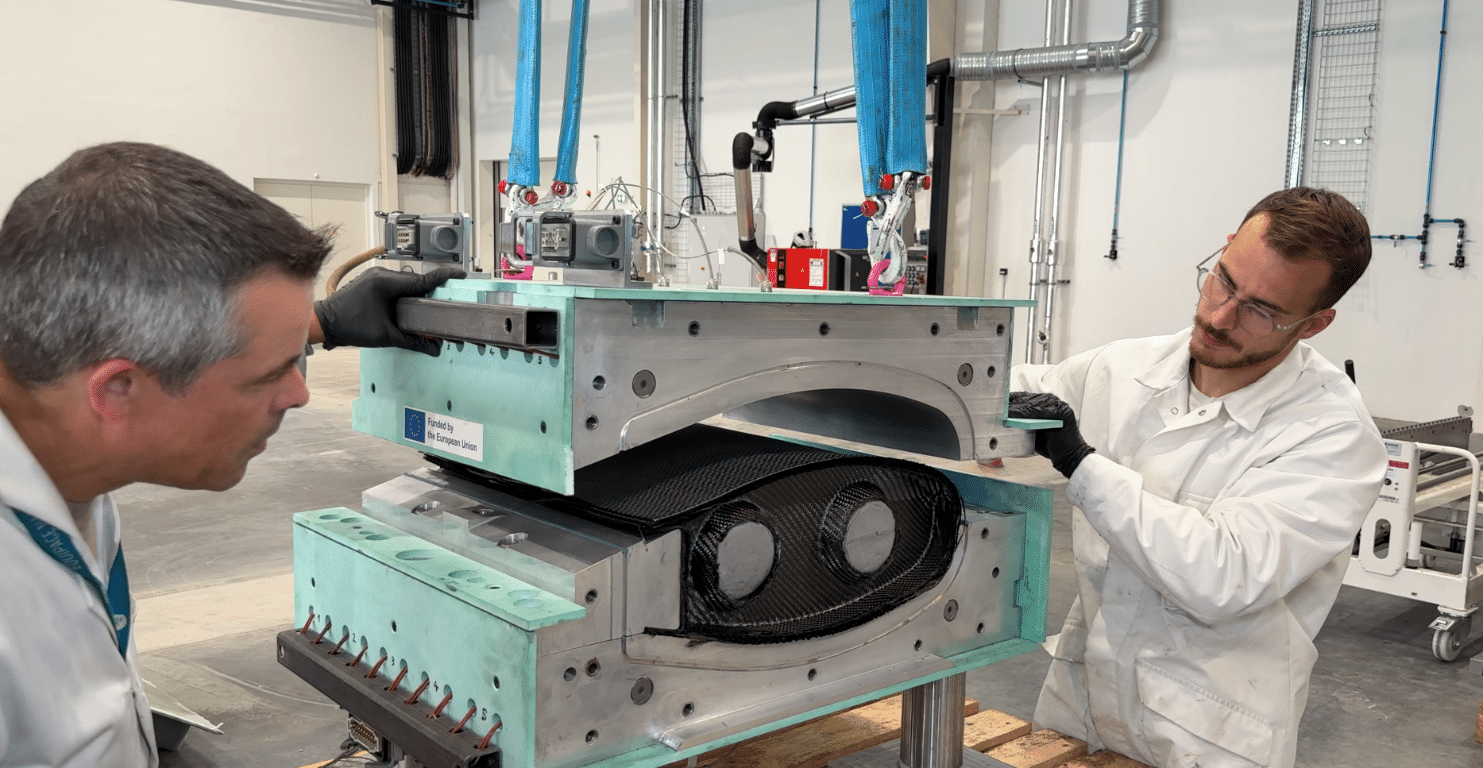 Aircraft wing-box
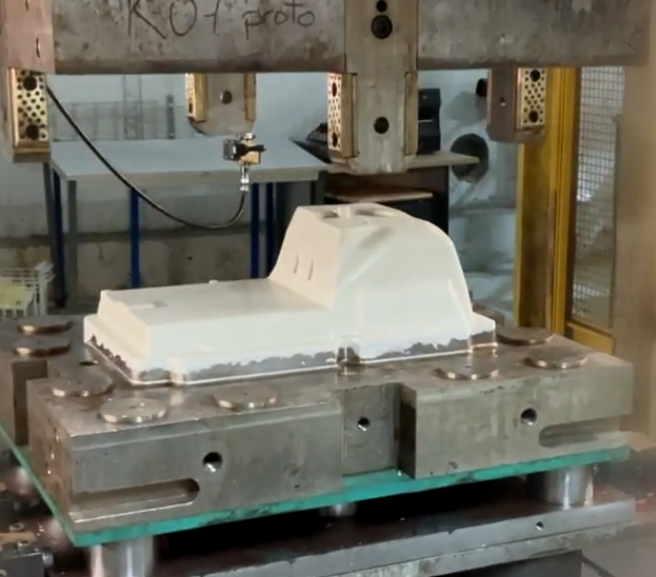 Car battery-pack
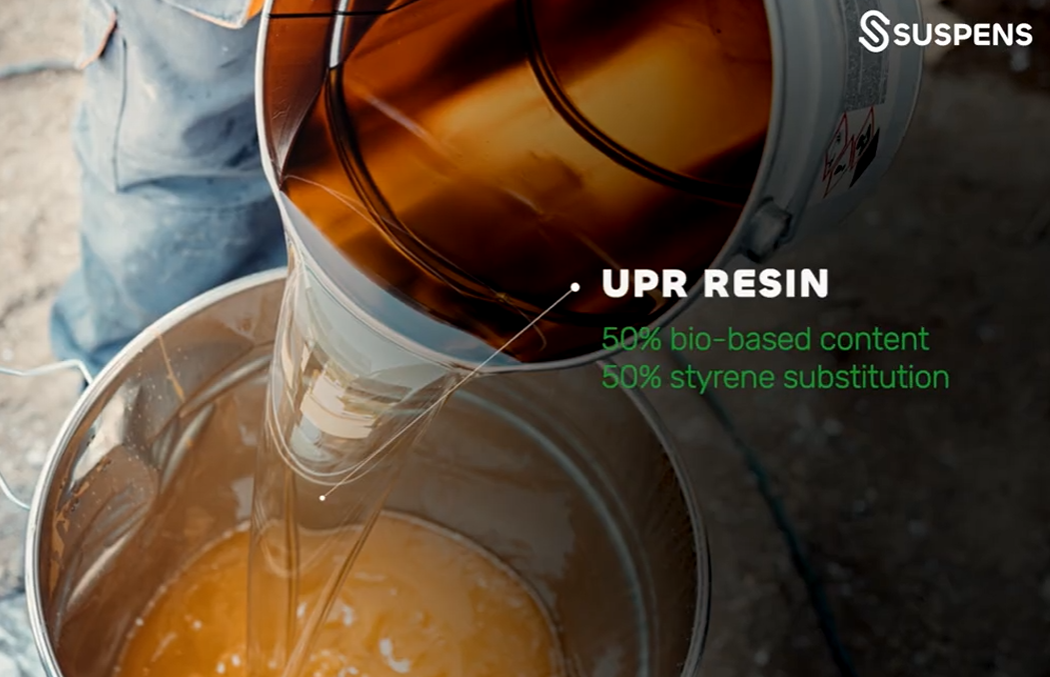 Resin
Resin

“We are proud of what we have achieved over the past 42 months. The solutions developed within SUSPENS demonstrate that the transition towards more sustainable composites is possible without compromising performance, benefiting both the transport sector and the environment. We now hope to see this collective momentum, bringing together academic and industrial partners from six European countries, continue towards industrialisation.”
The industrials perspectives of SUSPENS Project
Towards the industrialization of bio-based materials
Project partners are now identifying the scale-up steps needed for the industrialisation of these bio-based or recycled resins and fibres, in particular for the most advanced developments such as recycled glass fibres or bio-based flame retardant resin.
And what's next? a european dynamic that continues
SUSPENS is part of the European EcoComposites cluster, alongside the FOREST, r-LightBioCom, repOxyble, furhy and MC4 projects, which together continue the transition to more sustainable composites for the transport sector.
You might find this content of interest.
 Expertise
Composite processes
Improve the performance (cost and throughput) of manufacturing processes for complex, lightweight and large structures.
Discover this expertise
Expertise
Composite processes
Improve the performance (cost and throughput) of manufacturing processes for complex, lightweight and large structures.
Discover this expertise
 Offre
Bringing our technological expertise to the European stage
Find out more about this offer
Offre
Bringing our technological expertise to the European stage
Find out more about this offer
 Sector
Aeronautics
Find out more about this course
Sector
Aeronautics
Find out more about this course