
Modelling & simulation
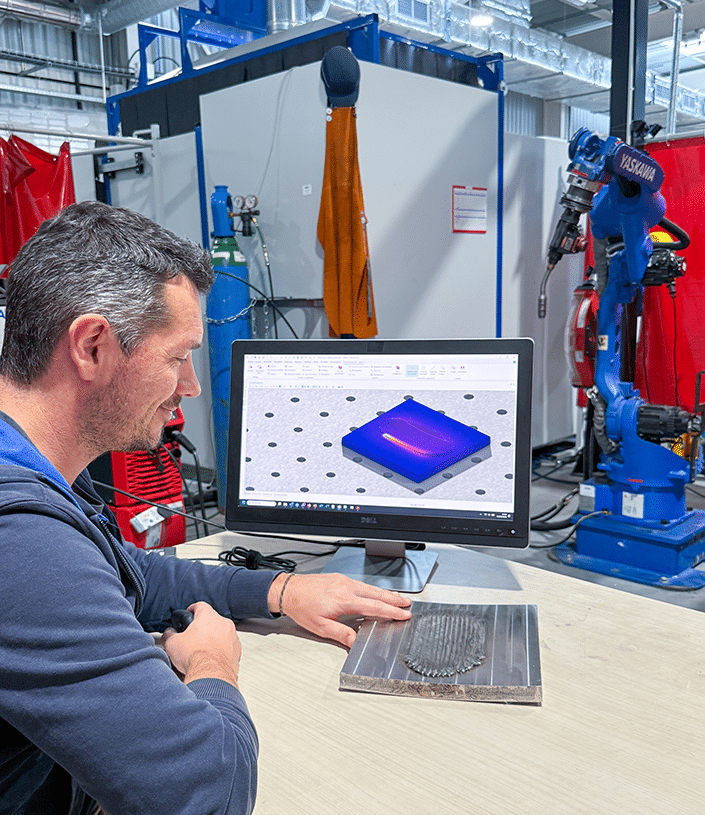
To enhance the competitiveness of the industrial sector, IRT Jules Verne relies on modeling and numerical simulation of manufacturing processes to address the major challenges facing French industry. Based in Nantes since 2012, the Modelling and Simulation team studies the behavior of structures and manufacturing processes and works on the shaping and assembly of materials. It uses and develops digital tools for its R&D projects and services to size, predict, optimize, and understand.
The objective is clear: to provide reliable data to manufacturers to facilitate decision-making and reduce the time and cost of development.
Led by Stéphanie Colliou, the team consists of 18 R&D engineers, experts, and doctoral students. It has a strong digital culture and is proficient in a wide range of simulation software. Working in collaboration with the institute’s other technological expertise areas, the simulation and modeling work is validated through testing. The team relies on a network of partners to characterize materials and feed data into the models.
- Simulation and optimisation of composite processes
- Simulation and optimisation of metallic processes
- Digital twin of the process
- Assembly and tolerancing
- Thermal management of processes
Better predicting the behaviour of processes and structures to accelerate development
At IRT Jules Verne, numerical simulation is used to develop and optimise manufacturing processes. It provides objective criteria to guide decision-making. In particular, it enables the comparison of different technical solutions and the identification of influential parameters.
In the case of manufacturing processes, IRT Jules Verne studies both the phenomena involved in material transformation and the technologies required to implement them, through the modelling of tooling and manufacturing cells. The Institute thus contributes to assessing feasibility, defining the operating window and predicting achievable performance in terms of material integrity, geometric distortions and residual stresses. The work carried out by the team addresses three major challenges:
- Improving industrial performance by reducing development times and costs, optimising operating windows and controlling energy consumption.
- Strengthening process control by understanding physical phenomena, designing more robust processes and tooling, taking into account variations in materials and processes, and anticipating their impact on in-service performance.
- Developing practical digital tools: prediction and decision-support tools to aid in the design, optimisation and control of processes.
Our expertise and technological building blocks in modelling and simulation
IRT Jules Verne’s roadmap for modelling and simulation covers the entire digital chain. It combines the modelling of material behaviour, process simulation, the modelling of production facilities and the development of decision-support tools.
- Metallic processes
- Composites processes
- Material behaviour laws
- Advanced thermal analysis
- digital twins
- uncertainty management
- digital workflow for a manufacturing range
- proficiency in a wide range of simulation codes (commercial and open-source)
- Multiphysics couplings
- 0D et 1D models
- Tool compatibility
- model and data hybridisation
- automation of calculations
- stochastic approaches
- AFM
- SFT
- IMDR
Our core expertise in Modelling and Simulation
Simulation and optimisation of composite processes
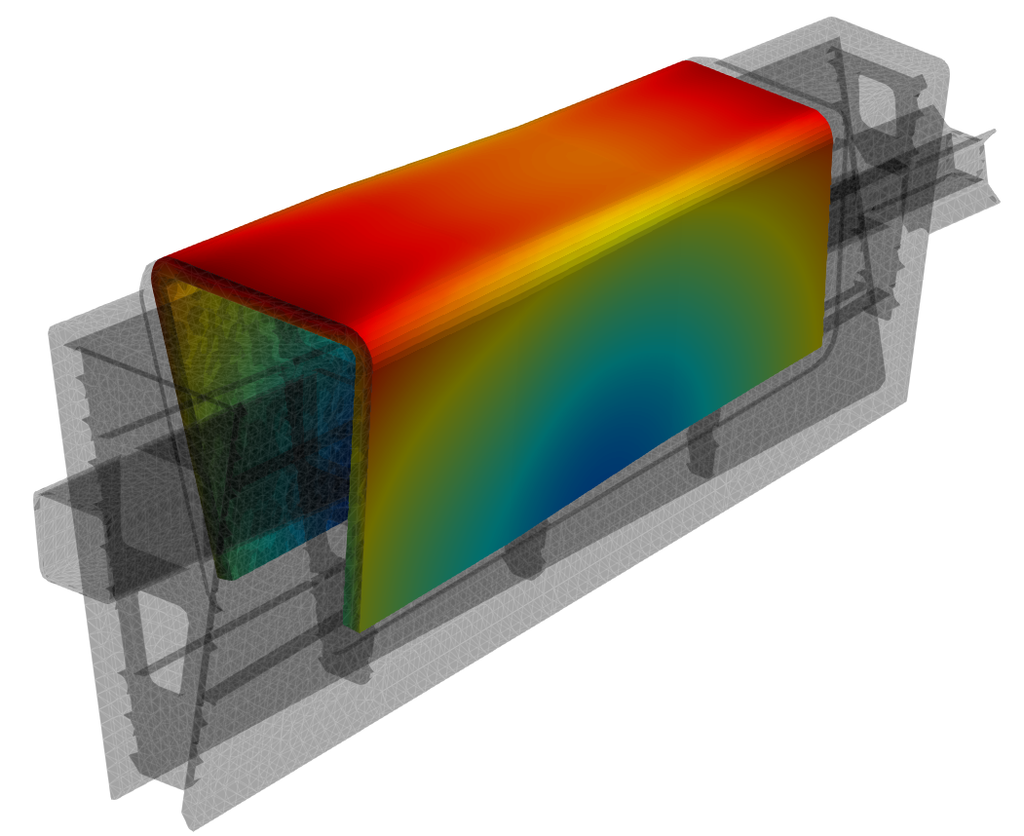
Working closely with the Composite Processes and Materials team, the Modelling and Simulation team studies the processes involved in the fabrication of thermosetting and thermoplastic materials. Simulation is used during the development and optimisation phases of composite processes, particularly for liquid-phase processes (RTM, infusion), forming and consolidation processes (stamping, thermocompression, autoclave), hybrid processes (overmoulding) and assembly by welding.
The aim is to be able to anticipate the filling, firing, consolidation and demoulding stages of the components by predicting as accurately as possible the flow patterns, temperatures and deformations generated, as well as potential defects (dry spots, porosity, wrinkling, etc.). Digital tools thus enable the feasibility of the process to be assessed, its operating window to be defined and the manufacturing parameters to be optimised.
The accuracy of the simulations depends largely on the ability to model the behaviour of the material during the manufacturing stages, as well as on taking into account the actual behaviour of the tooling and the environment.
Simulation and optimisation of metallic processes
Working closely with the Metallic Materials Processes team, the Modelling and Simulation team models welding, additive manufacturing and cold or hot forming processes.
Welding
The team focuses on the simulation of fusion welding processes, in particular arc welding processes (TIG, MIG/MAG) and laser welding, as well as solid-state welding processes such as FSW.
The research covers both the effects of heat input (weld bead dimensions, phase transformations, residual stresses, geometric deformations) and the generation of heat itself, as well as the physical phenomena in the heat-affected zone (arc plasma, arc-bath interactions, keyhole). Simulation is also used to support the design of welding tools (laser heads, inerting tools, pre- or post-heating modules).
Additive manufacturing
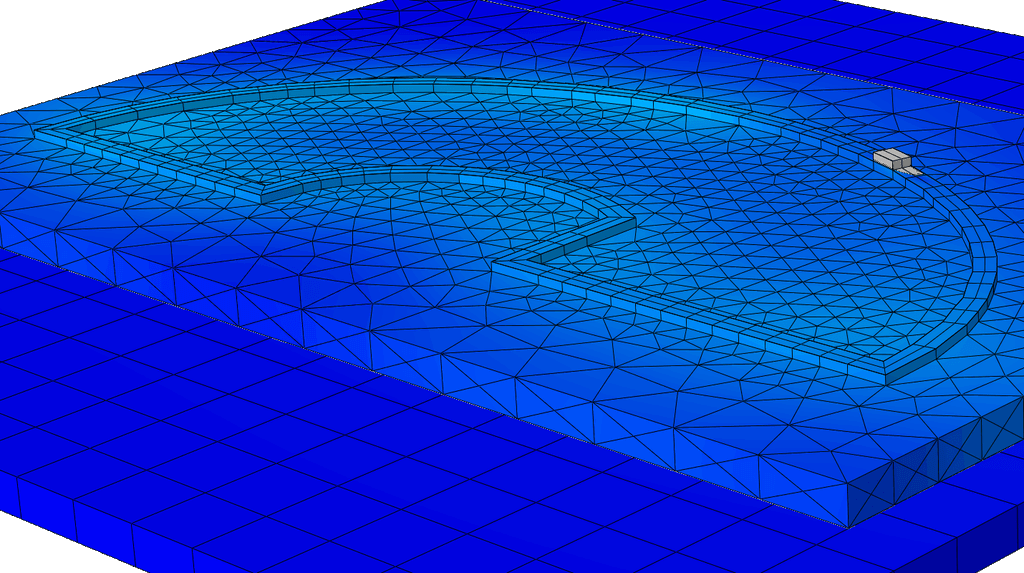
This extensive expertise in welding modelling is extended to the simulation of additive manufacturing processes. The team’s work focuses in particular on arc and laser DED (Directed Energy Deposition) processes. The main objectives are to control thermal conditions throughout the manufacturing range to ensure material integrity and geometric conformity, as well as to optimise manufacturing strategies for productivity.
Forming
The simulation of forming processes focuses on improving the predictive capabilities of simulations (particularly in terms of geometric control) and optimising tool life. The IRT addresses standard forming processes as well as niche processes such as flexforming and SPF.
Digital twin of the process
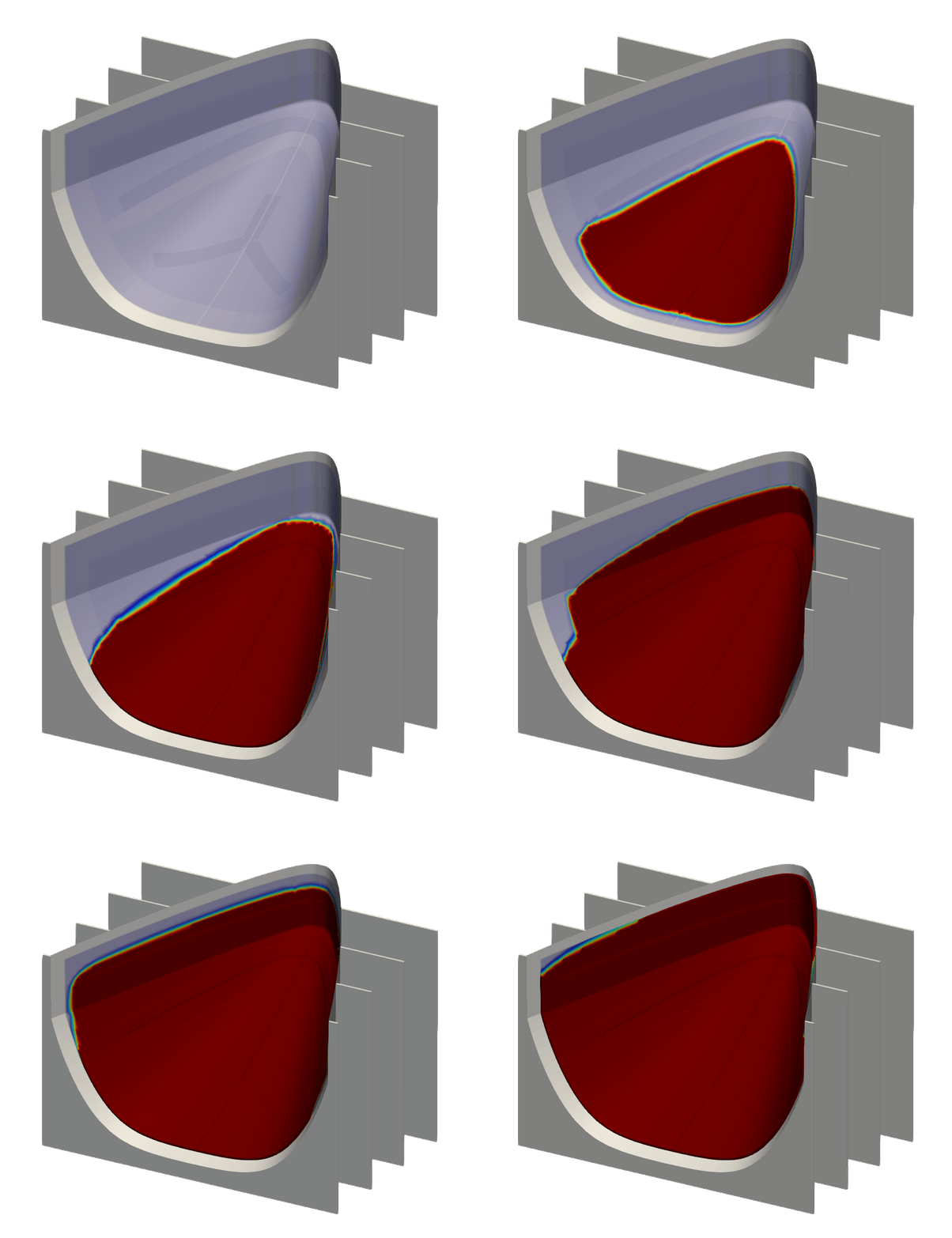
Beyond understanding and developing processes, IRT Jules Verne is developing digital twin approaches to support process control.
These virtual replicas enable the behaviour of a process to be faithfully reproduced, allowing changes to be anticipated and deviations to be detected. The digital models that form the computational core of the twin combine a representation of physical phenomena with data from the actual process, ensuring realistic simulations tailored to each industrial context.
To meet the requirements for speed of execution and accuracy, the Modelling and Simulation team – in collaboration with the Monitoring, Inspection and Control team – utilises advanced modelling methods, notably those involving artificial intelligence. These approaches adhere to the physical laws governing the process whilst remaining usable in real time – essential assets for process control and reliable decision-making.
Assembly and tolerancing
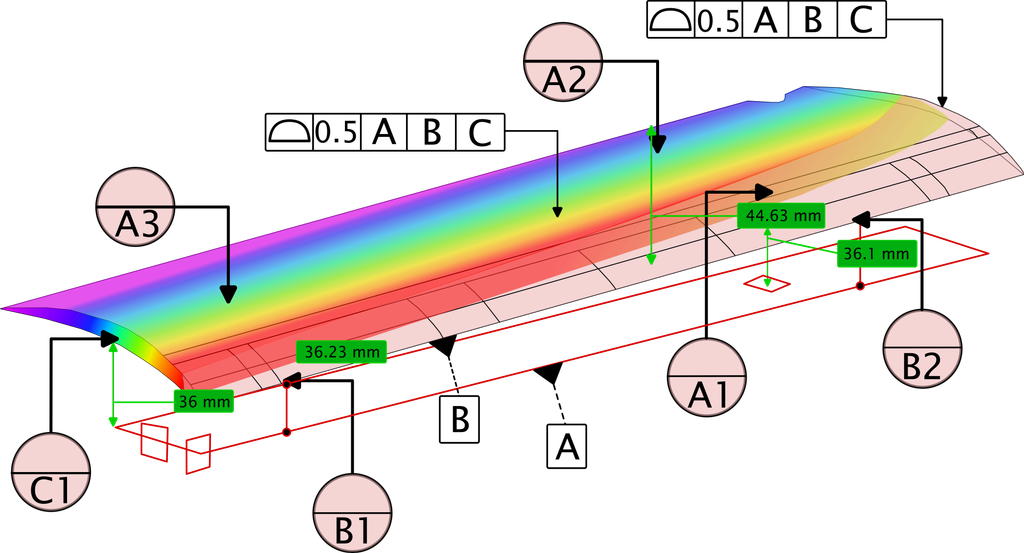
The Modelling & Simulation team has developed in-depth expertise in tolerance-related issues, which are key to assembly sequences and, consequently, to the optimisation of production rates.
The team develops virtual metrology tools to compare the results of its simulations (part geometry) with the specified tolerances.
The work also aims to account for uncertainties (material, process parameters, environment) in order to determine, via simulation, the manufacturing tolerances of a part or to estimate process non-conformance rates. In this context, the team seeks to prioritise parameters and develop frugal uncertainty propagation methods (large number of process parameters, very low compliance rates).
Finally, in the case of assemblies comprising very large parts or sheet metal components, the IRT Jules Verne addresses the issue of the flexibility of assembled parts.
Thermal management of processes
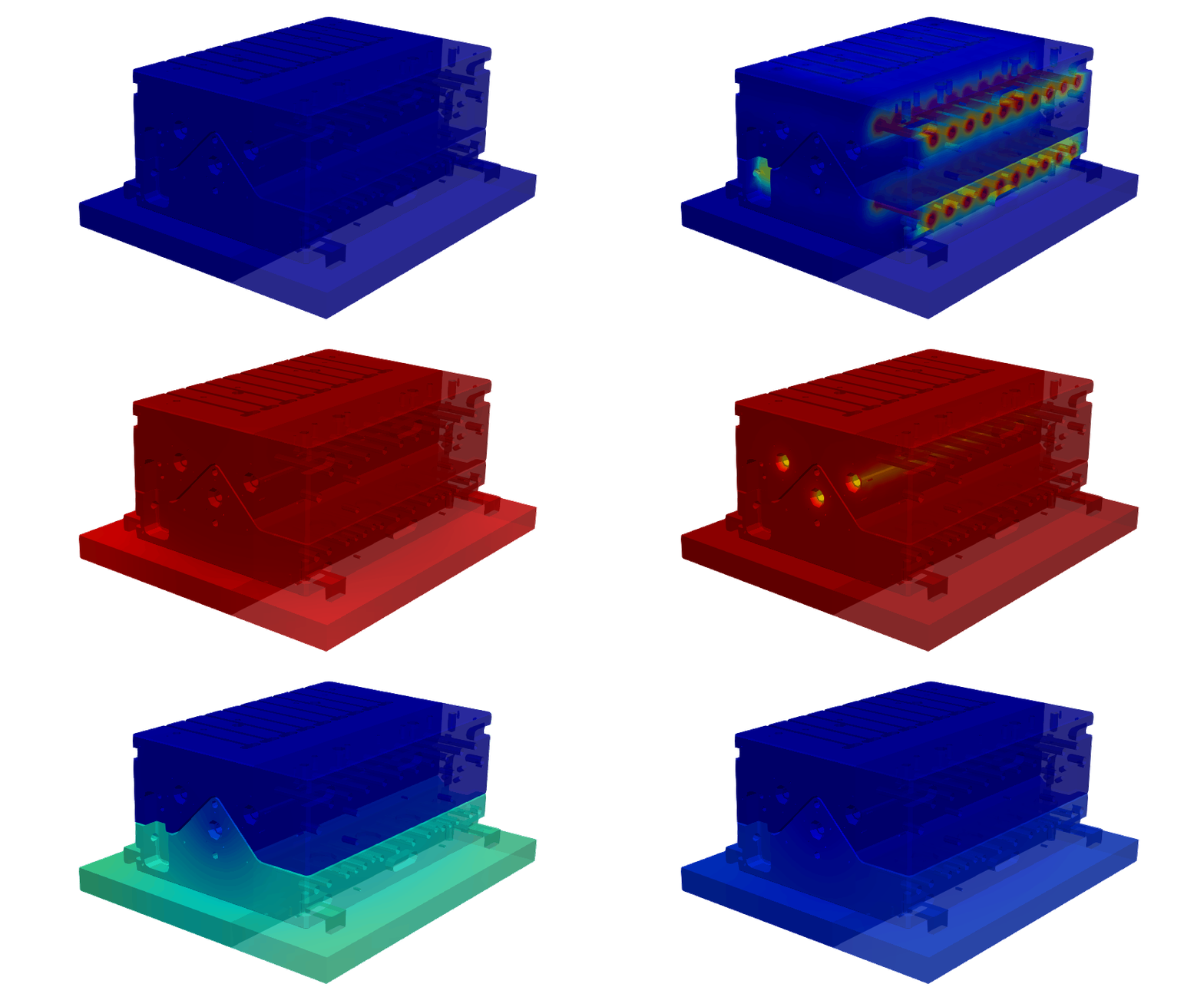
Thermal management is a key challenge in the control of composite and metal-based processes.
Using modelling, the team supports process development: defining and controlling heating and cooling cycles and designing moulds (thermal and energy performance). The use of simulation ensures thermal uniformity across moulding surfaces, controls thermal gradients, assesses tool expansion, and anticipates and compensates for geometric distortions in parts.
Beyond process control to guarantee the quality of the parts produced, the team seeks to improve industrial performance:
- Optimising the energy consumption of processes (minimising losses, recovery, utilisation)
- Reducing tooling costs by extending their service life.
Our main digital tools for modeling and simulation
To develop and run its numerical simulations, IRT Jules Verne has a high-performance computing (HPC) platform. Accessible remotely, the platform enables the automation and scheduling of calculations and meets the team’s requirements in terms of computing power, parallelisation and the processing of large volumes of data.
Key software environments
Key software environments include general-purpose software such as ABAQUS, ANSYS and COMSOL Multiphysics, as well as a number of specialised industry-specific software packages such as MOLDFLOW, PAM-COMPOSITES and SYSWELD.
The Modelling and Simulation team works closely on a daily basis with the process research teams (PMC, PMM) and has access to all the equipment in the fabrication workshops to carry out calibration, correlation and validation tests on the models developed.
Material data is obtained through a network of partners specialising in the characterisation of thermal, chemical and mechanical properties.
The platform includes:
-
CPU computing nodes
4 CPU computing nodes
192 cores / 2.2 TB RAM -
GPU nodes
2 GPU nodes
1 Nvidia H100 / 192 GB RAM + 94 GB VRAM
2 Nvidia L4 / 380 GB RAM + 48 GB VRAM -
Storage
33 TB
-
Software
More than 50 software programs installed
-
Shared workspace
8 TB of shared workspace
-
Liaison
1 liaison Infiniband de 100 Gb/s
-
Power
192 cores and 2.2 TB of RAM
Visit our technology halls
Ongoing PhD theses on modelling and simulation
-
 Pauline ARNOULIN GeM, IMN, Nantes Université
Thermal control to optimise deposition rates in wire arc additive manufacturing (WAAM). Application to stainless steel alloys using dual-wire TIG welding: optimisation of microstructure and stress distribution.
-
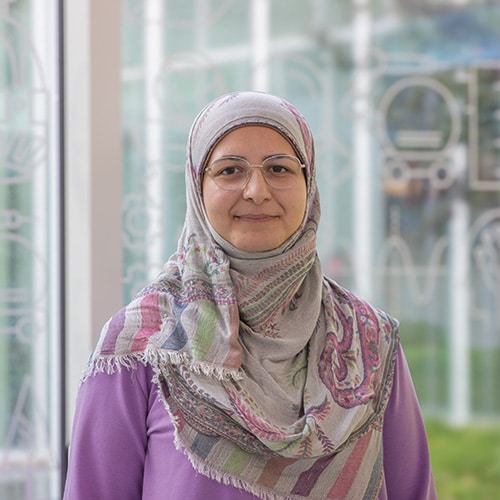 Hawraa BECHER IREENA, Nantes Université
Control of interfaces during inductive welding, specifically for the heating and cooling phases.
-
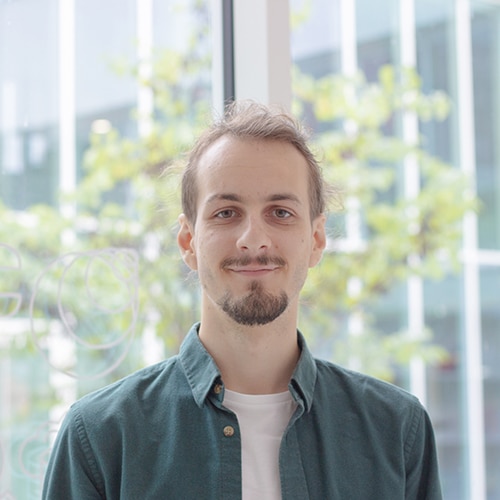 Valentin CLAVIER GeM, IMN, Nantes Université
Thermo-mechanical-metallurgical simulation of the manufacture of titanium alloy components using the WAAM process and of their mechanical behaviour using a mean-field approach.
-
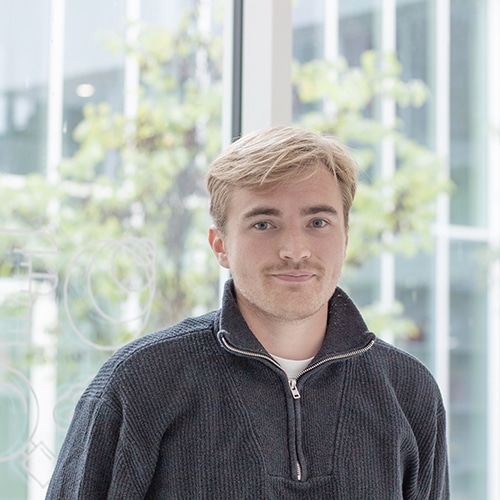 Pierre WAROQUIER LTeN, Nantes Université
Anisothermic development of adhesion between two thermoplastic composites – Modelling, characterisation and application to industrial processes.
-
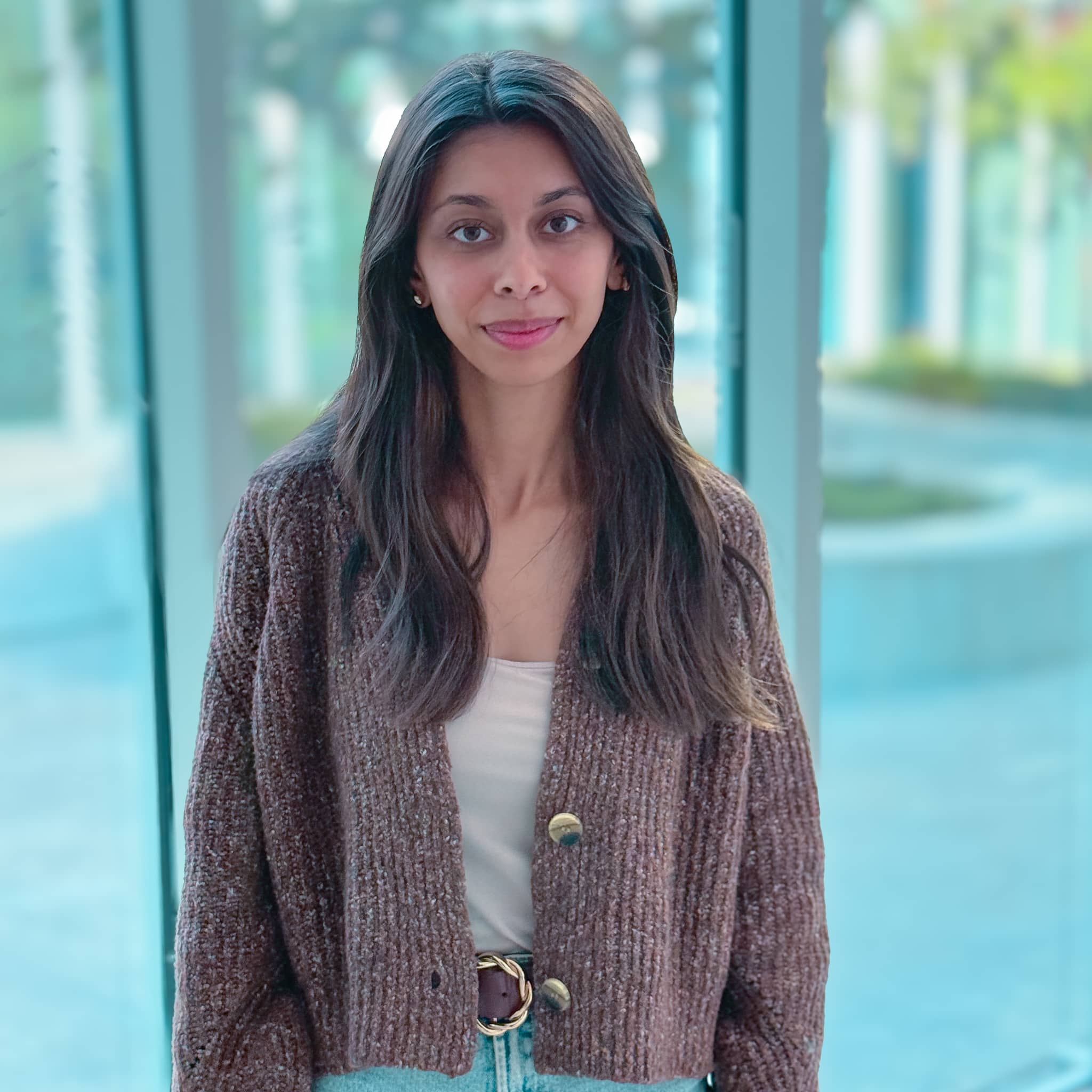 Fatma BENSAAD LTeN, Nantes Université
Spatio-temporal control of thermal conditions at the boundaries of a composite component characterised by considerable thickness and significant thickness variation, with the aim of controlling the polymerisation kinetics.
-
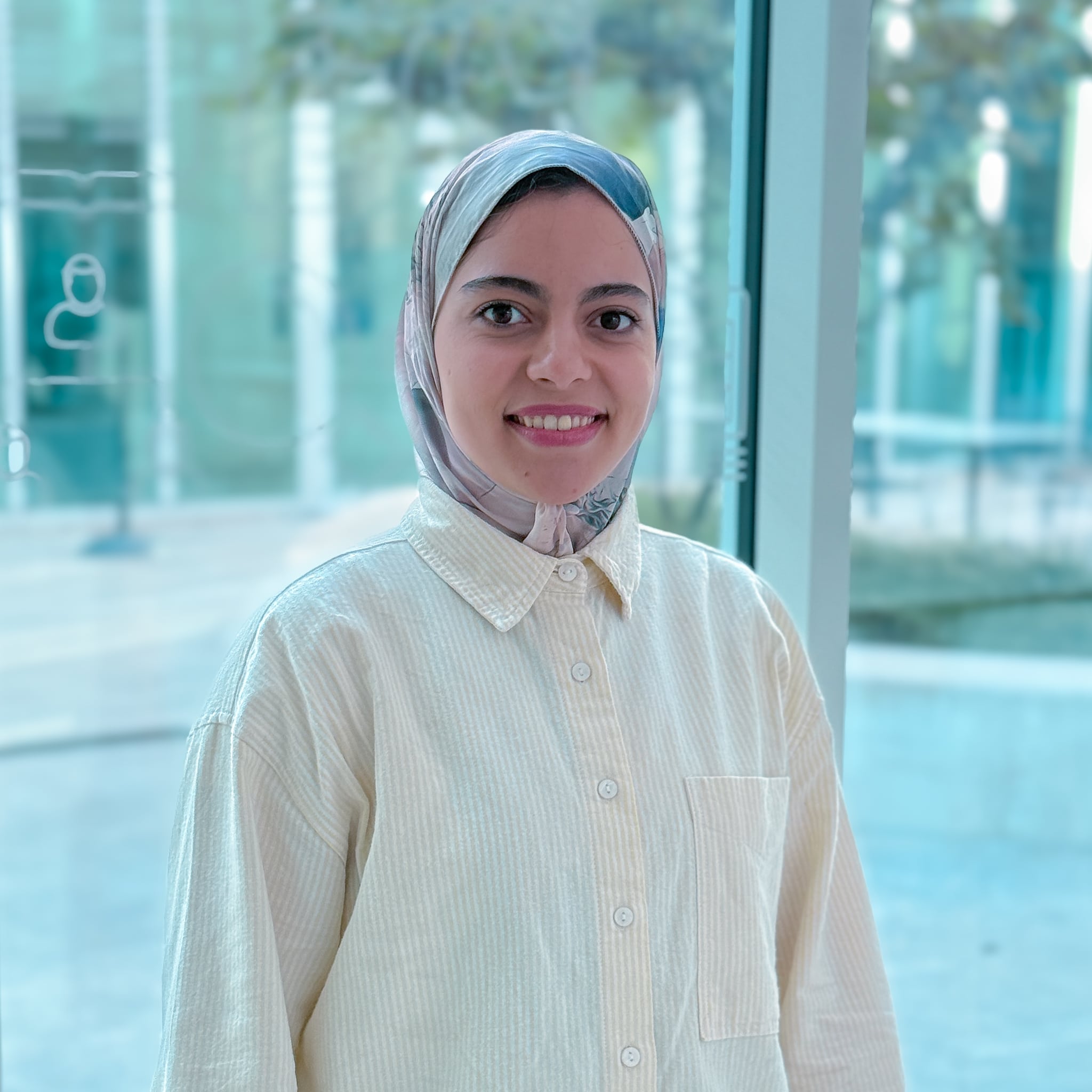 Manal AATIK LTeN, Nantes Université, ICAM
Improving the energy efficiency of manufacturing equipment operating on a thermal cycle by recovering waste heat.
Our key R&D projects dedicated to modelling and simulation
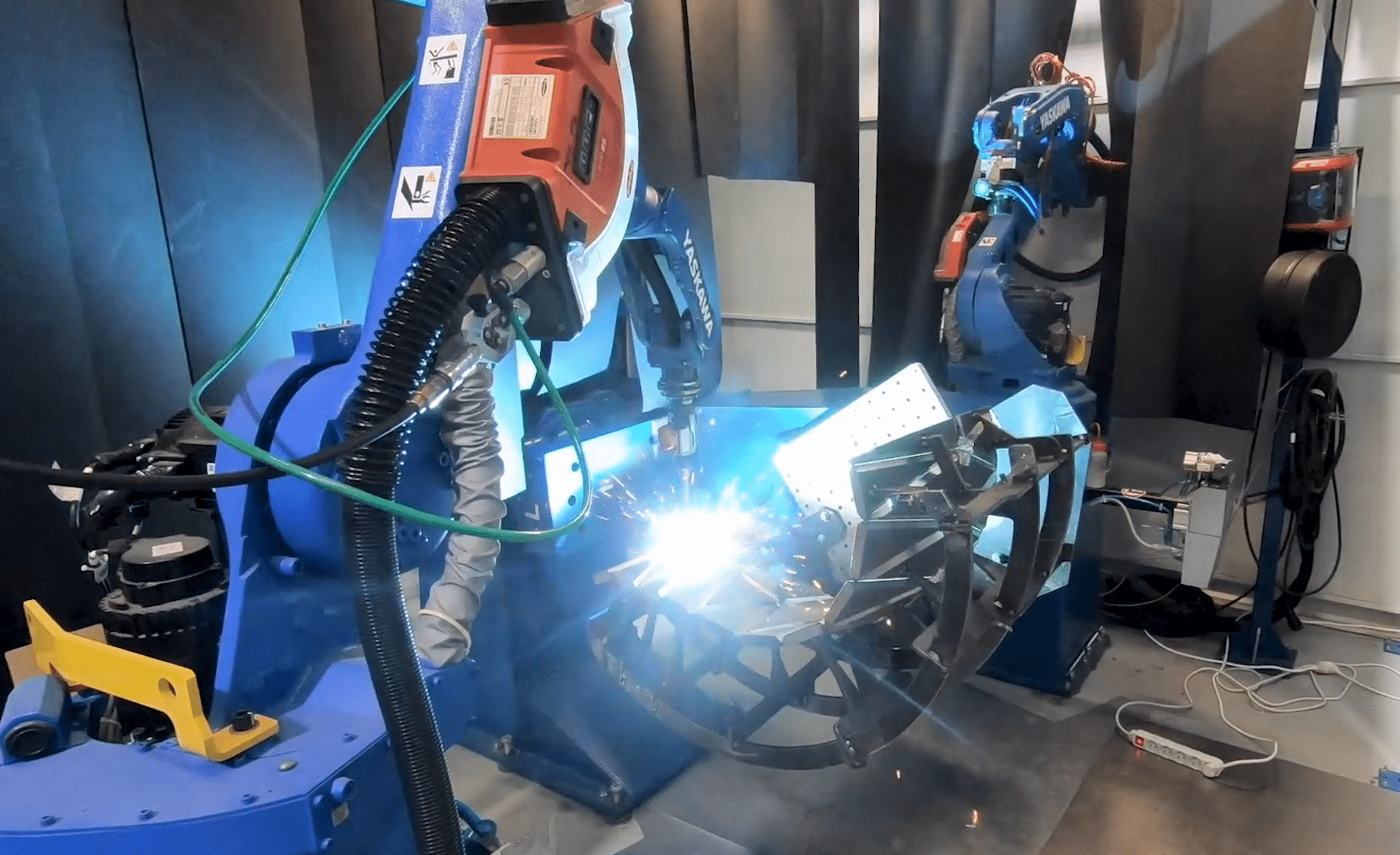 Developing large-scale INVAR® tools without the need for foundry
The ARWEN project combines paver assembly, robotic welding and WAAM additive manufacturing to produce mold blanks for the draping of aeronautical composite materials.
Explore the case study
Developing large-scale INVAR® tools without the need for foundry
The ARWEN project combines paver assembly, robotic welding and WAAM additive manufacturing to produce mold blanks for the draping of aeronautical composite materials.
Explore the case study
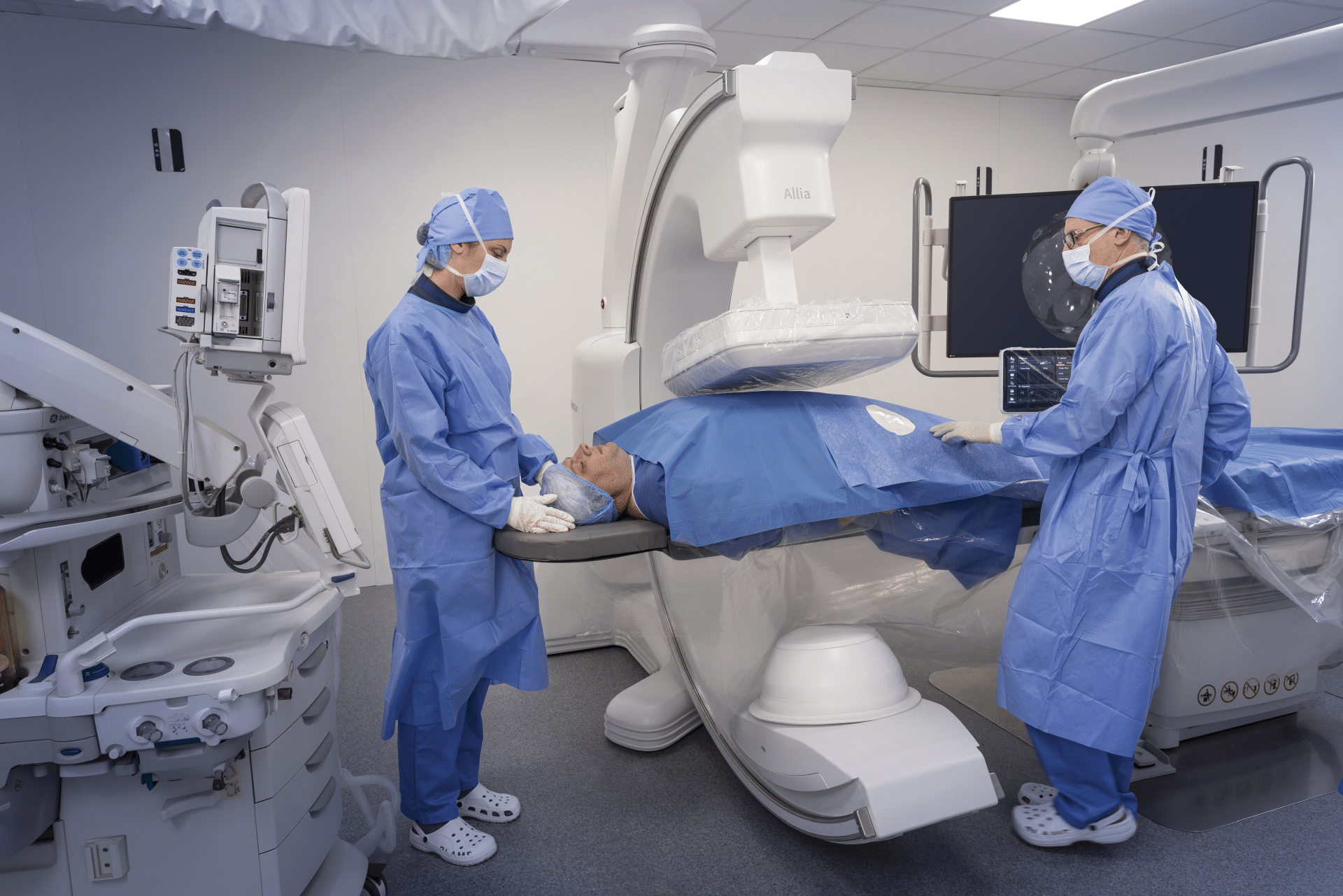 Industrializing a compact and mobile C-arm for interventional imaging
Allia™ Moveo illustrates the transition from an applied research challenge to a medical platform for the global market, thanks to a large-diameter, mobile composite C-arm with no visible cables.
Explore the case study
Industrializing a compact and mobile C-arm for interventional imaging
Allia™ Moveo illustrates the transition from an applied research challenge to a medical platform for the global market, thanks to a large-diameter, mobile composite C-arm with no visible cables.
Explore the case study
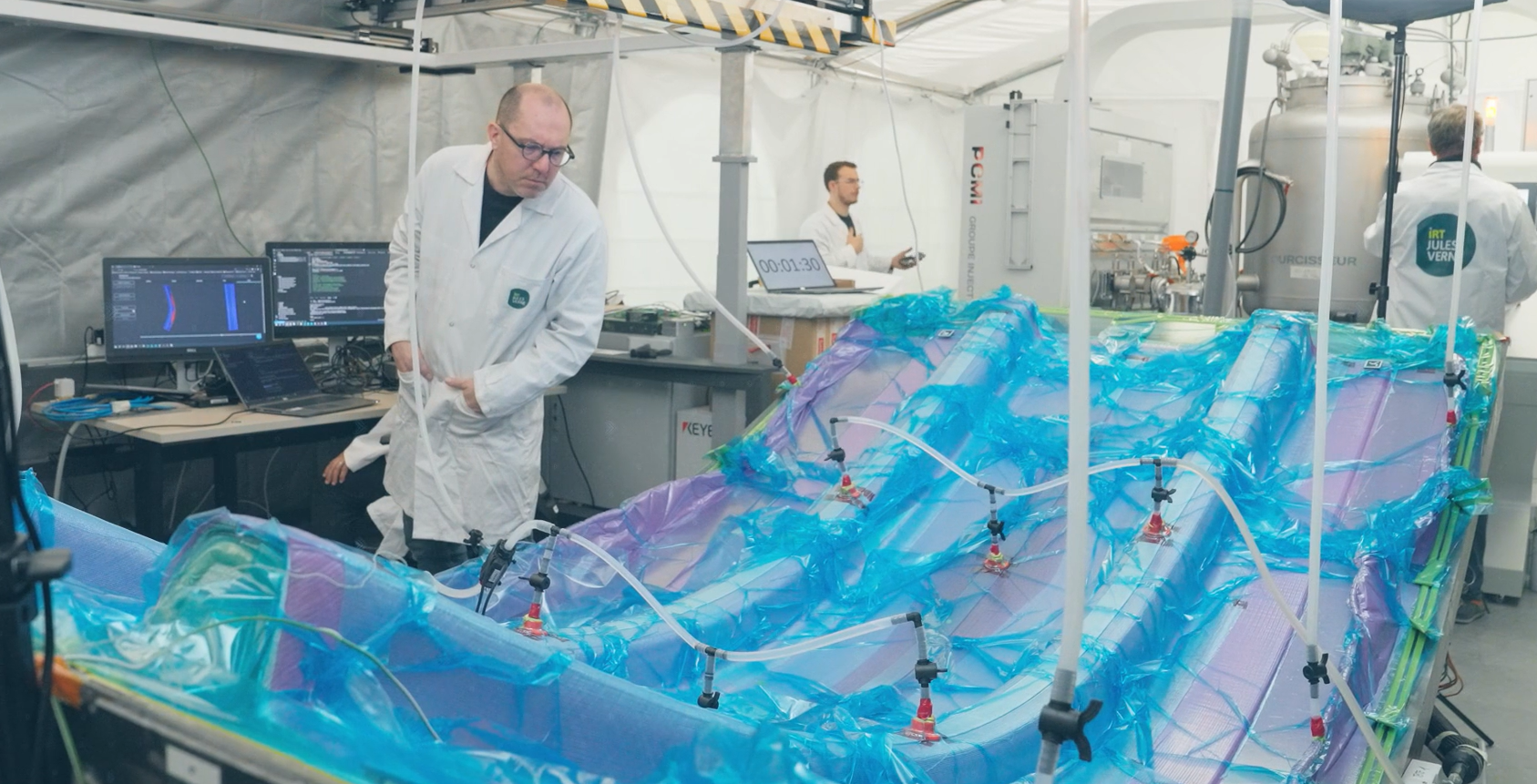 Making composite processes more reliable thanks to real-time monitoring
The Monocle project is developing an innovative real-time monitoring and decision support solution to secure the infusion processes of large composite parts.
Explore the case study
Making composite processes more reliable thanks to real-time monitoring
The Monocle project is developing an innovative real-time monitoring and decision support solution to secure the infusion processes of large composite parts.
Explore the case study
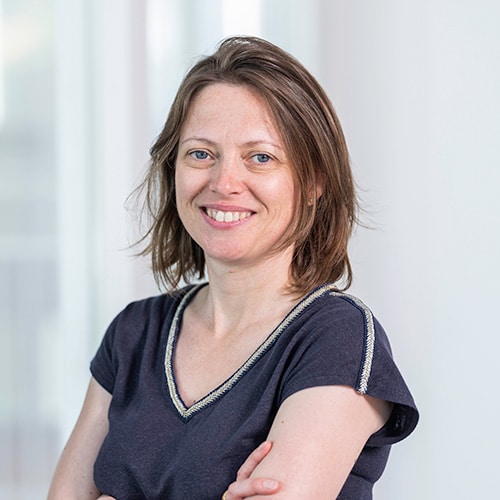
At IRT Jules Verne, we make modelling and simulation one of the cornerstones of our offering. We develop simulation tools to provide objective data that informs manufacturers’ decisions and accelerates their development. Our ambition: pragmatic digital simulation, closely aligned with manufacturing workshops, in the service of a high-performing and sustainable industry.
they trust us



Our other areas of technological expertise
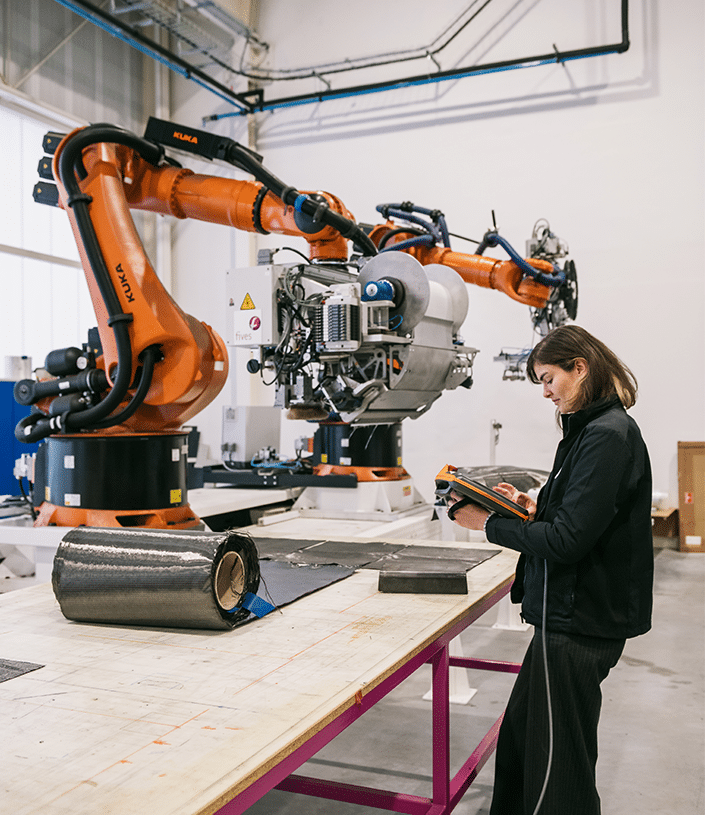
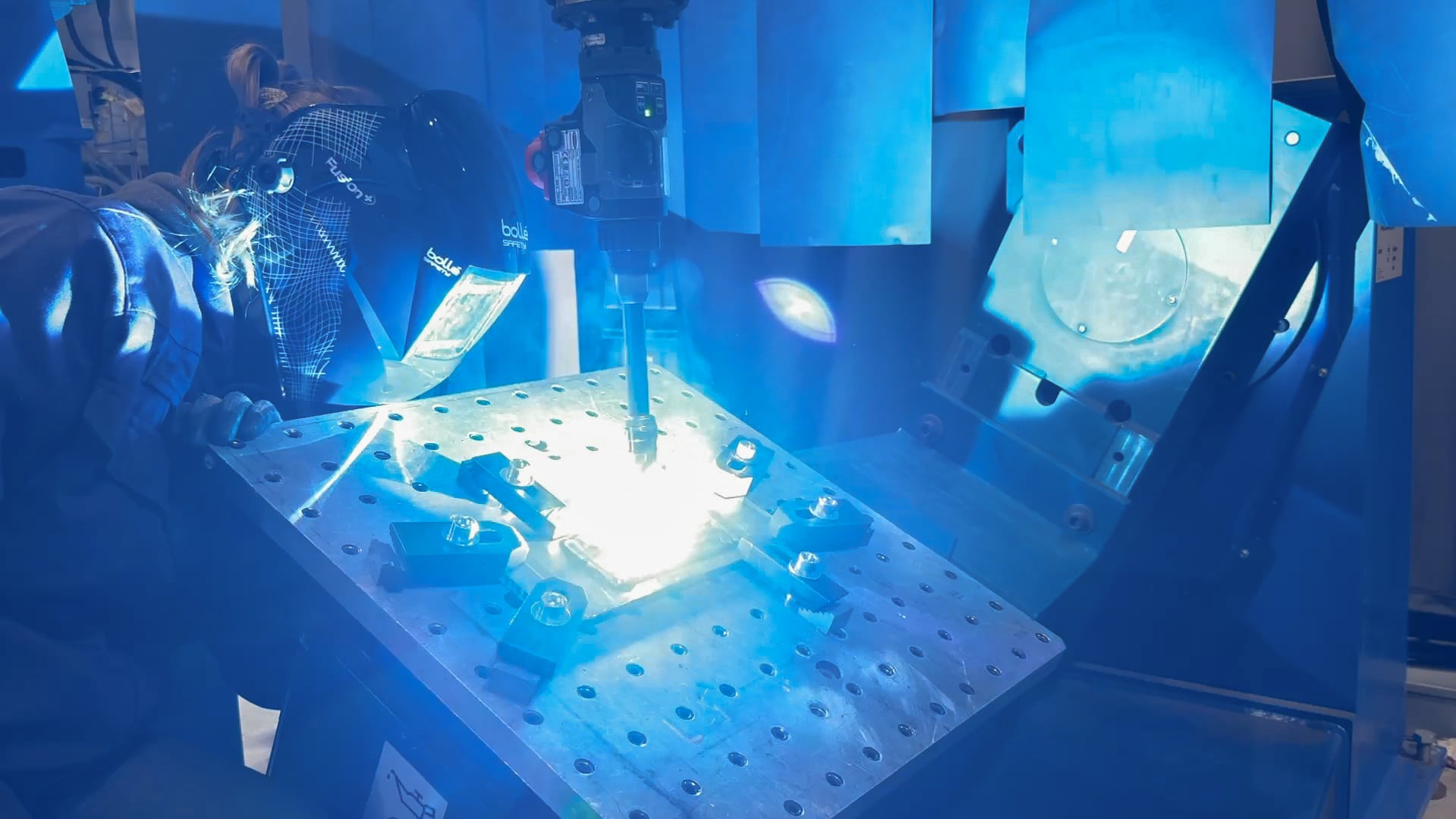
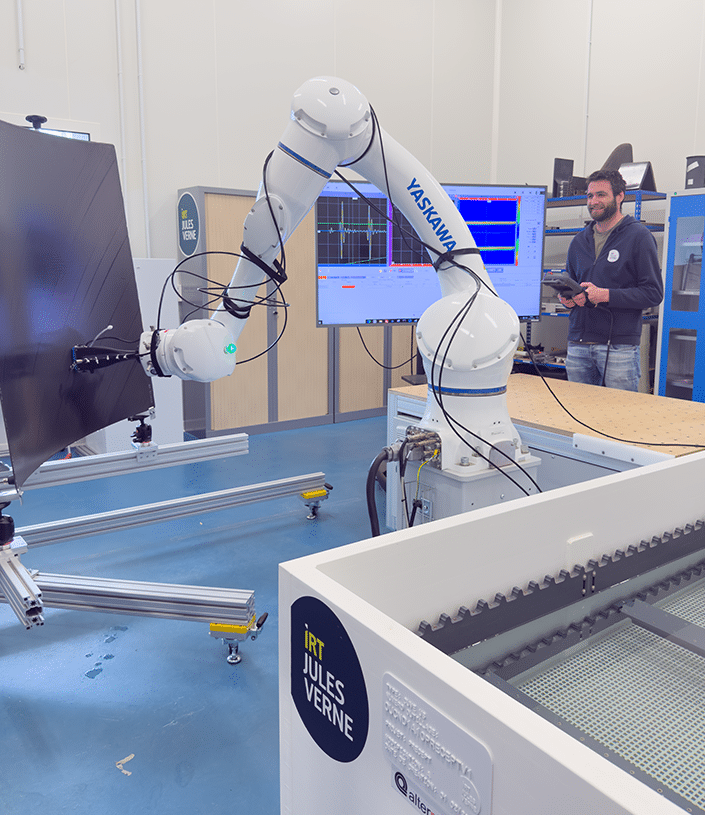
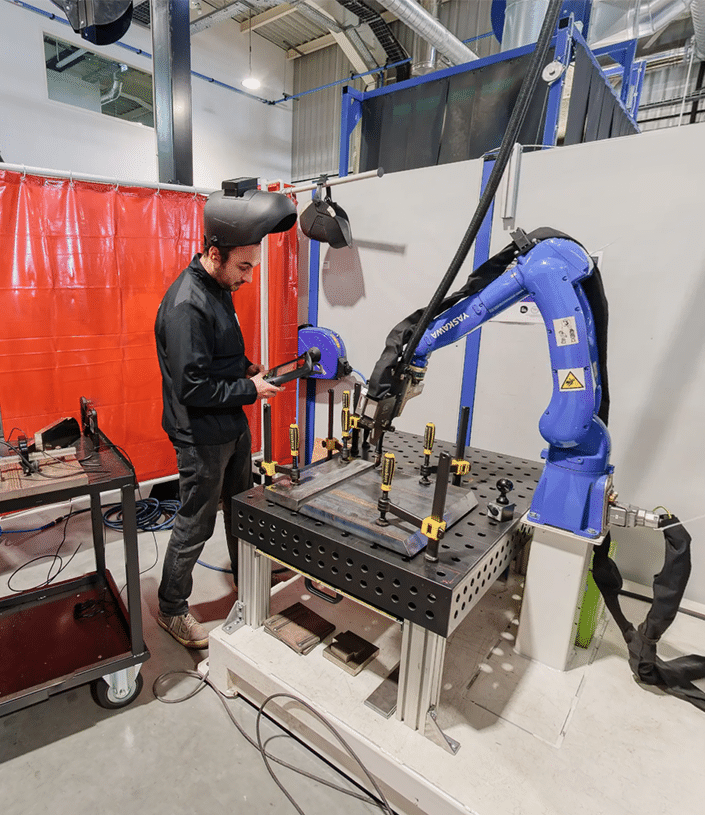
- Composites Improve the performance (cost and throughput) of manufacturing processes for complex, lightweight and large structures.
- Metallic Industrialize additive manufacturing technologies (DED-fil and AFSD) and automate welding assembly (Arc and FSW) by improving productivity and quality.
- Monitoring & process control Develop non-destructive testing of critical parts and monitor manufacturing processes to reduce production costs.
- Robotics & Cobotics Automating processes and optimising the deployment of robots in complex industrial environments