

IRT Jules Verne, R&D Partner to the Shipbuilding Industry
Naval Group and Chantiers de l’Atlantique, two leading players in the French shipbuilding industry, are among IRT Jules Verne’s eight founding industrial partners.
Their involvement at the heart of the Institute’s governance reflects a shared conviction: collaborative innovation is a key driver of competitiveness for the French shipbuilding industry, in both the civil and defence sectors, in a market characterised by strong European and Asian competition and where sovereignty issues are more important than ever.
This commitment is also reflected in IRT Jules Verne’s broader ecosystem, which includes Bénéteau, Bureau Veritas, SNEF and SMAF, a subsidiary of Chantiers de l’Atlantique specialising in composite masts.
The shipbuilding industry faces several challenges simultaneously: remaining competitive in a highly competitive international market, reducing manufacturing costs and lead times for large-scale parts and structures, addressing skills shortages in critical trades, particularly welding, and accelerating the decarbonisation of maritime transport, which accounts for more than 80% of global trade and nearly 3% of global greenhouse gas emissions.
To address these challenges, IRT Jules Verne works with shipbuilders and their subcontractors to develop new manufacturing processes and innovative robotic solutions, drawing on its expertise in robotics, composite and metallic processes, simulation and non-destructive testing.
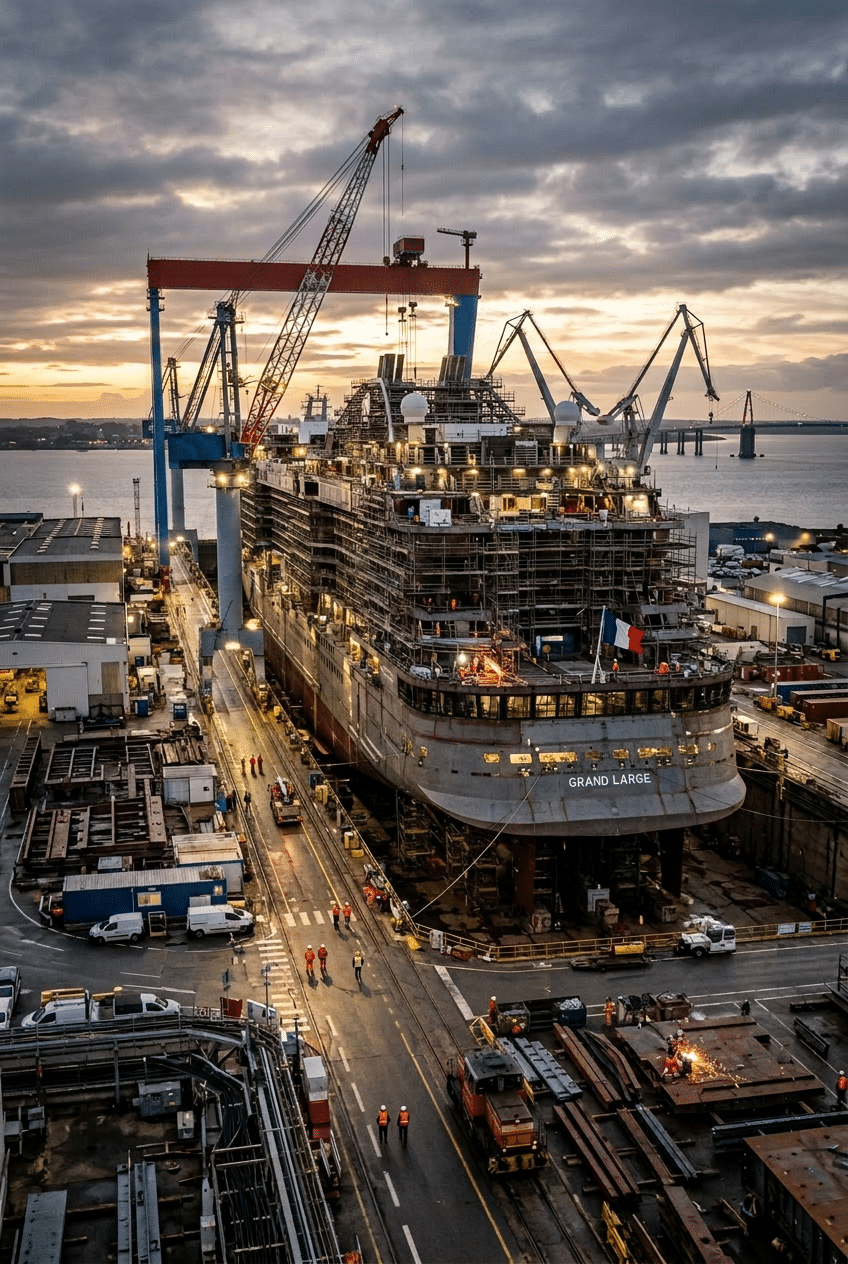
- Improving industrial performance and competitiveness
- Maintaining production capacity amid skills shortages
- Decarbonising maritime transport
- Addressing sovereignty challenges in Naval Defence
Improving industrial performance: reducing manufacturing costs and lead times
Shipbuilding involves complex manufacturing and assembly operations, often carried out on large-scale parts or structures, with stringent requirements in terms of quality, lead times and costs. IRT Jules Verne works in partnership with shipbuilders and their subcontractors to develop new manufacturing processes aimed at improving operational efficiency and reducing production times.
The ASPEN project illustrates this ambition. Conducted in partnership with Chantiers de l’Atlantique, Naval Group, Europe Technologies, CETIM and CNRS (LS2N), it aims to automate the production of a simple weld bead on large flat panels using a cobot-based assembly solution. The challenge is to keep the weight of the onboard cobot under control, shorten production cycles and reduce the physical strain associated with welding operations.
The same focus on performance drives the work carried out with Naval Group, including the development of a decision-support tool based on numerical simulation of the cold forming of large, thick metal sheets, designed to improve the reliability of forming process development.
Maintaining production capabilities in the face of skills shortages
The shipbuilding industry is facing significant labour shortages in several key industrial trades, particularly welding. These shortages have a direct impact on shipyards’ production capacity.
IRT Jules Verne develops autonomous robotic solutions to help industrial companies address recruitment challenges. The aim is not only to automate industrial operations or reduce the physical strain associated with certain tasks: these technologies also enable operators to focus on higher-value activities, such as supervision, setup, inspection and process control.
For example, the ASPEN project helped mature robotic welding technologies which, combined with the results of the earlier CHAMBORD and CHARMAN projects, have since been transferred to a mobile robot now marketed by Servisoud, a subsidiary of the Europe Technologies Group, for the construction industry. This illustrates IRT Jules Verne’s ability to transfer technologies from one industrial sector to another.
The results: a 20% reduction in welding time in certain configurations and more than €8 million in orders secured by Servisoud.
Decarbonising maritime ransport: developing new industrial solutions
Maritime transport accounts for more than 80% of global trade and nearly 3% of global greenhouse gas emissions. Decarbonising the sector has become a major industrial challenge for the French shipbuilding industry, which also sees it as an opportunity to strengthen competitiveness and sovereignty.
Wind-assisted propulsion is one of the solutions being explored to address this challenge. Since 2023, IRT Jules Verne, alongside the Wind Ship association, has been leading efforts to structure this emerging sector. Following an initial feasibility study involving 32 maritime transport stakeholders, the Institute launched the VENFFRAIS II project in late 2025. With a budget of €15.2 million over five years, the project brings together 23 partners from across the French value chain around a common objective: to develop reference methods and tools for measuring, comparing and certifying the performance of wind propulsion systems.
This momentum is already delivering tangible industrial results: automated lay-up technology developed by IRT Jules Verne has enabled SMAF, a subsidiary of Chantiers de l’Atlantique, to market its first machine for manufacturing composite masts for the Solid Sail technology.
At the European level, IRT Jules Verne also contributed to the FIBRE4YARDS project, which brought together 13 partners from six countries to explore the use of fibre-reinforced polymers in shipbuilding, with the aim of optimising production costs and integrating Industry 4.0 principles.
The NOMADE project, conducted with Naval Group, Airbus and several industrial and academic partners, complements these efforts by developing insulation solutions for onboard liquid hydrogen storage, a key technological building block for the naval propulsion systems of the future.
Addressing sovereignty challenges in naval defence
A major industrial player in naval defence, Naval Group designs, builds, integrates, maintains and decommissions submarines and surface vessels for the French Navy and several international navies. Since 2012, IRT Jules Verne and Naval Group have developed a trusted partnership, resulting in more than 30 collaborative projects and research services deployed across the Lorient, Indret, Cherbourg and Nantes sites.
In the field of quality control, the ICOME project is evaluating several non-destructive testing (NDT) methods, including ultrasonic testing and X-ray radiography, for the inspection of thick, heterogeneous composite parts intended for military naval structures, with a clear objective: to pave the way for a sovereign automated inspection architecture.
In the same vein, the MONOCLE project, conducted with Naval Group, iQanto, PCMI, Sicomin and Bureau Veritas Marine & Offshore, led to the development of a methodology for real-time monitoring of the infusion process for large, one-off or very low-volume composite parts. The results are now being transferred to Naval Group’s production facilities, and a follow-up project, MONOCLE 2, has been launched with Quantiflex Simulations and Phalanx, with operational deployment in the factory planned for late 2027.
For the assembly of large structures, the HAPPY 2 project, conducted with Airbus, Naval Group, ACsystème, CNRS (LS2N), IMT Atlantique and INRIA, enabled Naval Group to carry out horizontal docking and fitting trials on large parts weighing up to several dozen tonnes, using a positioning system controlled by visual sensors.
The SmartRobot and SmartRobot 2 projects explore the robotisation of welding operations for ship floors and frames, while AMATSUMARA aims to achieve 3D positioning of long, heavy metal parts with sub-millimetre accuracy prior to tack welding.
This work also includes knowledge and skills transfer: IRT Jules Verne delivered a ROS2 training module for Naval Group teams and developed an autonomous UV disinfection robot for industrial environments for the same partner, which is now protected by a patent.
Related projects
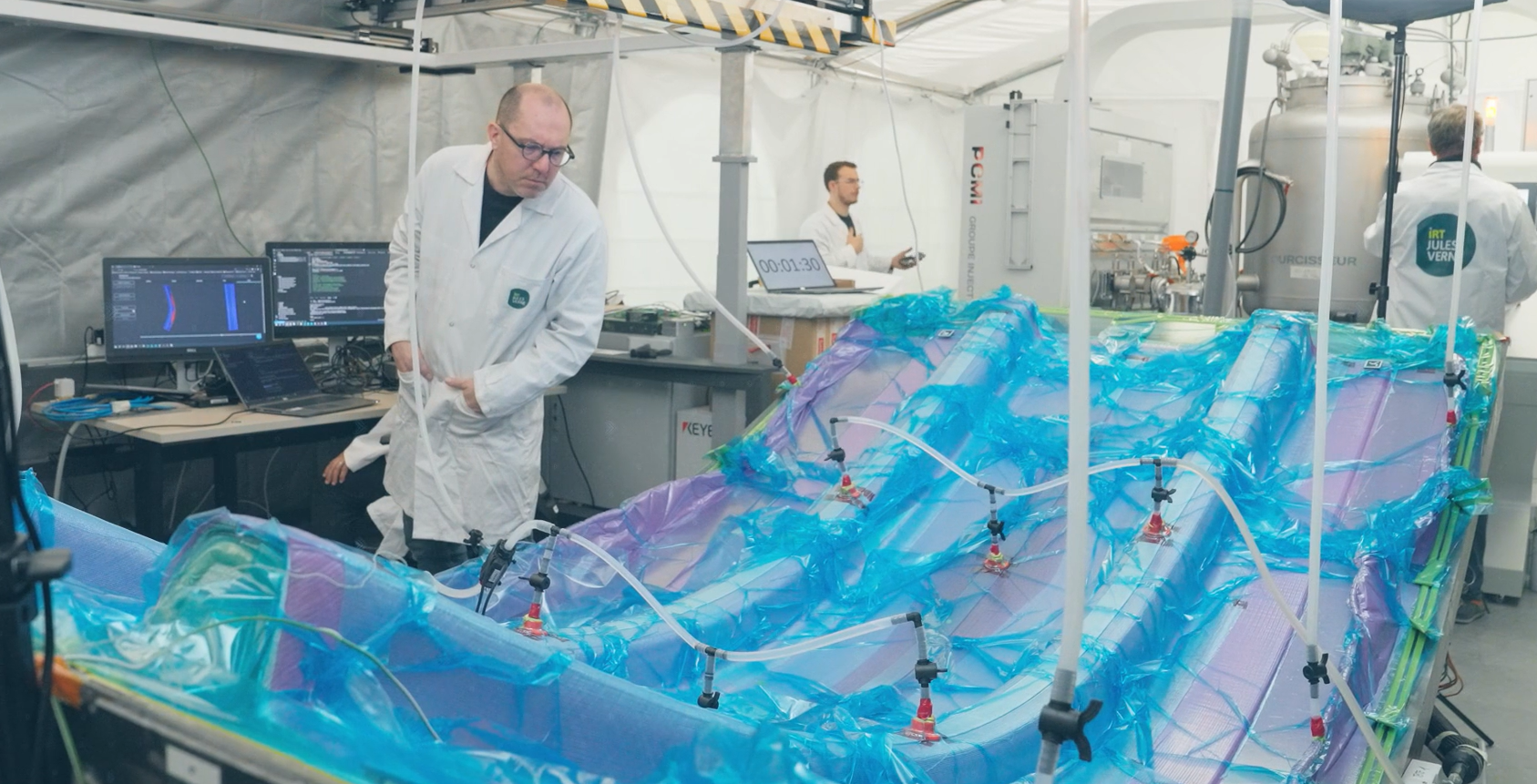 Making composite processes more reliable thanks to real-time monitoring
The Monocle project is developing an innovative real-time monitoring and decision support solution to secure the infusion processes of large composite parts.
Explore the case study
Making composite processes more reliable thanks to real-time monitoring
The Monocle project is developing an innovative real-time monitoring and decision support solution to secure the infusion processes of large composite parts.
Explore the case study
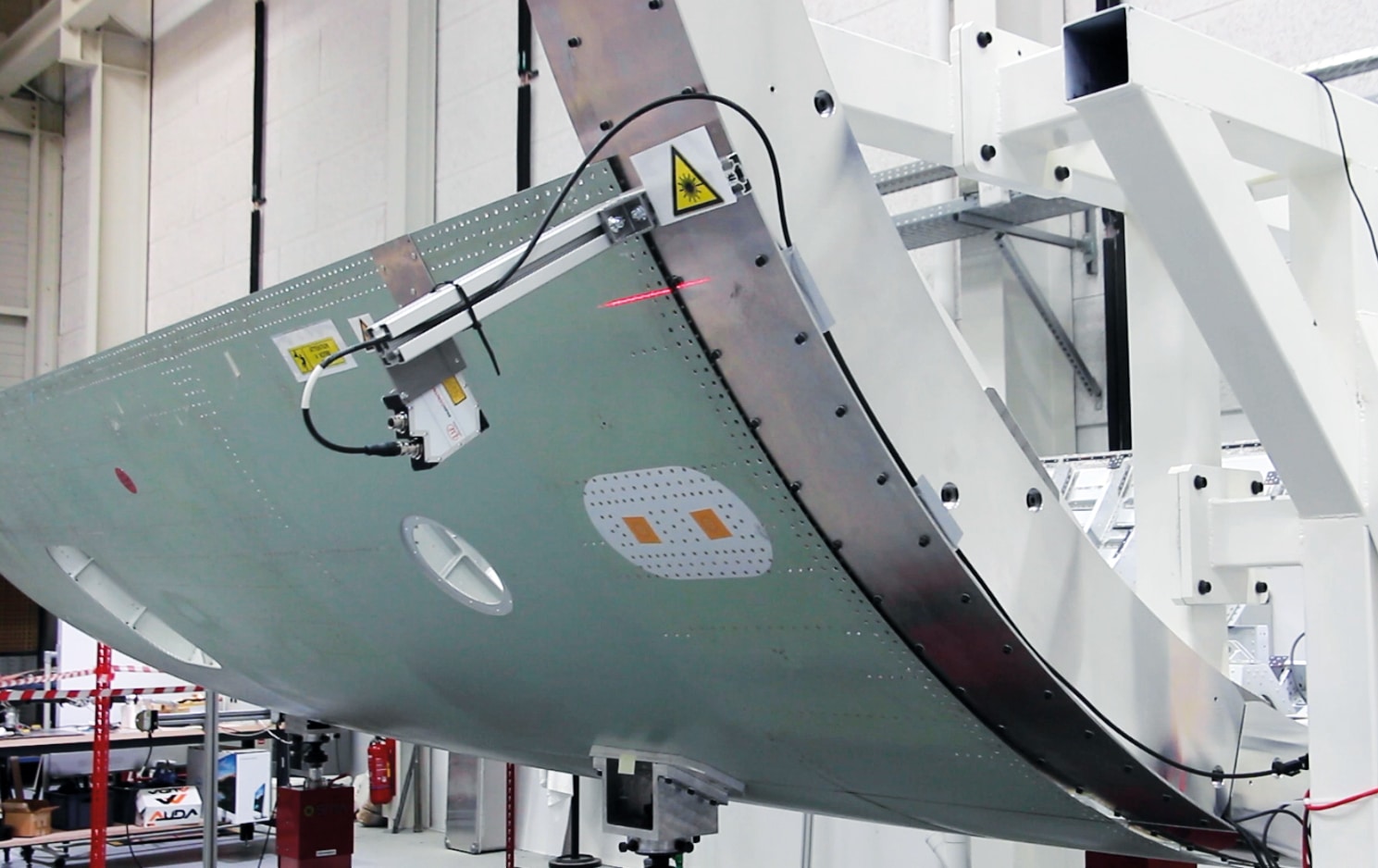 Automating the Precise Assembly of Large Structures with Continuous Servo Control
HAPPY and HAPPY2 projects develop lightweight and flexible positioners, driven by local or global measurements, to handle and position large parts in the aeronautics and naval defense industries.
Explore the case study
Automating the Precise Assembly of Large Structures with Continuous Servo Control
HAPPY and HAPPY2 projects develop lightweight and flexible positioners, driven by local or global measurements, to handle and position large parts in the aeronautics and naval defense industries.
Explore the case study
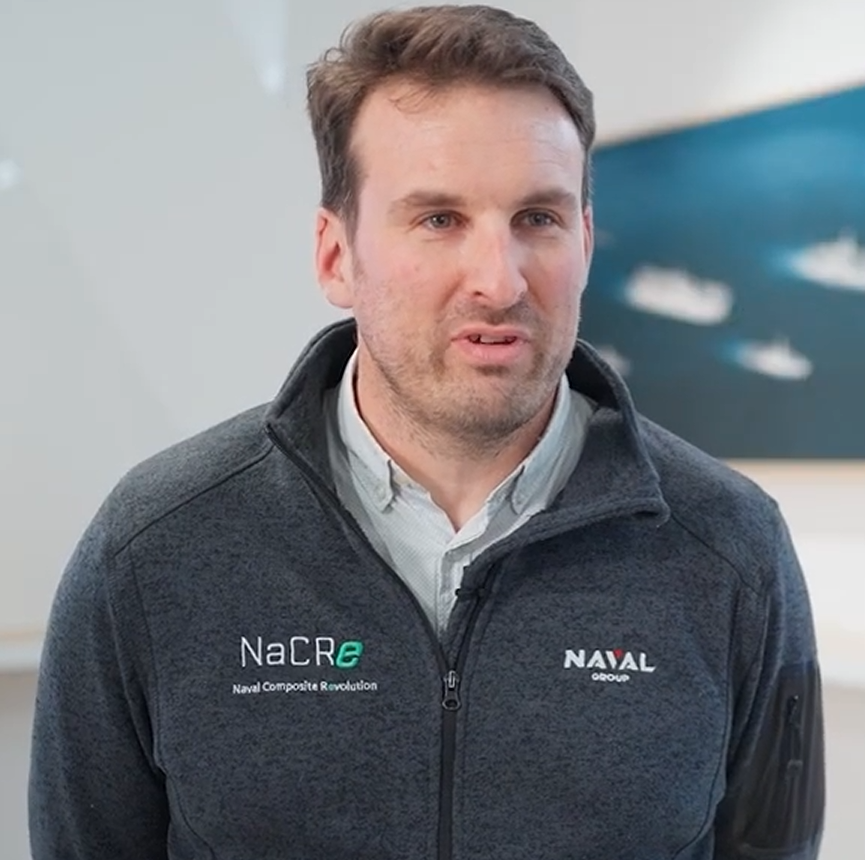
“The MONOCLE project led to the development of a prototype operator assistance tool, which has delivered very satisfactory results. A number of cutting-edge technological building blocks were developed within a very tight timeframe, which had been considered ambitious from the very start of the project.”Find out more
At the heart of a rich and well-structured ecosystem
IRT Jules Verne’s strong roots in the shipbuilding industry are reflected in its governance, which includes Naval Group and Chantiers de l’Atlantique. It also draws on four academic and research partners: CNRS, Nantes Université, Centrale Nantes and CETIM.
Beyond this founding circle, IRT Jules Verne’s shipbuilding ecosystem brings together complementary industrial players of all sizes:
- Civil and naval defence shipbuilding: Bénéteau, Chantiers de l’Atlantique, Naval Group.
- Classification and industrial services: Bureau Veritas, SNEF.
- Offshore racing and wind-assisted propulsion: SMAF, Den-Ran Gréement, Gunboat, Mer Concept, and the Wind Ship association.
This momentum is also supported by the major networks that structure the French maritime industry:
- GICAN, which brings together nearly 750 companies representing 82% of the French shipbuilding industry’s turnover;
- Pôle Mer Bretagne Atlantique, which brings together academic and industrial stakeholders from across the maritime economy along France’s Atlantic coast;
- CORIMER, the maritime industry’s R&D committee, where IRT Jules Verne sits alongside GICAN, the EMC2 industrial competitiveness cluster, Ifremer and France Energies Marines.
-
Civil and Naval Defence Shipbuilding
NAVAL GROUP · LES CHANTIERS DE L'ATLANTIQUE · BENETEAU
-
Classification and Industrial Services
BUREAU VERITAS · SNEF
-
Offshore Racing and Wind-Assisted Propulsion
SMAF · DEN-RAN GREEMENT · GUNBOAT · MER CONCEPT · WIND SHIP
-
Networks & Competitiveness Clusters
GICAN · POLE MER BRETAGNE ATLANTIQUE · EMC2 · FRANCE ENERGIES MARINES
-
Academics
NANTES UNIVERSITÉ · CNRS · IFREMER · CORIMER
Our Key Industry Members in the Shipbuilding Sector
NAVAL GROUP · CHANTIERS DE L'ATLANTIQUE
These industrial partners make a long-term commitment to co-develop IRT Jules Verne’s technology and programme roadmap, in line with the sector’s key priorities. By becoming a member of IRT Jules Verne, you gain access to strategic opportunities that create tangible value for your organisation.
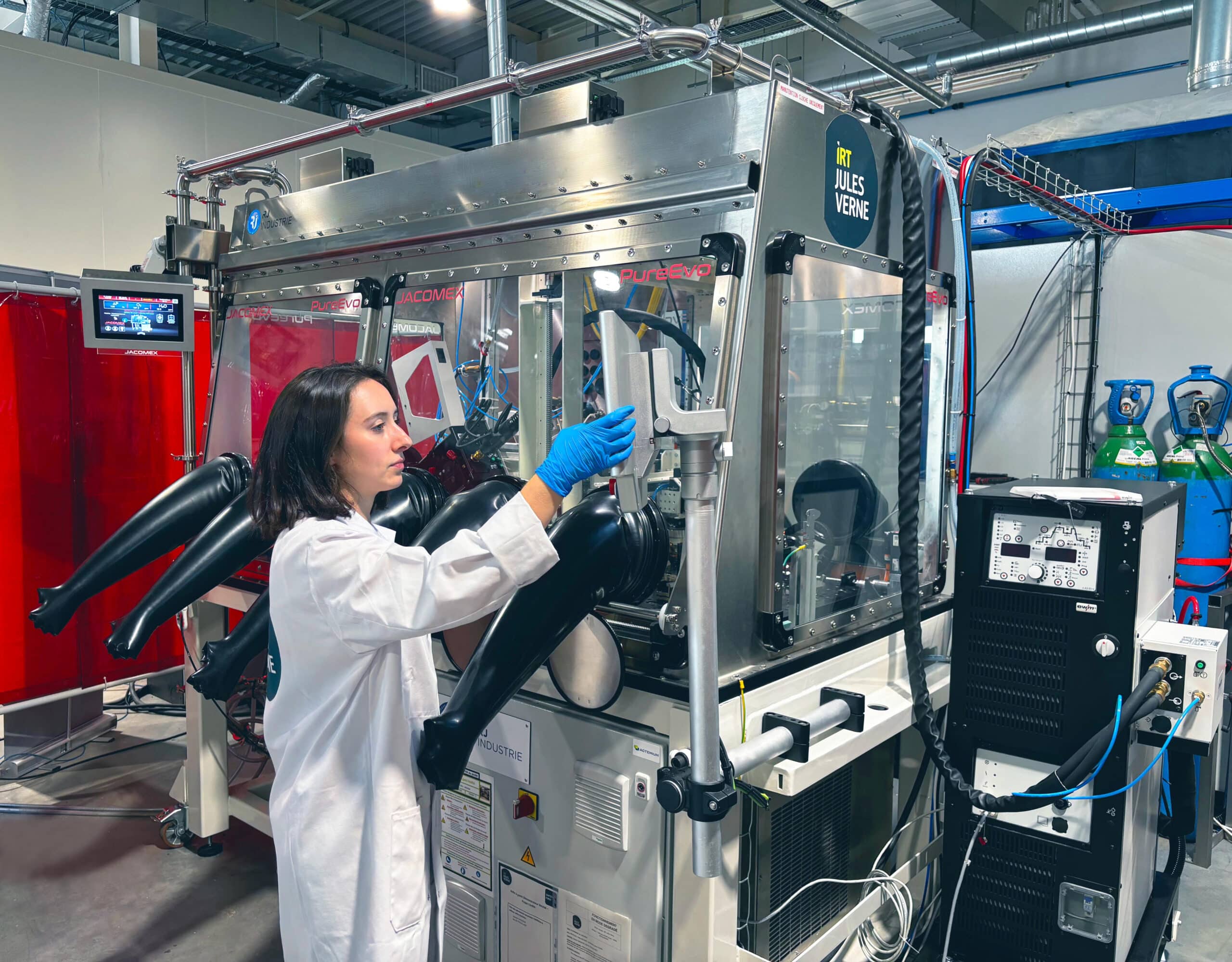
Two flagship projects in the Shipbuilding Sector
Making composite processes more reliable thanks to real-time monitoring
The Monocle project is developing an innovative real-time monitoring and decision support solution to secure the infusion processes of large composite parts.
Explore the case study
Automating the Precise Assembly of Large Structures with Continuous Servo Control
HAPPY and HAPPY2 projects develop lightweight and flexible positioners, driven by local or global measurements, to handle and position large parts in the aeronautics and naval defense industries.
Explore the case study