
Transfer manufacturing technologies to factories
As a bridge between research and industry, technology transfer is the ultimate goal of the research conducted by IRT Jules Verne to address the major market challenges facing key industrial sectors.
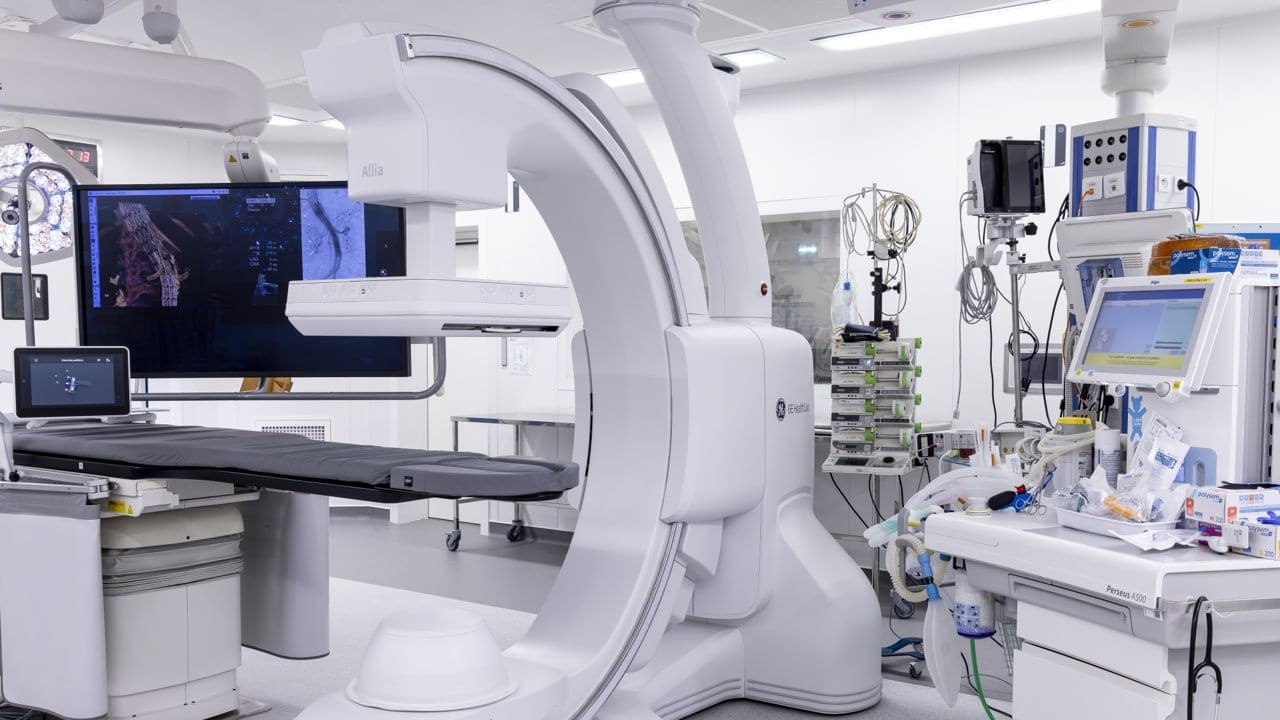
The goal is clear: to help industrialize innovations developed in the field of manufacturing processes and ensure they are rapidly integrated into French factories. The institute’s technology transfer approach leads to the industrialization of solutions developed for major international players such as Airbus, Forvia, and GE HealthCare.
The results of this technology transfer also lead to integrate new technologies at equipment suppliers such as Europe Technologies and Fives, as well as at system integrators (small and medium-sized enterprises) in the Pays de la Loire region, such as Loiretech, that are investing in factory modernization.
Since 2020, IRT Jules Verne has formalized and optimized its technology transfer process, by incorporating technology transfer considerations from the very early stages of R&D projects.
- The vocation of the IRT Jules Verne and its collaborative projects: to transfer technologies from manufacturing to factories.
- The technology transfer approach is integrated from the initiative of the R&D project and then supported in partnership with manufacturers until the industrialization phase.
- IRT Jules Verne has a portfolio of 30+ mature technologies and has already filed more than 80 patents.
- IRT Jules Verne has successfully led the transfer of major innovations now deployed to large groups, SMEs, mid-caps and integrators.
They trust us









IRT Jules Verne supports you in the transfer of technologies to factories
Our Strengths
- A transfer approach integrated into all stages of development, from set-up to post-project
- More than 7 years of experience in transfers in various industrial fields, to SMEs, mid-caps and large groups on large-scale subjects such as lightweight structures or complex robotics
- A detailed understanding of industrial needs and performance issues for industrialization and the production of concrete results
- A portfolio of 30 technologies resulting from 10 years of research in manufacturing
Our positioning in the technology transfer process
IRT Jules Verne supports industrialization.
Its role: to facilitate the exploitation of research results from R&D projects by industrialists and to help R&D project stakeholders (manufacturers, integrators, etc.) to anticipate industrialization activities.
IRT Jules Verne prepares technology transfer by integrating tangible objectives at the time of the R&D project: exploitation prospects, technical and economic analyses, operating methods (licenses), identification and choice of integrators, identification and characterization of technologies.
In the technology transfer process, the institute positions itself as a conduit of know-how, technologies and patents to succeed in the transfer stage so that the industrial partners can then carry out the industrialization phase independently.
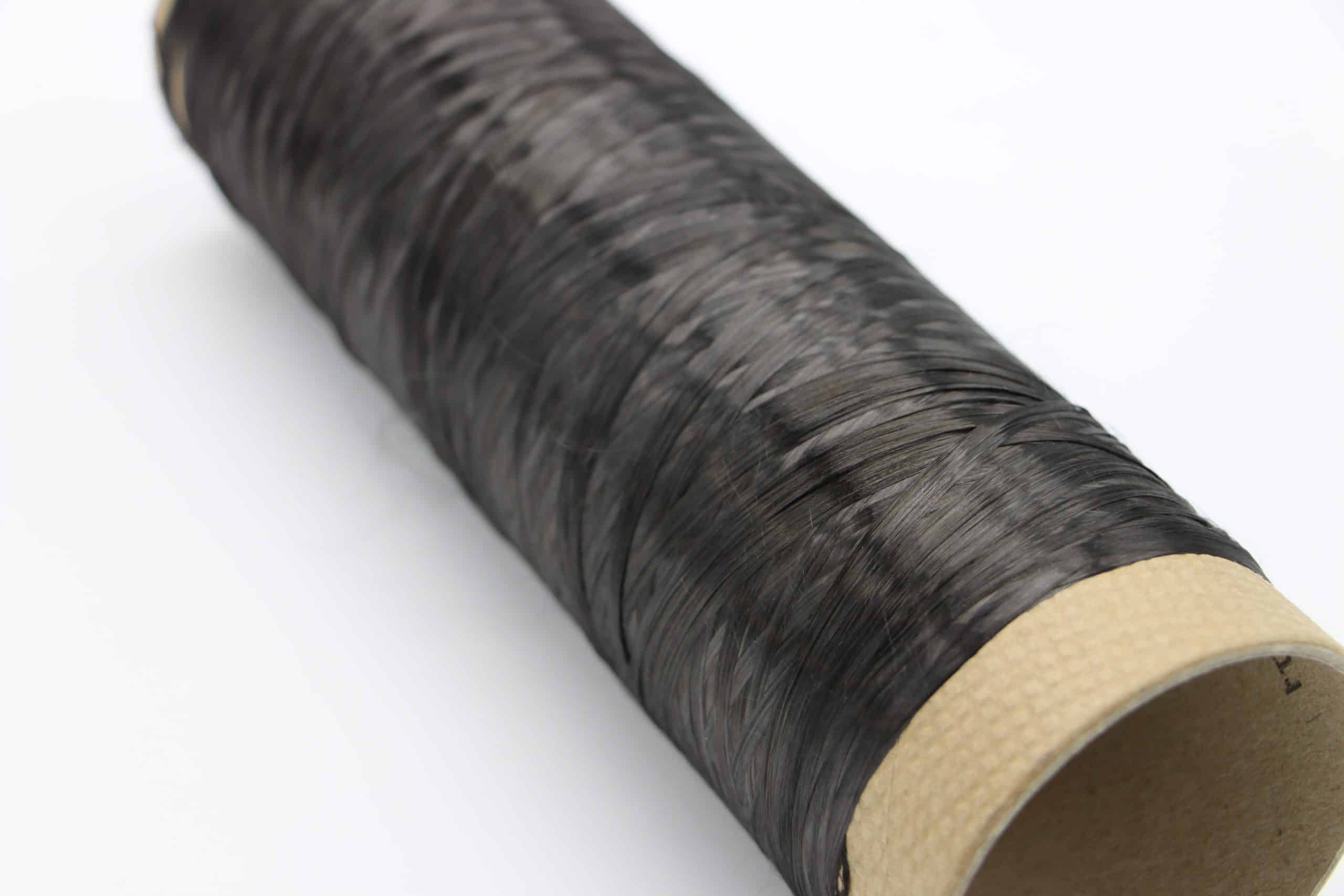 Startup creation
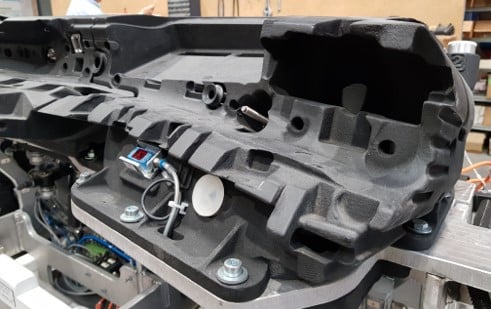 hybrid mineral additive manufacturing
 Assembly of Fitted Pipe Sections
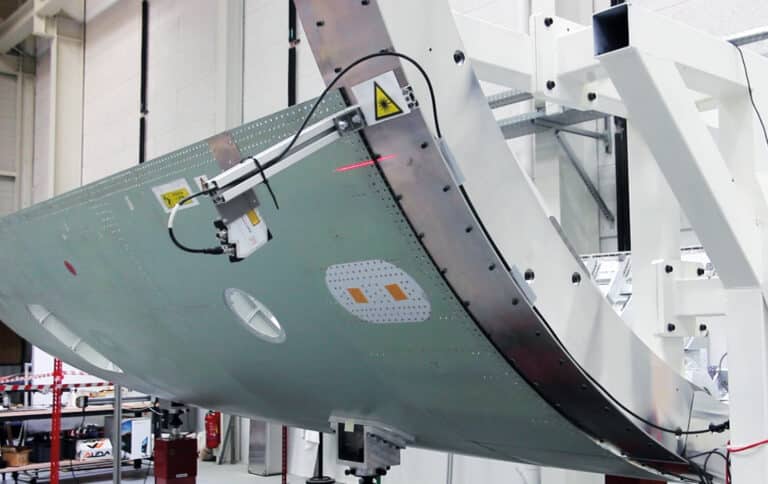 Robotic Assembly of Aerostructures
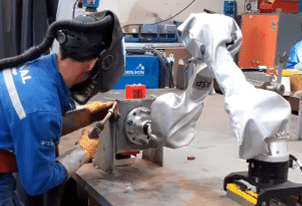
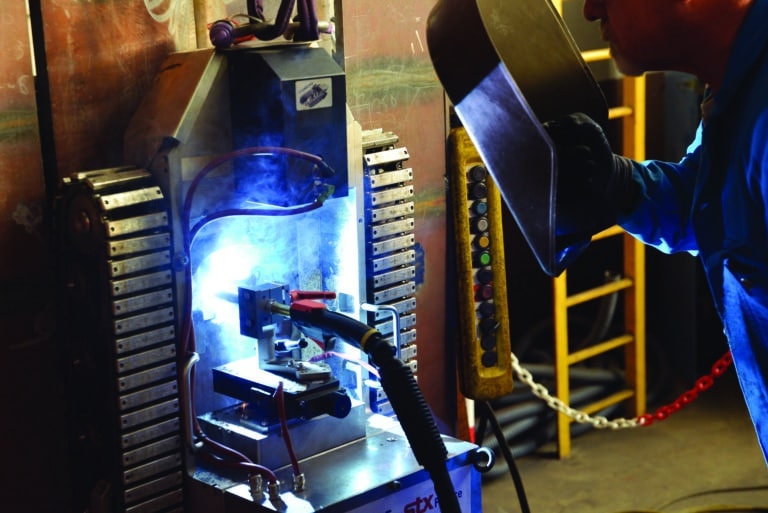 Mobile welding robot for the construction industry
The technology transfer approach at all stages of the project
IRT Jules Verne’s collaborative R&D projects culminate in technology transfer to factories.
To ensure the efficiency of the transfer to industrialization, the approach is integrated from the outset of a project: at the time of assembly, throughout the life of the project and post-project.
3 key steps
- 01 Project set-up (6 months): identification of the transfer potential and its impacts (economic, ecological, sovereignty and strategic)
- 02 R&D project (3 years): involvement of integrators or technology suppliers, technical and economic studies and external analyses of the market potential
- 03 Definition of industrialization strategy, transfer support, pre-industrial demonstrator projects, operating licenses
IRT Jules Verne transfers manufacturing technologies to 5 areas of expertise
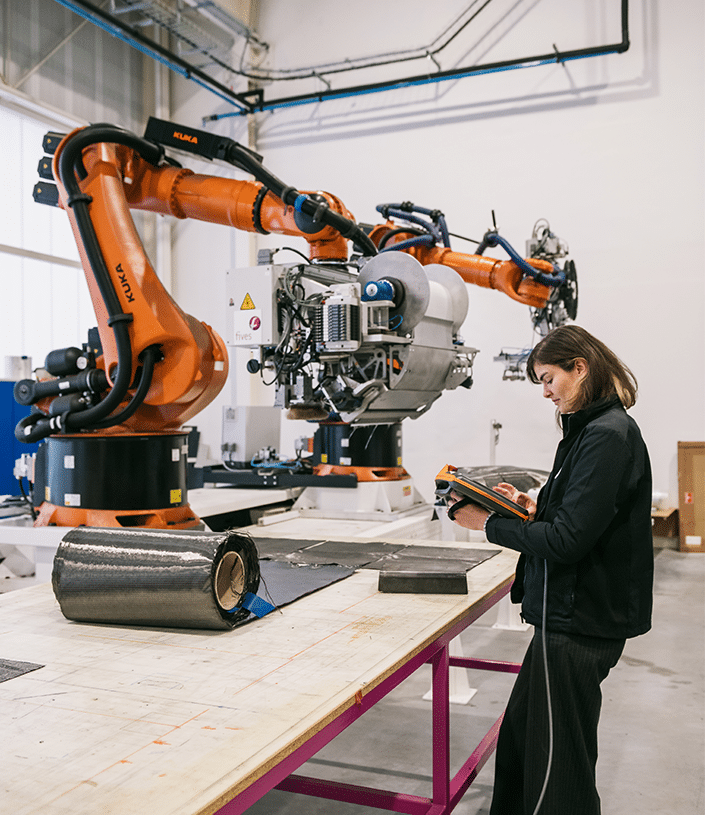
Composites
Based near Nantes, the IRT Jules Verne has, since its creation in 2012, developed outstanding expertise in the manufacturing processes for composite parts and structures.
As the core activity that led to its creation, the institute’s expertise in composite materials processes is now recognised at both national and European levels. IRT Jules Verne is also recognised as a key player in the field within international networks, notably JEC World, which has on several occasions recognised the groundbreaking technological innovations developed at the institute.
With a multi-sector technological research team dedicated to composite materials and processes, IRT Jules Verne leads collaborative national and European R&D projects and provides R&D services to address industrial performance challenges, particularly those relating to the manufacture of complex and large-scale structures.
The R&D activities combine the development of innovative processes with product design in order to optimise production costs, meet production rate targets and reduce environmental impact. They cover thermoplastic and thermosetting composite materials, from preforming and shaping through to assembly.
Linking up with IRT Jules Verne’s expertise in modelling and simulation, robotics and process monitoring, the team develops comprehensive solutions, from technical and economic feasibility studies through to full-scale industrial demonstrators.
- Large-scale automated preforming
- Liquid impregnation processes: thick infusion, RTM injection and isothermal CRTM
- Forming processes: thermocompression, stamping/overmolding and non-autoclave consolidation
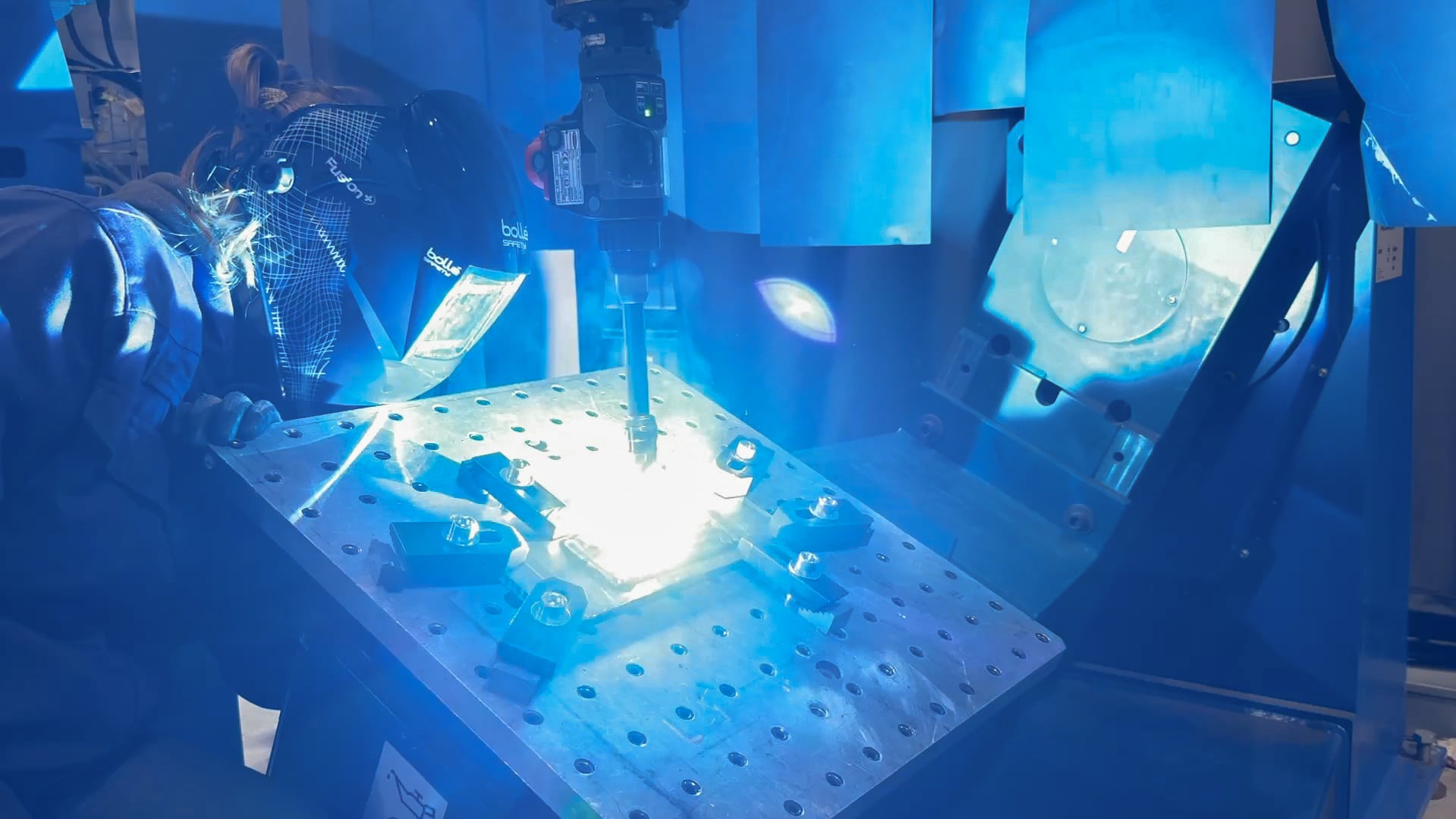
- Welding of TP composites
Metallic
Metal welding & additive manufacturing
Innovative metal processes are one of the pillars of the technological research carried out at the IRT Jules Verne (Nantes) since 2012. The objective is twofold: to industrialize additive manufacturing technologies (DED-fil and AFSD) and to automate welding assembly (Arc and FSW) by improving productivity and quality.
Supervised by Grégoire Bazin, our technological research team is made up of about fifteen R&D engineers, experts, technicians and PhD students. It develops innovations for metal manufacturing processes based on additive manufacturing and metal welding technologies in liquid and solid state.
The team relies on know-how in metal processes and materials and on state-of-the-art equipment that differentiates it. It works in synergy with the other research teams of the IRT Jules Verne in order to offer global support.
- Automated Metal Welding Assembly
- Large-Scale Metal Additive Manufacturing Using DED Wire (Liquid State)
- AFSD Large-Scale Metal Additive Manufacturing (Solid-State)
- Repair and Reloading
Modelling & Simulation
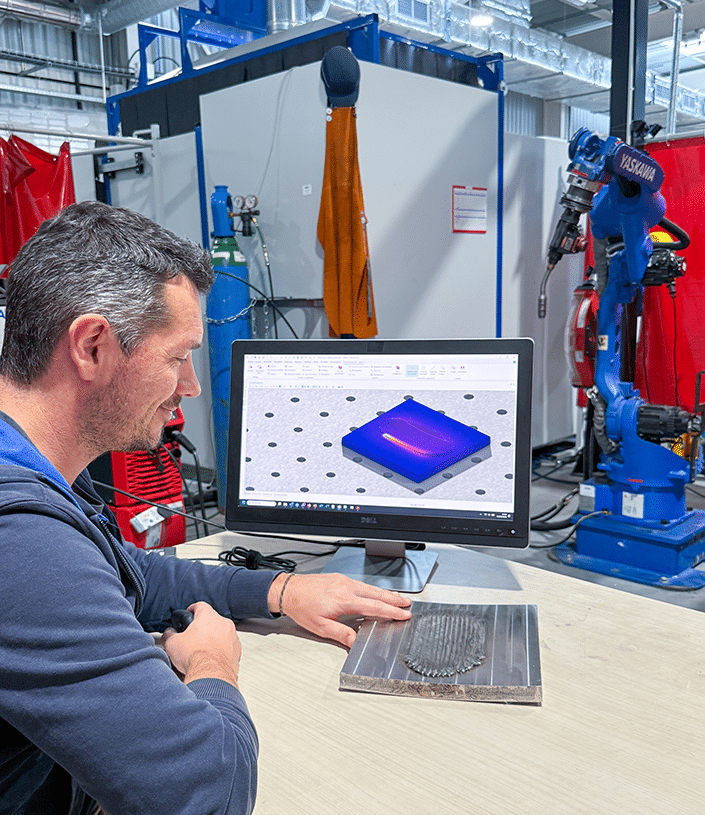
To enhance the competitiveness of the industrial sector, IRT Jules Verne relies on modeling and numerical simulation of manufacturing processes to address the major challenges facing French industry. Based in Nantes since 2012, the Modelling and Simulation team studies the behavior of structures and manufacturing processes and works on the shaping and assembly of materials. It uses and develops digital tools for its R&D projects and services to size, predict, optimize, and understand.
The objective is clear: to provide reliable data to manufacturers to facilitate decision-making and reduce the time and cost of development.
Led by Stéphanie Colliou, the team consists of 18 R&D engineers, experts, and doctoral students. It has a strong digital culture and is proficient in a wide range of simulation software. Working in collaboration with the institute’s other technological expertise areas, the simulation and modeling work is validated through testing. The team relies on a network of partners to characterize materials and feed data into the models.
- Simulation and optimisation of composite processes
- Simulation and optimisation of metallic processes
- Digital twin of the process
- Assembly and tolerancing
- Thermal management of processes
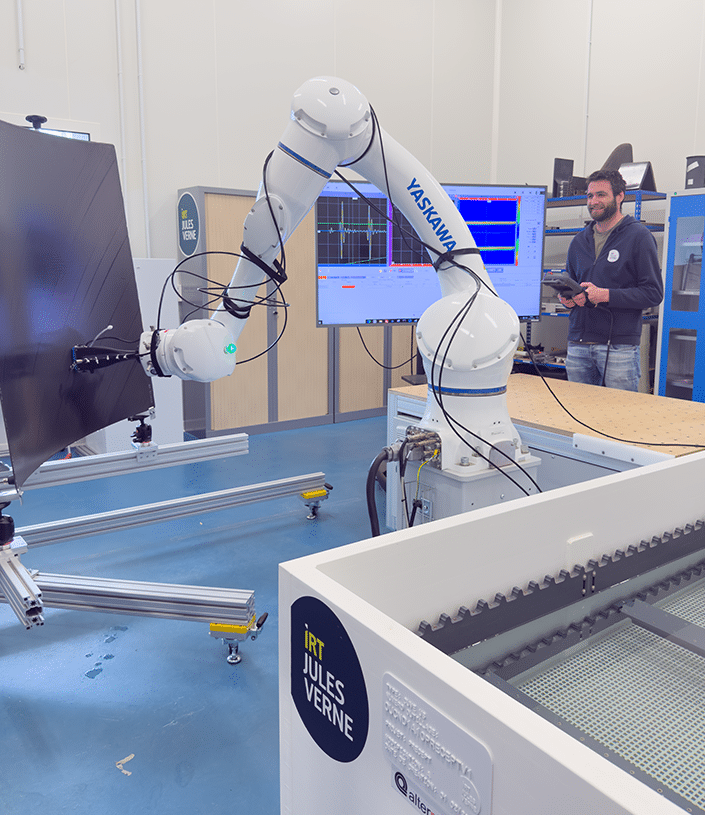
Monitoring & process control
Develop non-destructive testing of critical parts and monitor manufacturing processes to reduce production costs.
To reduce inspection costs, IRT Jules Verne develops innovative technologies in process monitoring (PHM), non-destructive testing (NDT) and integrated health control (SHM) at its premises in Nantes.
The team also offers the digital tools essential for the automatic real-time analysis of the data collected, in particular by using artificial intelligence to predict the quality of parts, provide feedback on processes, assist the operator in his diagnosis and ensure the digital continuity of all operations in the production range. The solutions developed are then deployed in production and maintenance in the aeronautics, naval, energy and transport sectors.
Led by Nicolas Terrien since 2022, the team is made up of around fifteen experienced experts, PhDs, engineers and R&D technicians and uses cutting-edge technological platforms to carry out its research work.
- Monitoring of manufacturing processes
- Automated and flexible non-destructive testing
- Automatic analysis of inspection and monitoring data
- Integrated health monitoring of structures
Examples of technology transfers led by the IRT Jules Verne
How to collaborate with IRT Jules Verne
- 01 Collaborative projects Work together to develop and carry out collaborative R&D projects in the manufacturing sector. Our offer
- 02 R&D services Take advantage of our resources and expertise to meet your specific needs. Our offer
- 03 French calls for proposals Take part in national calls for proposals alongside IRT Jules Verne. Our offer
- 04 European calls for proposals Join European consortia working in the industry of the future. Our offer
- 05 Training Train your teams in the manufacturing technologies of the future. Our offer