
IRT Jules Verne, R&D partner to the Aerospace Industry
A long-standing R&D partner to the aerospace industry, IRT Jules Verne has conducted more than 80 collaborative R&D projects supporting the sector, representing a total budget of over €180 million. Today, more than half of the Institute’s activities remain focused on innovative composite materials and processes to address the sector’s technological and economic challenges. Since its creation, the Institute has earned the trust of major aerospace players and works with industrial companies including Airbus, Safran and Daher.
The aerospace industry faces a particularly demanding industrial equation: absolute component safety, production ramp-up, lightweight structures and rigorous cost control at every stage of an aircraft’s life cycle.
To address these challenges, IRT Jules Verne develops advanced manufacturing technologies combining performance, reliability and competitiveness, working closely with stakeholders across the entire aerospace industrial value chain.

- Component quality & safety
- Lightweighting of structures
- Production ramp-up
- Cost control
Aerospace production performance: innovative processes for increasingly demanding parts
IRT Jules Verne and aerospace industry partners are developing increasingly competitive and high-performance innovative processes for the manufacturing and inspection of small- and large-scale metallic and composite parts.
The safety requirements of aerospace components demand complete control over material quality at every stage of the manufacturing process. Thermoplastic matrix composites, used in primary structural components such as fuselage frames, wing boxes and ribs, require tightly controlled manufacturing processes to ensure the mechanical integrity of the final part.
This is the challenge addressed by the MATCH project and its follow-up project, conducted with Airbus, Daher and Loiretech: developing a manufacturing process for thick thermoplastic composite parts for primary aerospace structures, while ensuring control over both fibre placement machine lay-up and material integrity throughout the process. Process robustness is non-negotiable: an undetected defect in a structural component can have critical consequences in service.
In the field of metallic processes, the ARWEN project, conducted with Airbus, Dassault Aviation, Aperam and Loiretech, is exploring wire-arc additive manufacturing of INVAR shells—an iron-nickel alloy with a very low coefficient of thermal expansion—for the production of large-scale lay-up tooling. The dimensional accuracy of this tooling directly determines the geometric conformity of the composite parts produced using it.
IRT Jules Verne also works on the simulation and modelling of manufacturing and assembly processes, which play a key role in reducing industrialisation lead times, optimising process parameters and tooling, and simulating manufacturing defects to assess their acceptability and thereby reduce scrap rates.
Related projects
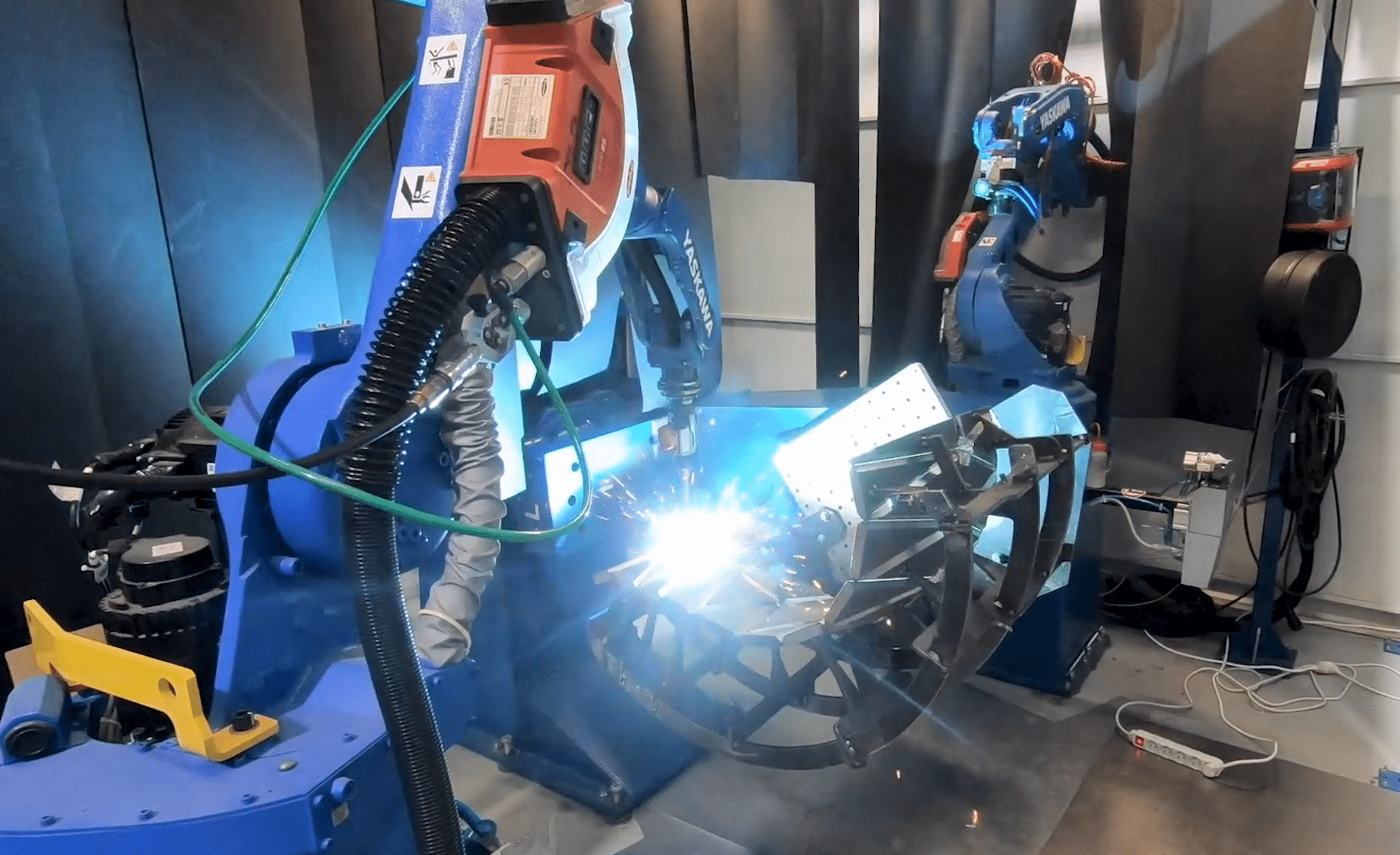 Developing large-scale INVAR® tools without the need for foundry
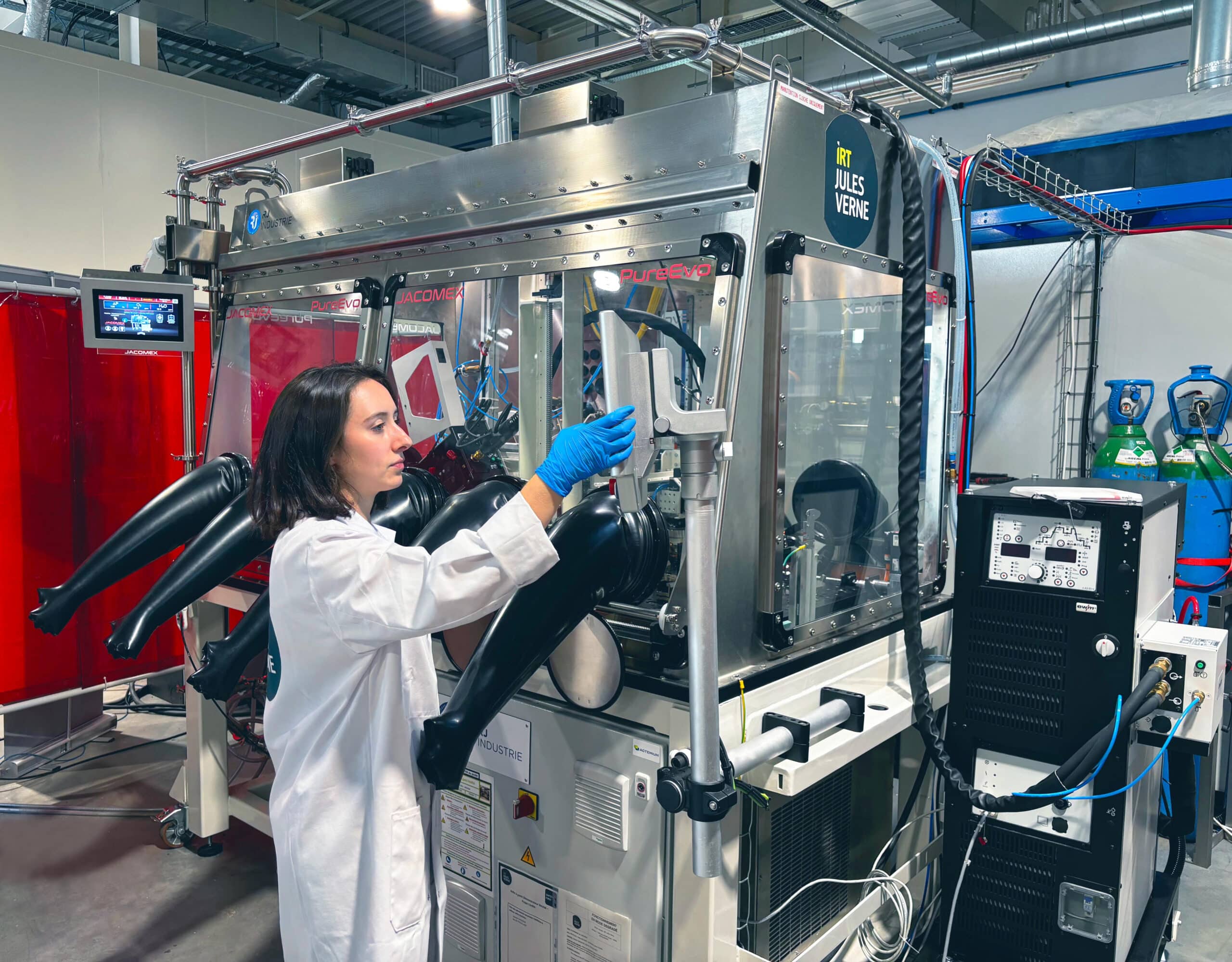
The ARWEN project combines paver assembly, robotic welding and WAAM additive manufacturing to produce mold blanks for the draping of aeronautical composite materials.
Explore the case study
Developing large-scale INVAR® tools without the need for foundry
The ARWEN project combines paver assembly, robotic welding and WAAM additive manufacturing to produce mold blanks for the draping of aeronautical composite materials.
Explore the case study
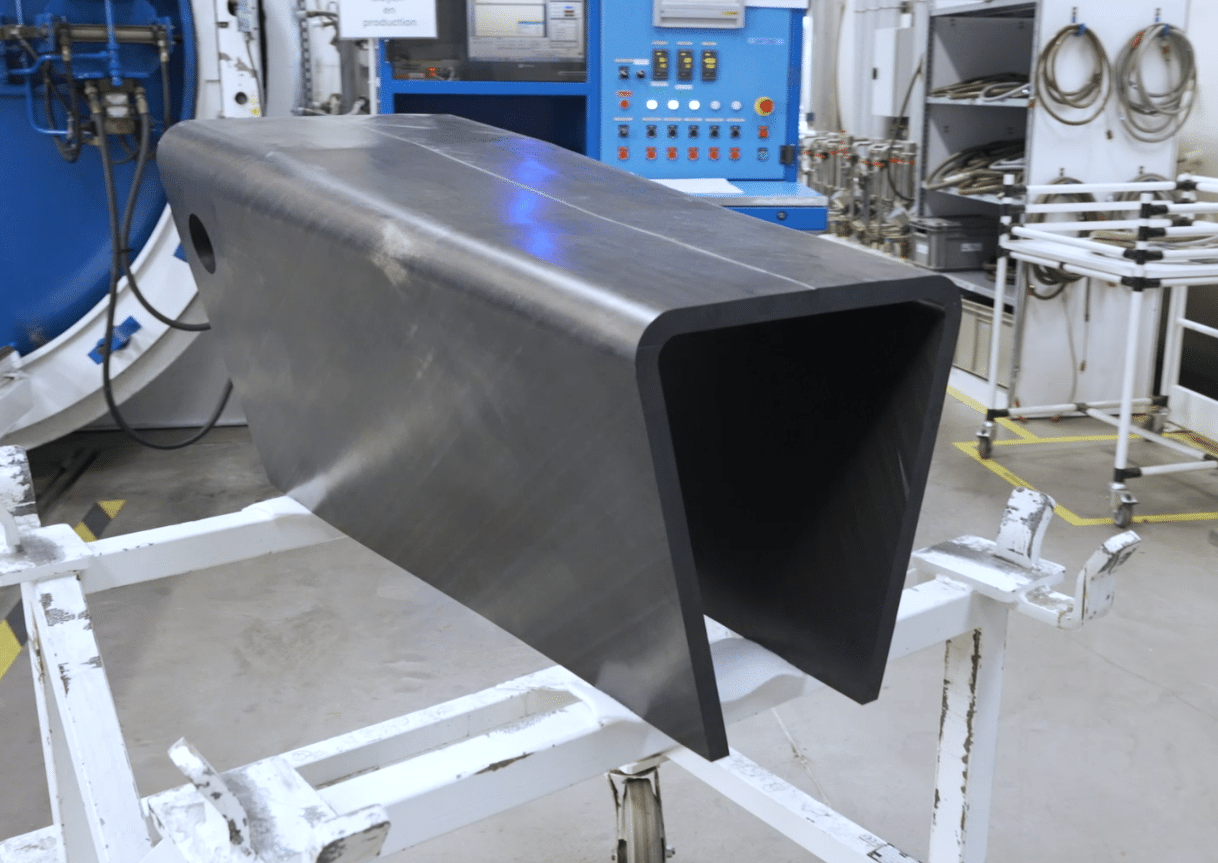 Developing the manufacture of high-thickness thermoplastic composite parts for aeronautics
The MATCH project develops innovative manufacturing, simulation and machining processes to produce high-performance, robust thermoplastic composite parts adapted to the requirements of the aeronautics industry.
Explore the case study
Developing the manufacture of high-thickness thermoplastic composite parts for aeronautics
The MATCH project develops innovative manufacturing, simulation and machining processes to produce high-performance, robust thermoplastic composite parts adapted to the requirements of the aeronautics industry.
Explore the case study
Lightweight structures: a strategic lever for the decarbonisation of air transport
Reducing the weight of an aircraft is one of the most effective ways for the aerospace industry to improve both its environmental and economic performance. Every kilogram saved on the structure means less fuel consumed over the aircraft’s entire service life and, consequently, lower CO₂ emissions. From an operator’s perspective, it also means an additional kilogram of payload or fuel that can be carried.
Composite materials—carbon fibres combined with thermoset or thermoplastic matrices—are now at the heart of this lightweighting strategy. Their strength-to-weight ratio is unmatched among structural materials. They are now used in some of the most critical components of modern aircraft.
However, lightweighting is not simply a matter of material selection. It also involves designing more complex parts that integrate more functions within a single manufacturing operation, and mastering multi-material assemblies that combine the advantages of composites and metals where each performs best.
Finally, controlling preforming processes enables fibres to be positioned precisely where they are mechanically required, avoiding excess material and thereby optimising the performance-to-weight ratio of each part produced.
Productions rates: robotics supporting aerospace production ramp-up
The robotic solutions developed by IRT Jules Verne’s research teams help address production ramp-up challenges, particularly for low-value-added operations.
The aerospace industry needs to produce increasing numbers of aircraft without compromising quality or traceability. At the end of 2025, Airbus announced its ambition to produce 1,000 aircraft per year by 2027, including a target production rate of 12 A350s per month. This acceleration makes the automation of many operations that are still performed manually essential.
The MADRAS technology platform at IRT Jules Verne provides a concrete illustration of this ambition. This 18-metre pilot line, equipped with KUKA robotic arms capable of handling loads of up to 480 kg, is dedicated to the automated production of composite textile preforms for aerospace structures. It achieves a fibre deposition rate of 75 kg/hour—compared with 15 kg/hour for the best existing processes—and reduces composite part production times by a factor of five to six, while also reducing waste.
MADRAS
- 18 m Pilot line
- 480 kg Kuka robot payload
- 75 kg/h Fibre deposition
- Reduced by a factor of 5 to 6 Production lead times
In the field of assembly, the HAPPY project and its follow-up, HAPPY 2, conducted with Airbus, address the flexibility challenges associated with large aerospace structures. IRT Jules Verne developed a system of lightweight positioning devices mounted on mobile bases and controlled in real time using visual sensors. This system compensates for part flexibility during the assembly of aerostructure sections. The demonstrator has since been transferred to Airbus.
The HAPPY 2 project, bringing together Airbus, Naval Group, INRIA and CNRS, extends this technology to even more complex assembly operations, including wing-to-fuselage joining.
In the field of welding, the SPECTRA and SCRATCH projects, conducted with Airbus, Airbus Atlantic, Safran, Arkema and CERO, aim to industrialise conduction welding of thermoplastic composites for the assembly of series-produced aerospace parts. Eliminating traditional mechanical fasteners helps increase production rates, reduce weight and simplify assembly operations.
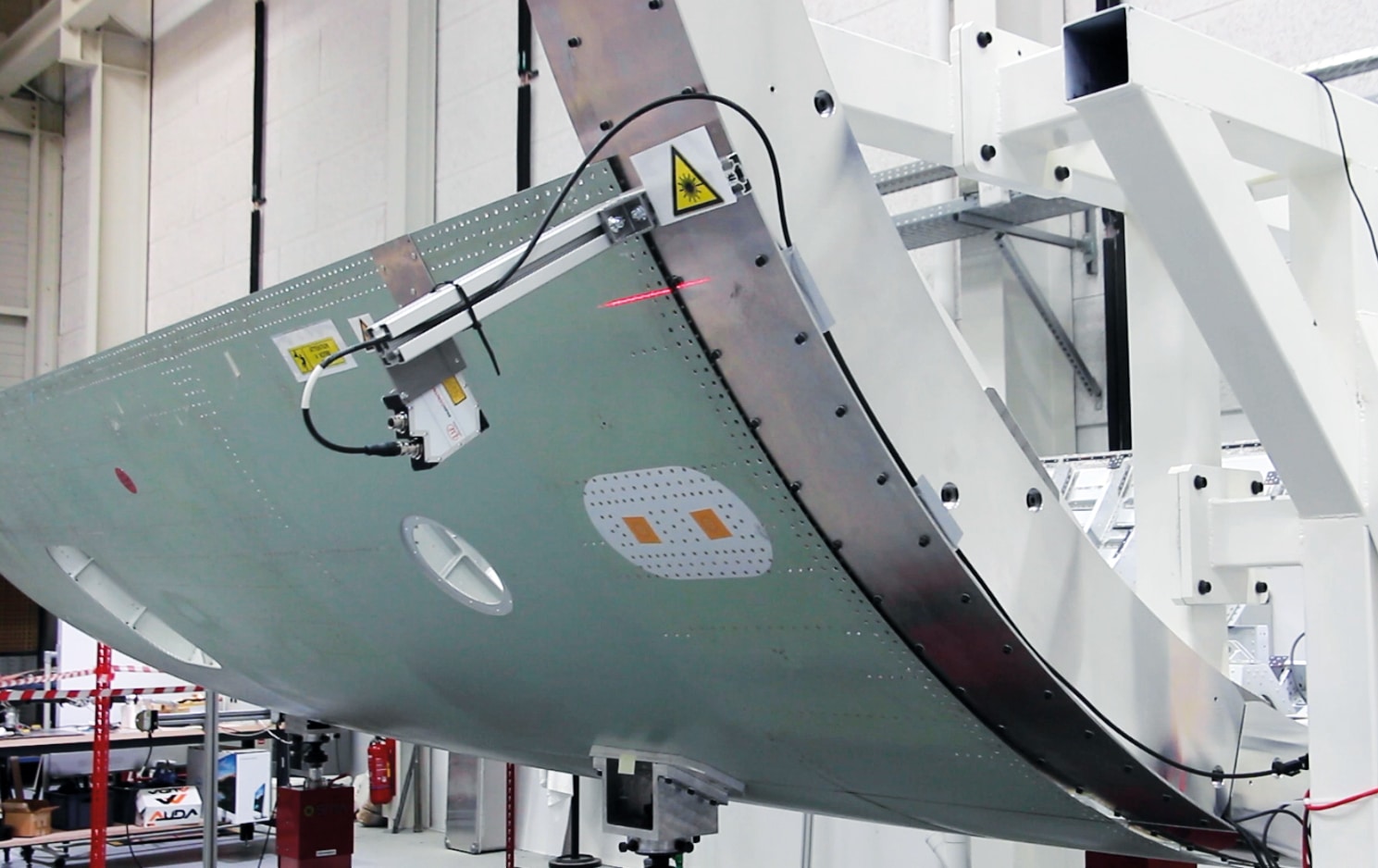
Cost control in the Aerospace Industry: from design to production
IRT Jules Verne’s R&D activities inherently take into account the need to reduce development, industrialisation and production costs, by addressing structural design, material selection and the optimisation of manufacturing processes.
In the aerospace industry, costs are determined at every stage: poorly sized tooling, an overly time-consuming process or a high scrap rate can compromise the profitability of a programme over several decades. IRT Jules Verne takes a systemic approach to this challenge.
- 01 Material reuse The cost of materials, particularly carbon fibres, remains a major component of composite part manufacturing costs.
-
02
Assembly
IRT Jules Verne develops innovative thermoplastic composite welding technologies to eliminate drilling and mechanical fastening operations, which are particularly time-consuming and costly for large structures.
The Institute is also exploring one-shot thermoforming-overmoulding processes to produce composite parts without the need for subsequent machining operations. - 03 Tooling Metal additive manufacturing opens up new possibilities for producing large-scale tooling at significantly lower costs and with much shorter lead times than conventional methods.
A collaborative ecosystem supporting the Aerospace Industry
IRT Jules Verne’s work is conducted through a collaborative model bringing together major prime contractors, equipment manufacturers, SMEs and academic laboratories. Since 2012, the Institute has worked with:
Located at the heart of the Inodus industrial campus in Nantes, in the immediate vicinity of Technocampus Composites, the Airbus Atlantic site and Technocampus Océan, IRT Jules Verne benefits from a manufacturing ecosystem that is unique in France, helping accelerate the transition from research to industrialisation in the aerospace industry.
-
Major industrial companies
AIRBUS · SAFRAN · DAHER · DASSAULT AVIATION · AIRBUS HELICOPTERS · LATECOERE · TESTIA
-
Materials industry players
ARKEMA
-
Integrators and SME
ACB
-
Specialist equipment manufacturers
LOIRETECH · FIVES · CERO · EUROPE TECHNOLOGIES
-
Academic teams
NANTES UNIVERSITÉ · CNRS
Our key industry members in the Aerospace Sector
AIRBUS · ARKEMA · DUQUEINE · HUTCHINSON · LATECOERE · SAFRAN · TESTIA
These industrial partners make a long-term commitment to co-develop IRT Jules Verne’s technology and programme roadmap, in line with the sector’s key priorities. By becoming a member of IRT Jules Verne, you gain access to strategic opportunities that create tangible value for your organisation.
Three flagship projects in Aerospace industry
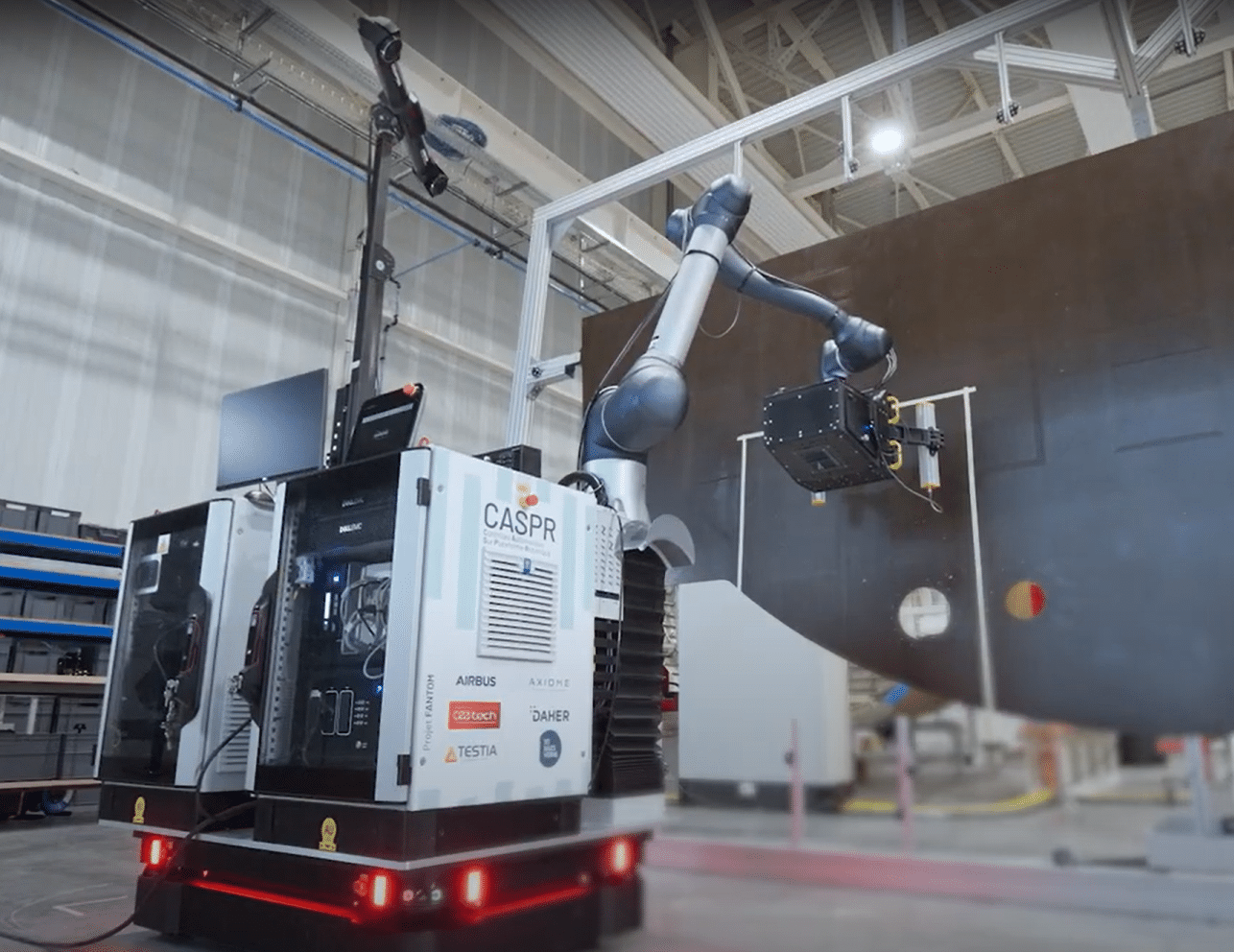 Automating the non-destructive testing of composite parts with an intelligent robotic platform
The FANTOM project is developing a flexible and automated non-destructive testing platform to make the inspection of composite parts more reliable and to support the digital continuity of production lines.
Explore the case study
Automating the non-destructive testing of composite parts with an intelligent robotic platform
The FANTOM project is developing a flexible and automated non-destructive testing platform to make the inspection of composite parts more reliable and to support the digital continuity of production lines.
Explore the case study
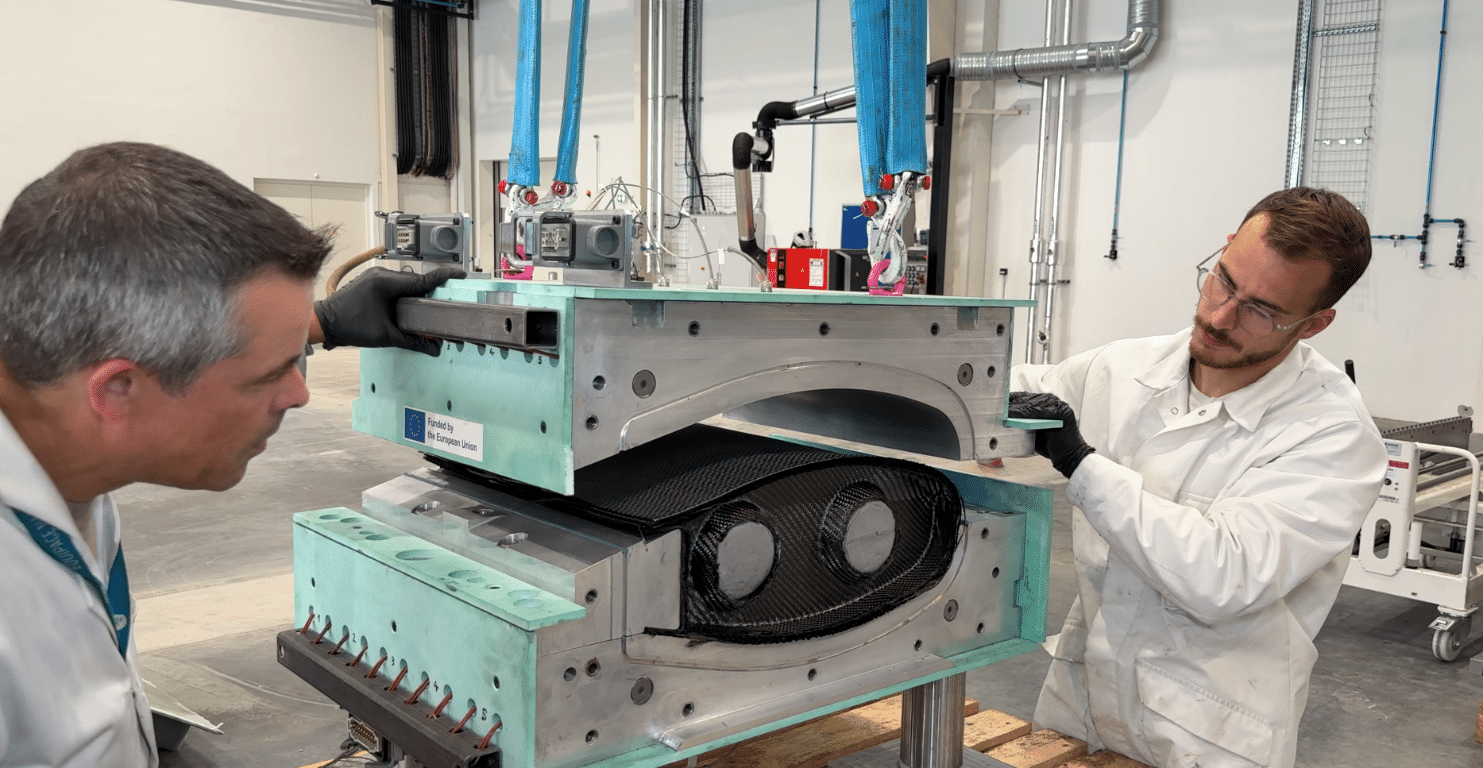 Reducing the environmental footprint of composites with bio-based and recycled materials
The European project SUSPENS has developed bio-based resins, recycled fibres and more sober manufacturing processes to design sustainable composites for the automotive, nautical and aeronautics industries.
Explore the case study
Reducing the environmental footprint of composites with bio-based and recycled materials
The European project SUSPENS has developed bio-based resins, recycled fibres and more sober manufacturing processes to design sustainable composites for the automotive, nautical and aeronautics industries.
Explore the case study
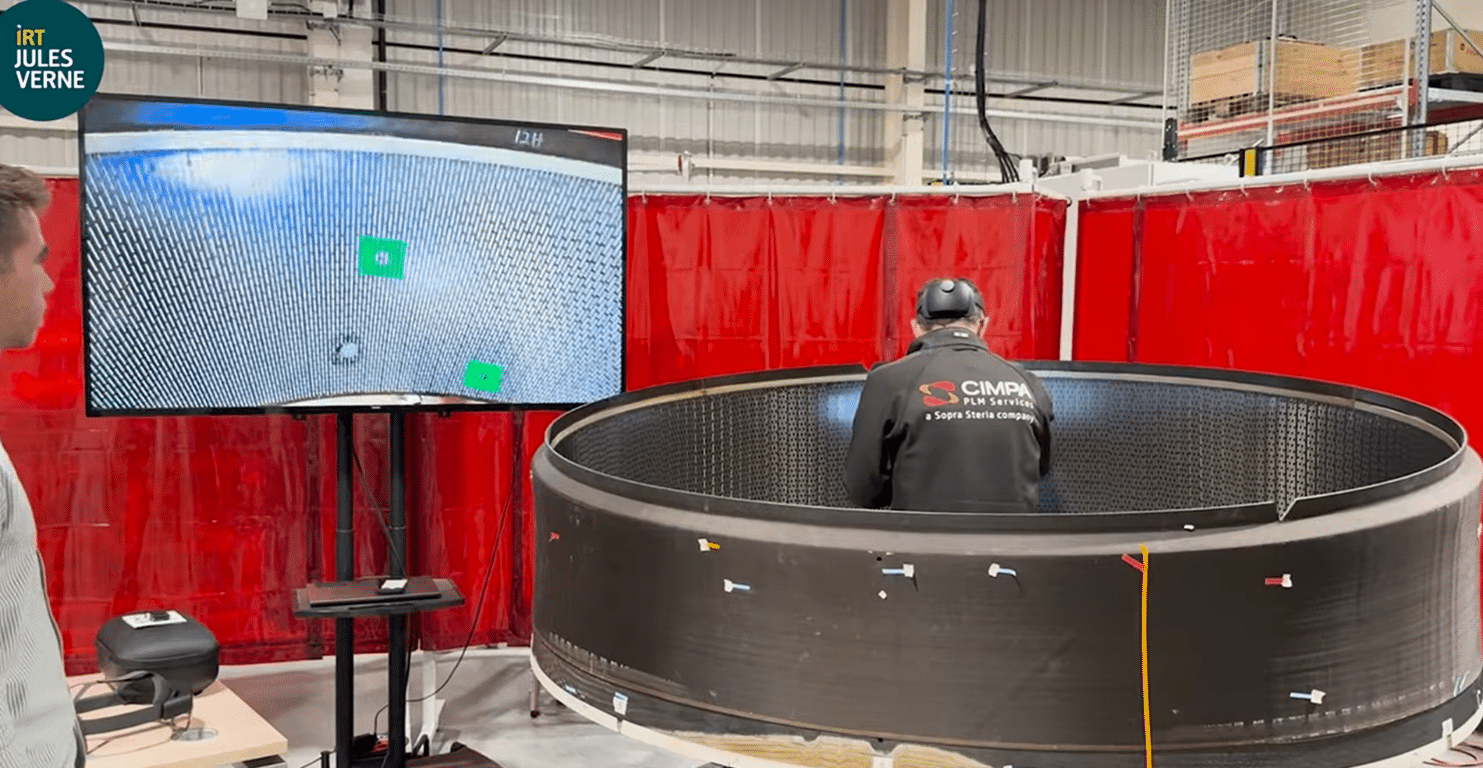 Automating the quality control of acoustic panels using artificial intelligence
For Airbus Atlantic, IRT Jules Verne has developed an automated visual inspection solution combining non-destructive testing and artificial intelligence to detect cosmetic defects in air inlet parts.
Explore the case study
Automating the quality control of acoustic panels using artificial intelligence
For Airbus Atlantic, IRT Jules Verne has developed an automated visual inspection solution combining non-destructive testing and artificial intelligence to detect cosmetic defects in air inlet parts.
Explore the case study