
Process monitoring, inspection and control
Develop non-destructive testing of critical parts and monitor manufacturing processes to reduce production costs.
To reduce inspection costs, IRT Jules Verne develops innovative technologies in process monitoring (PHM), non-destructive testing (NDT) and integrated health control (SHM) at its premises in Nantes.
The team also offers the digital tools essential for the automatic real-time analysis of the data collected, in particular by using artificial intelligence to predict the quality of parts, provide feedback on processes, assist the operator in his diagnosis and ensure the digital continuity of all operations in the production range. The solutions developed are then deployed in production and maintenance in the aeronautics, naval, energy and transport sectors.
Led by Nicolas Terrien since 2022, the team is made up of around fifteen experienced experts, PhDs, engineers and R&D technicians and uses cutting-edge technological platforms to carry out its research work.
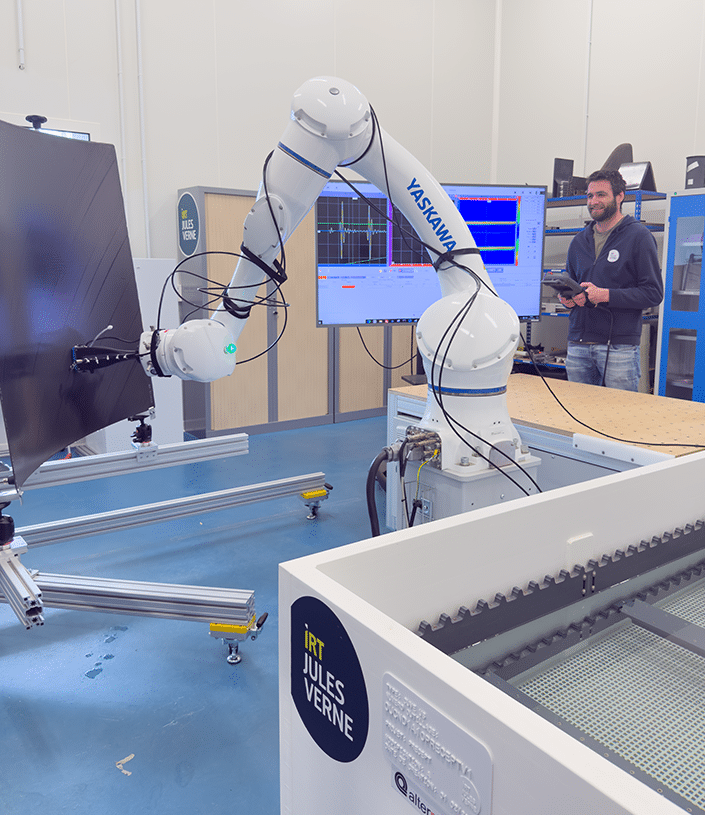
- Monitoring of manufacturing processes
- Automated and flexible non-destructive testing
- Automatic analysis of inspection and monitoring data
- Integrated health monitoring of structures
Addressing industrial challenges related to cost and quality through process monitoring, inspection, and control
Improving industrial competitiveness requires reducing production and operating costs, while maintaining quality and safety requirements. The Monitoring, Inspection and Process Control team responds to the following challenges:
- Reduce control costs in production and maintenance.
- Remove non-quality and avoid scrap.
- Accelerate process development and optimize the window of use.
- Detect drifts early and take into account product variability.
- Automate the inspection of complex and varied structures.
- Reduce analysis time and facilitate decision-making.
- Diagnose the state of health of structures to plan maintenance operations.
- Ensure the digital continuity of inspection operations.
Expertise in R&D for Monitoring, Inspection, and Process Control
- Restitution of results for decision support
- Performance Analysis
- Process & structure monitoring
- NDT Processes
- Robotization & Automation
- Effector design
- Multimodal data processing
- Artificial Intelligence
- Simulation of control methods
- Electronics & Embedded Processing
- Integration of health control sensors
To maximize the industrial impact of its R&D work, our team is building relationships with the professional and scientific community in the fields of monitoring, AI, and NDT.
Our R&D activities dedicated to monitoring, inspection and process control
Monitoring of manufacturing processes
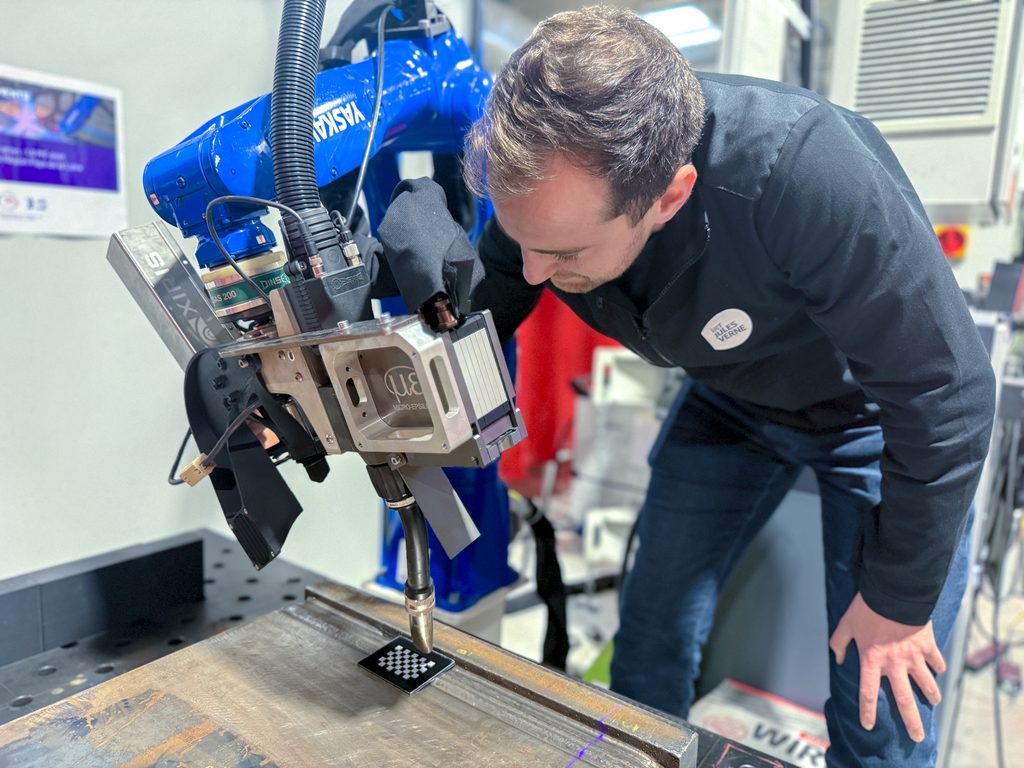
The technology team instrumented the processes to monitor their key parameters. The data acquired makes it possible to better understand the behavior of processes, to optimize their operating window and to detect drifts.
The ultimate objective is to predict the quality of products at the end of production in order to limit NDT operations and alert the operator in the event of drifts. The key parameters monitored can also feed into process feedback loops to prevent these process drifts and ensure production quality. The analysis of these key process parameters also makes it possible to detect process wear and therefore to plan maintenance operations in a preventive manner to optimize production shutdown phases.
Automated and flexible non-destructive testing
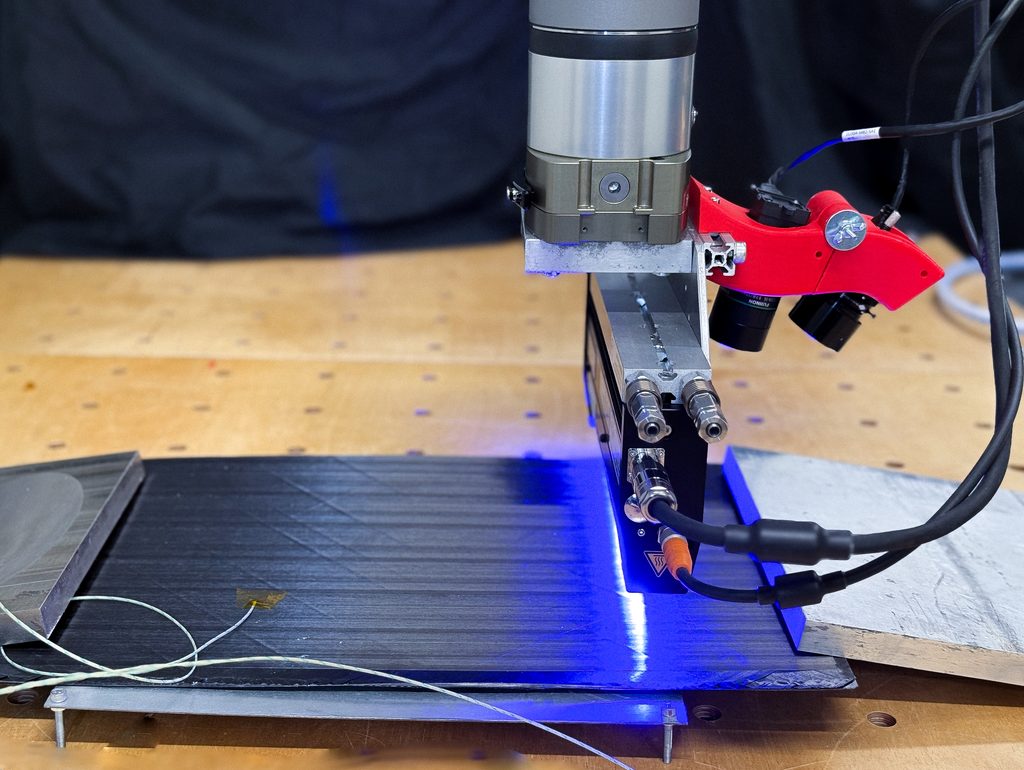
The second line of research focuses on the development and industrialization of automated, flexible NDT resources adapted to complex and varied structures.
The work focuses on the development of more efficient and productive means while seeking to reduce CAPEX and inspection costs.
They cover the choice of control method, the design of effectors, the automation of inspection data acquisition, the implementation of restitution tools and the qualification of production resources. The solutions include ultrasound, airborne ultrasound, vision, active infrared thermography, eddy currents and 3D dimensional inspection.
Automatic analysis of inspection and monitoring data
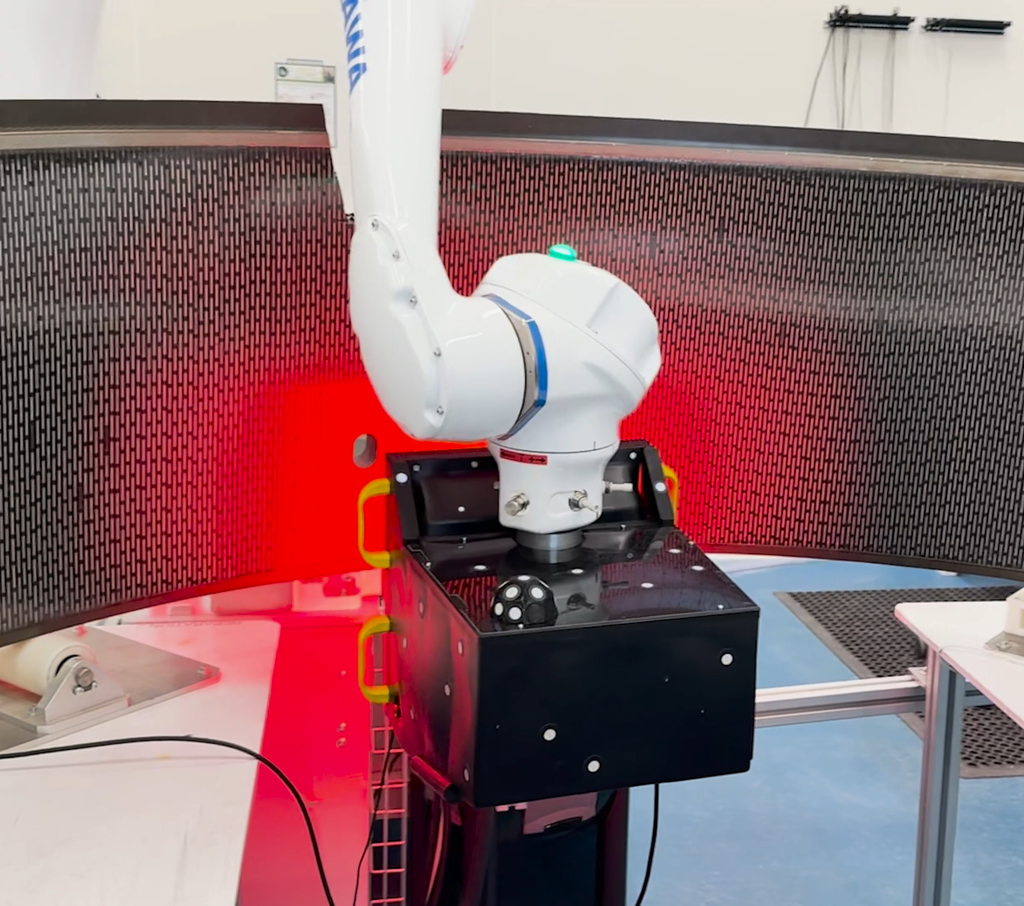
IRT Jules Verne also develops solutions for automatic analysis of multimodal data from the various means of inspection (ultrasound, vision, infrared thermography, etc.) and monitoring (process sensors: temperature, pressure, heat flow, etc.).
The work focuses in particular on the detection, location and automatic characterization of anomalies on structures.
Artificial intelligence makes it possible, for example, to assist operators, reduce analysis times and improve the traceability of decisions.
Integrated health monitoring of structures
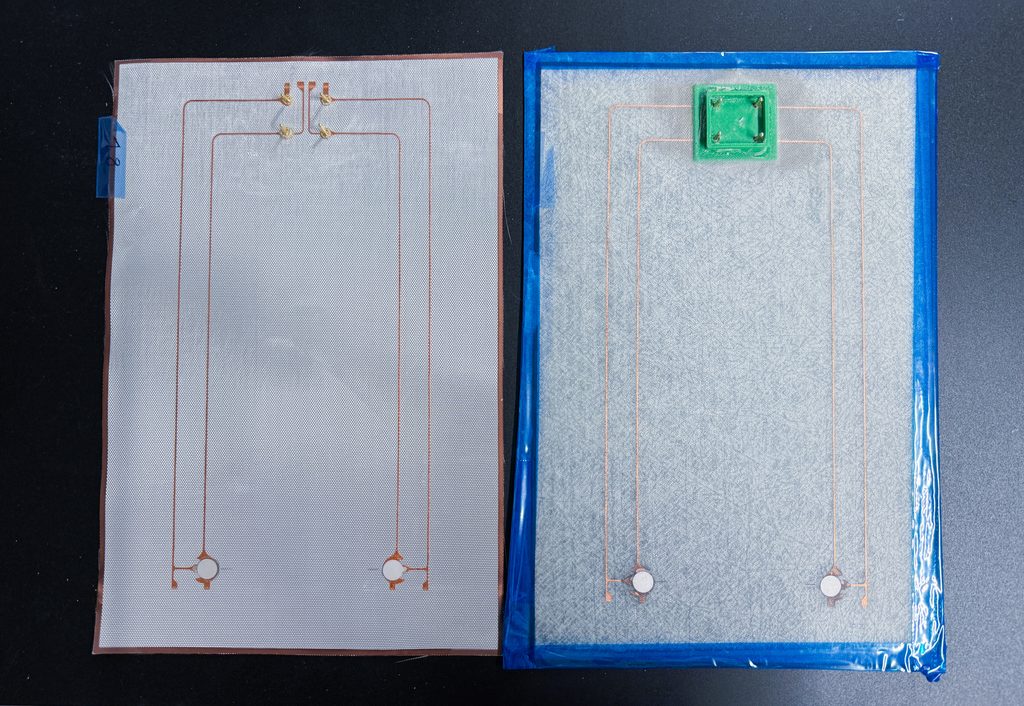
Integrated health monitoring, or SHM (structural health monitoring), consists of integrating sensors into structures or equipment to diagnose their state of health during use. This approach makes it possible to anticipate maintenance operations and thus optimize operating conditions.
At IRT Jules Verne, the team in charge of SHM selects the measurement technologies adapted to the desired defects and the operating constraints of the equipment or structures. It also develops the processes for integrating the sensors and processes the data collected to assess their state of health. The results obtained contribute to the estimation of the residual life of the instrumented equipment and structures.
Our main technology platforms for monitoring, inspection and process control
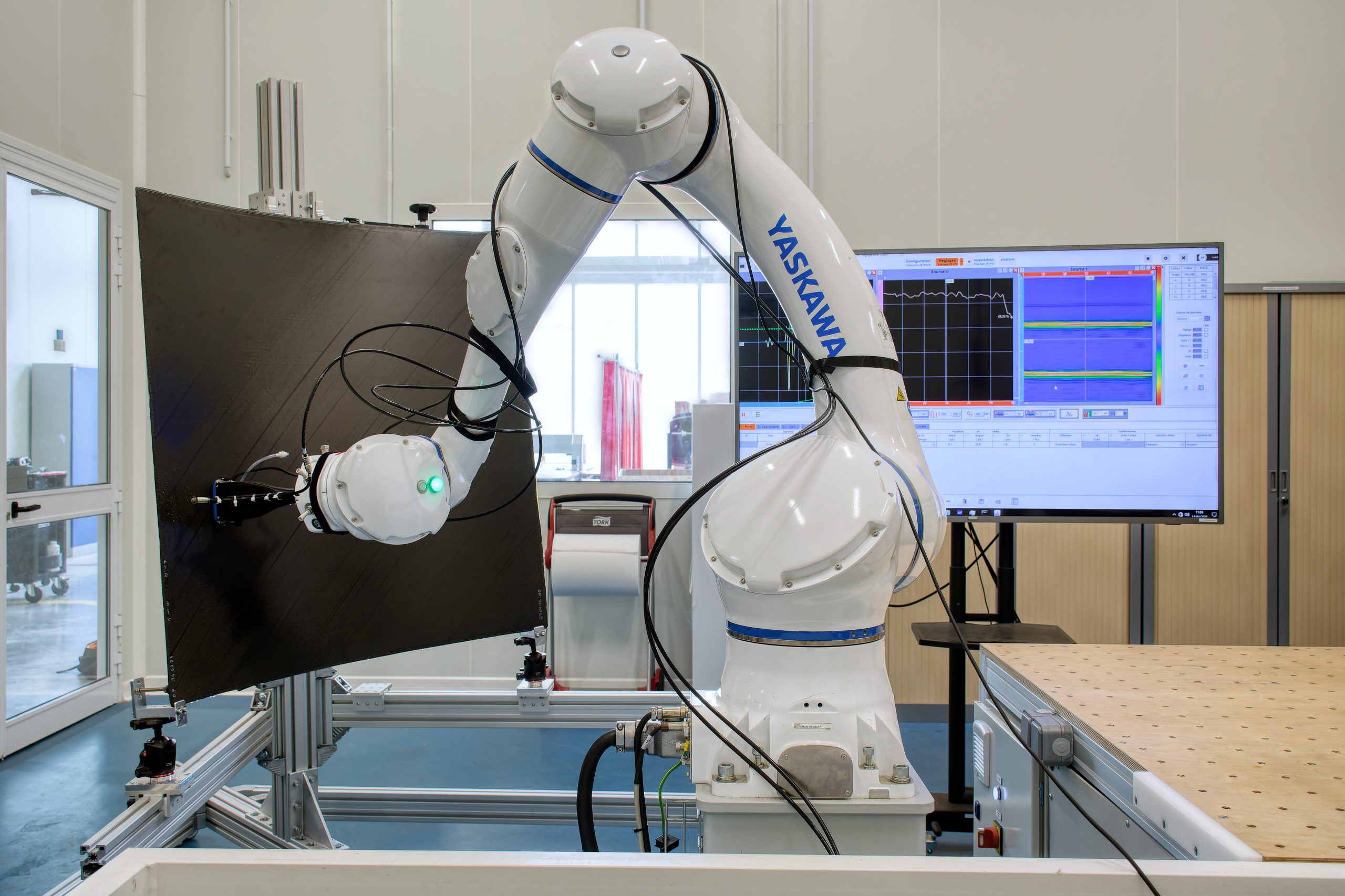 Multi-technique NDT Cobot Cell
Discover the equipment
Multi-technique NDT Cobot Cell
Discover the equipment
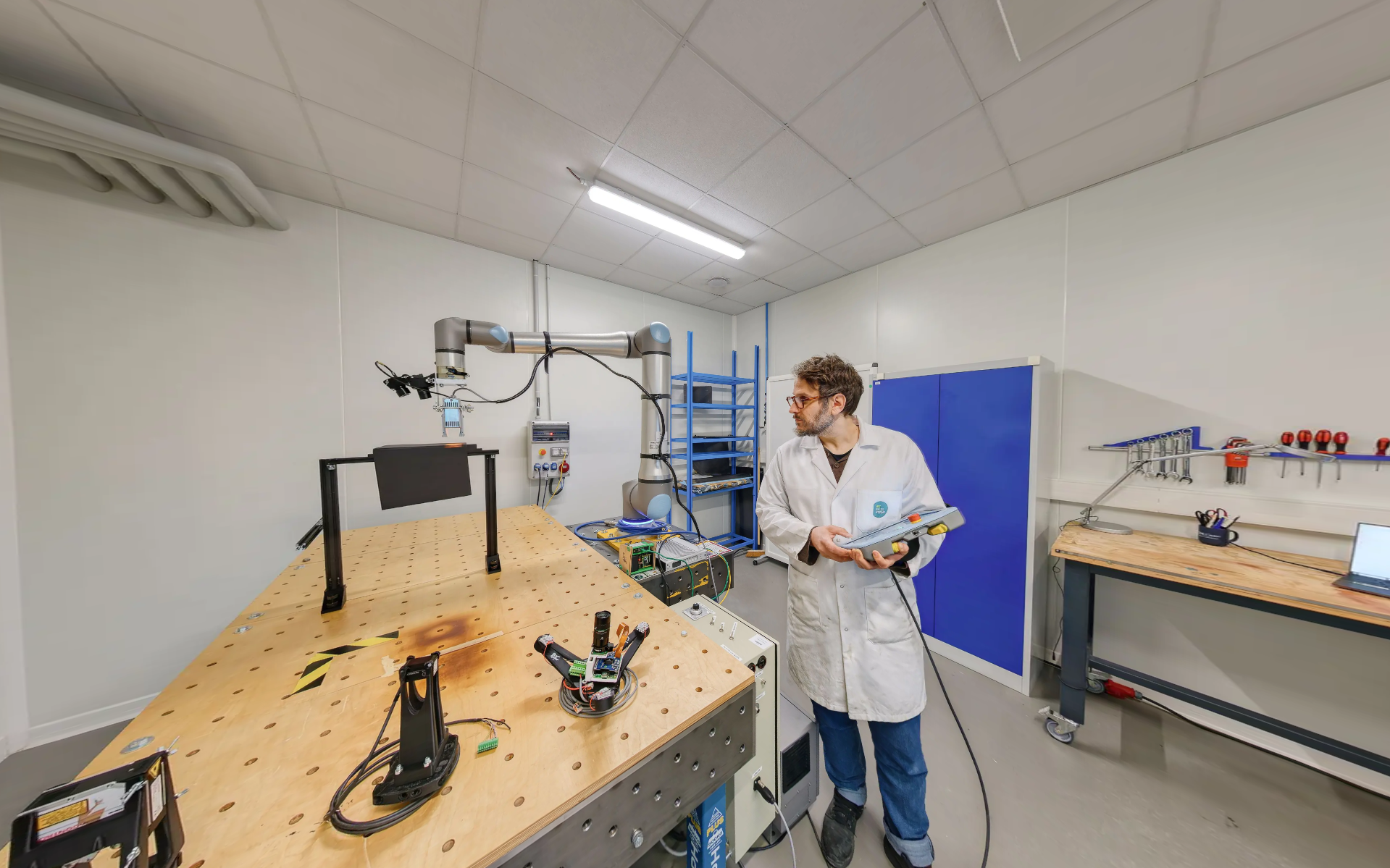 Non-contact NDT platform featuring active infrared thermography, 2D and 3D vision, and laser profilometry
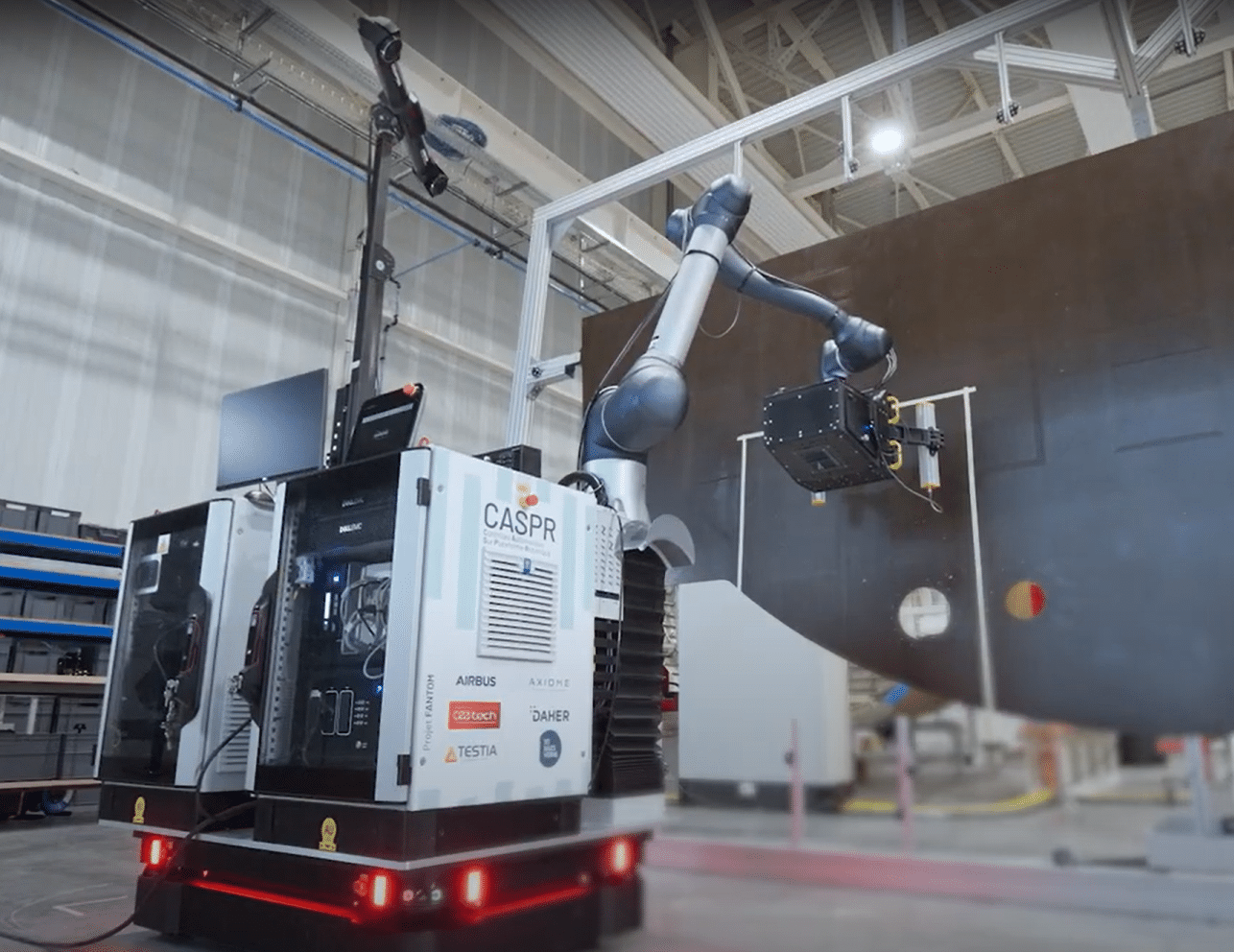 Mobile, autonomous, and robotic NDT platform
- Data resources
- Simulation and analysis software
- In-production process parameter acquisition platform
- Composite manufacturing methods for integrating SHM systems on the surface and within the core of structures
- Integrated Health Monitoring (SHM) Platform: Acousto-ultrasonic sensors, optical fibers, acoustic emission equipment, strain gauges, QRS sensors…
Learn more about our non-destructive testing capabilities
Within the IRT Jules Verne's technology halls, three robotic platforms are dedicated to non-destructive testing:
- The multi-technical NDT cobotized cell enables ultrasonic, eddy current and vision inspections. It incorporates an immersion tank for ultrasonic testing and a workspace suitable for localized immersion or non-contact techniques.
- The non-contact NDT platform integrates active infrared thermography, 2D and 3D vision, and laser profilometry technologies.
- The mobile NDT platform is autonomous and cobotized, combining an AGV, a collaborative robotic arm and interchangeable end-effectors for ultrasonic, vision and 3D scanning inspection.
Thèse PERFORM en cours sur le monitoring, l’inspection et le contrôle procédés.
-
 Kyu-Taek KIM LAUM, SPI, Le Mans Université
Visual Optical Experimental Methods for the Detection and Characterization of Defects in Metallic and Composite Structures
Examples of R&D projects focused on monitoring, inspection, and process control
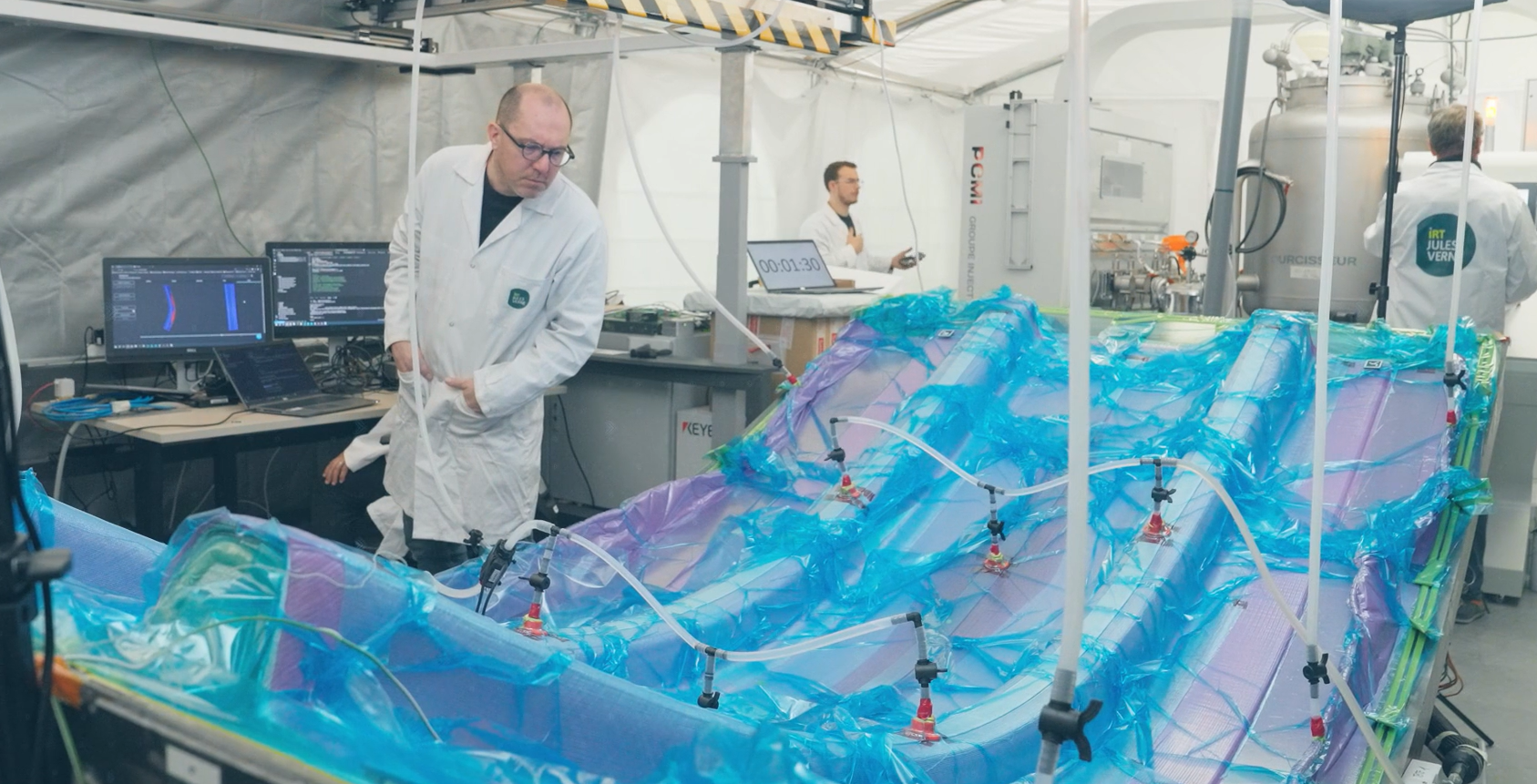 Making composite processes more reliable thanks to real-time monitoring
The Monocle project is developing an innovative real-time monitoring and decision support solution to secure the infusion processes of large composite parts.
Explore the case study
Automating the non-destructive testing of composite parts with an intelligent robotic platform
The FANTOM project is developing a flexible and automated non-destructive testing platform to make the inspection of composite parts more reliable and to support the digital continuity of production lines.
Explore the case study
Making composite processes more reliable thanks to real-time monitoring
The Monocle project is developing an innovative real-time monitoring and decision support solution to secure the infusion processes of large composite parts.
Explore the case study
Automating the non-destructive testing of composite parts with an intelligent robotic platform
The FANTOM project is developing a flexible and automated non-destructive testing platform to make the inspection of composite parts more reliable and to support the digital continuity of production lines.
Explore the case study
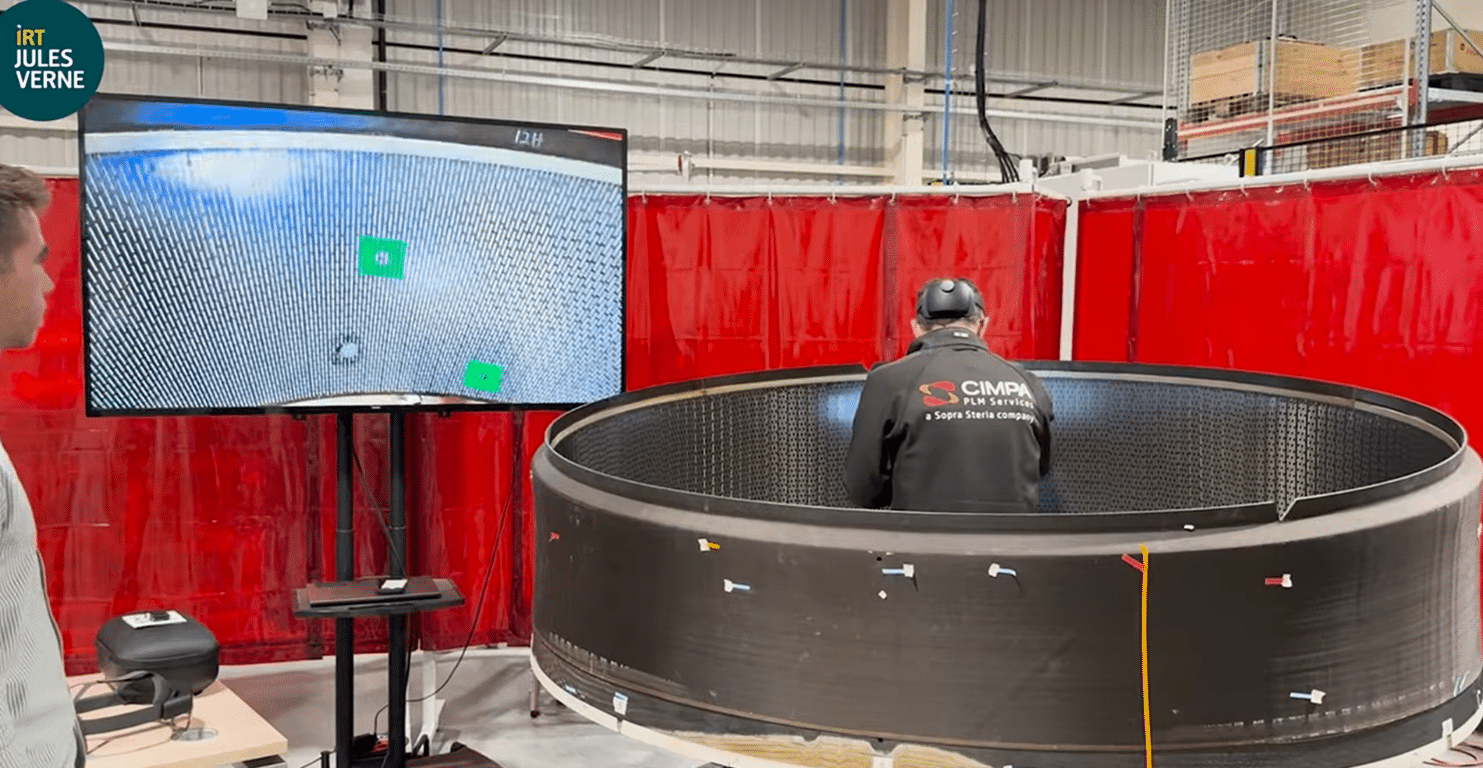 Automating the quality control of acoustic panels using artificial intelligence
For Airbus Atlantic, IRT Jules Verne has developed an automated visual inspection solution combining non-destructive testing and artificial intelligence to detect cosmetic defects in air inlet parts.
Explore the case study
Automating the quality control of acoustic panels using artificial intelligence
For Airbus Atlantic, IRT Jules Verne has developed an automated visual inspection solution combining non-destructive testing and artificial intelligence to detect cosmetic defects in air inlet parts.
Explore the case study

With my team, we are converging NDT and monitoring to meet a concrete industrial challenge: reducing control costs in production and maintenance. Our ambition is to develop generic solutions adapted to complex structures and processes, capable of predicting the quality of parts, targeting inspections and automating measurements. It is this technological breakthrough that we are collectively supporting: to sustainably reduce recurring costs and CAPEX, without compromising production capacities.
They trust us







Our other areas of technological expertise
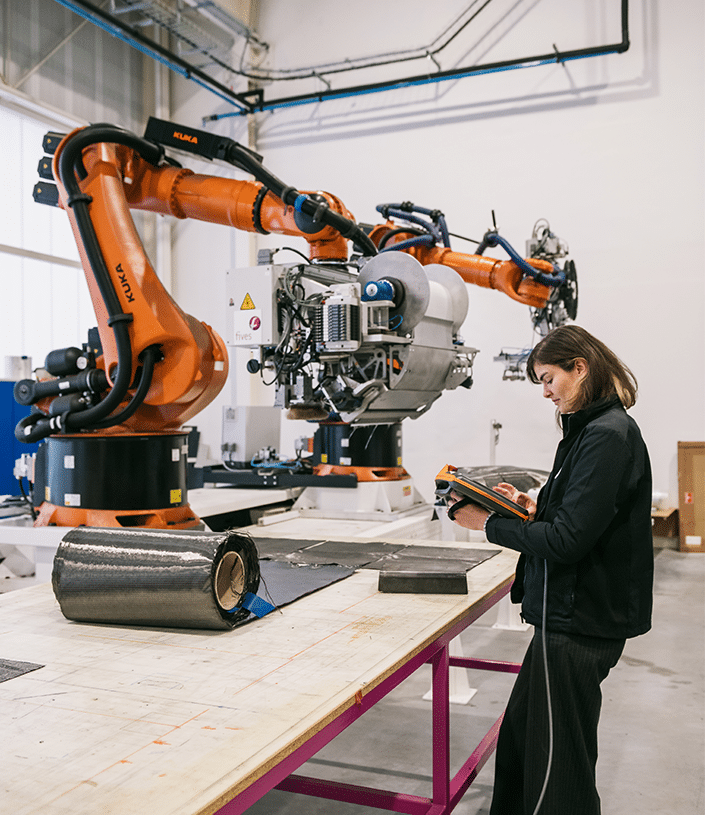
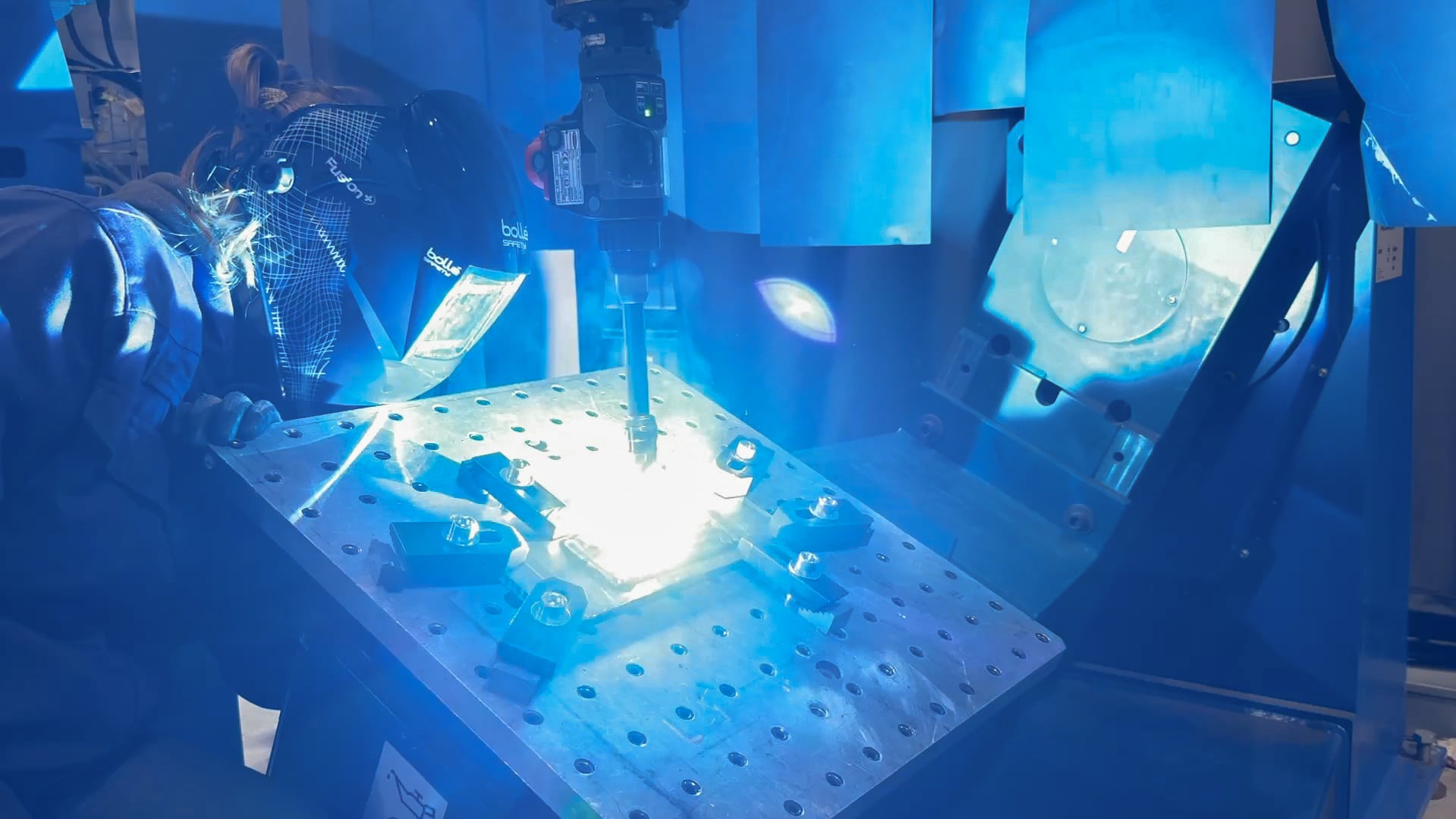
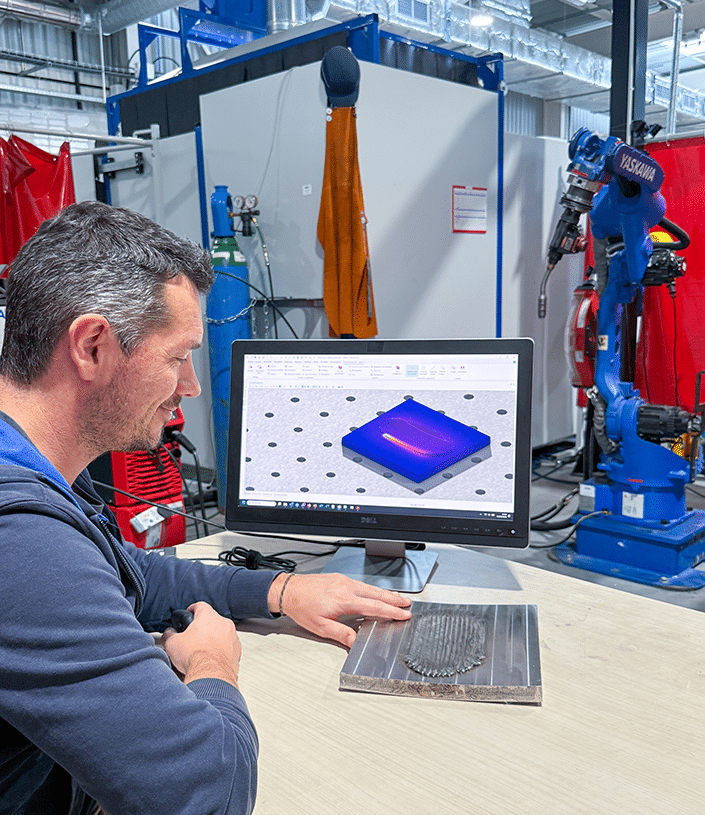
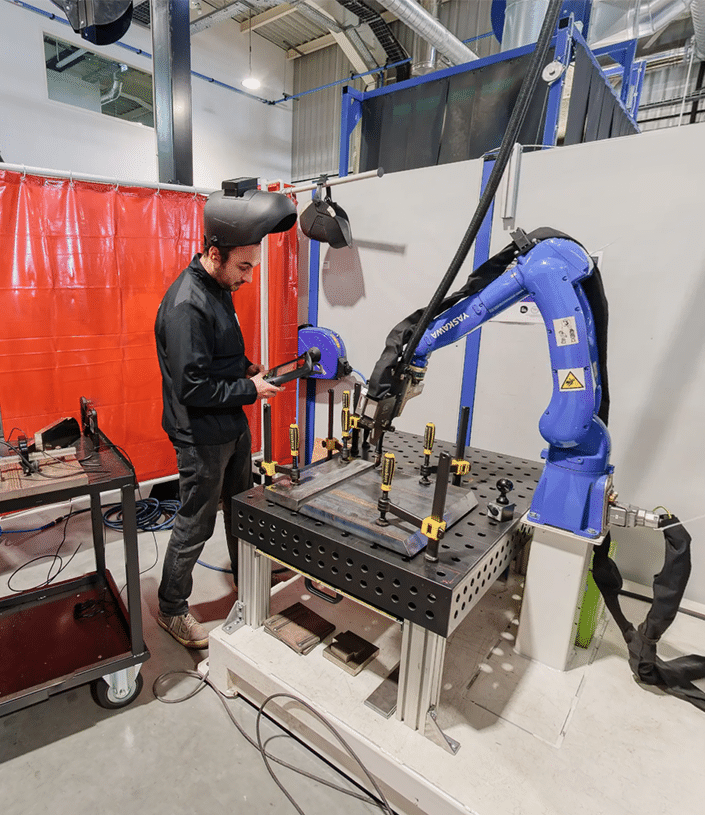
- Composites Improve the performance (cost and throughput) of manufacturing processes for complex, lightweight and large structures.
- Metallic Industrialize additive manufacturing technologies (DED-fil and AFSD) and automate welding assembly (Arc and FSW) by improving productivity and quality.
- Modelling & Simulation Providing reliable data to facilitate decision-making and reduce the time and cost of process development
- Robotics & Cobotics Automating processes and optimising the deployment of robots in complex industrial environments