

Robotics & Cobotics
The flexible and smart industry is taking shape in Nantes, at IRT Jules Verne. Since 2012, our technology team specializing in industrial robotics and cobotics has been developing solutions tailored to the production challenges faced by French manufacturers. These innovations take shape through national and European collaborative research projects and research services.
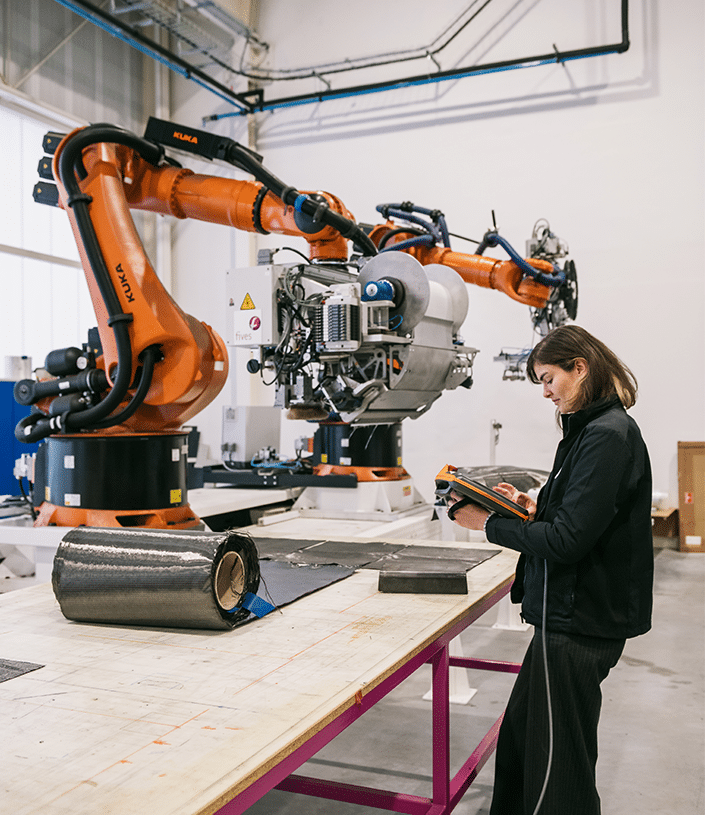
Our goal: to automate composite and metalworking processes and optimize the deployment of robots in complex industrial environments.
Comprising some twenty experts, engineers, technicians, and doctoral students, the team is led by Sébastien Rubrecht and has access to cutting-edge, proprietary resources, delivering robust and flexible robotic and cobotic solutions. These solutions are designed for rapid industrialization and address the challenges of flexibility, performance, precision, and ergonomics.
At IRT Jules Verne, R&D in robotics and cobotics works in synergy with the institute’s other areas of technological expertise, which specialize in metalworking processes, composite processes, simulation, and process monitoring.
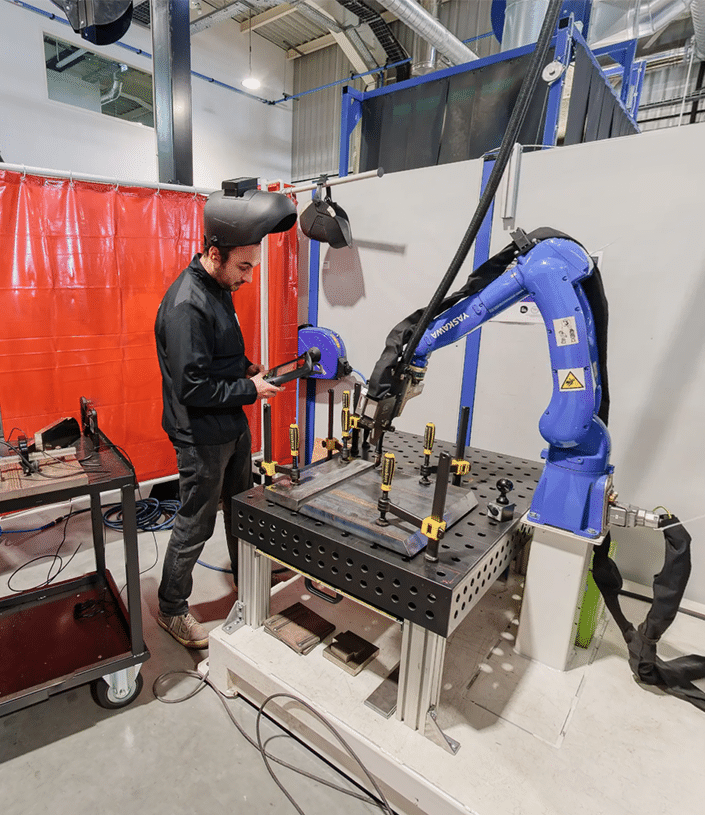
- Automation of composite and metal fabrication processes
- Automated programming
- Precision compliant robotics
- Vision-based control
- Parallel cable robotics
- Localization & navigation of collaborative mobile robots
- Digital factory: diagnostics and optimization of production flows
Deploying flexible, high-performance robotics in complex industrial environments.
Manufacturers must enhance their competitiveness whilst meeting a significant need for flexibility: diversity in products, processes and production volumes.
As the key to a high-performing industry, robotisation must adapt to variations in parts and changes in production runs, whilst meeting the demands for throughput and robustness in production environments.
Another key challenge lies in the successful, rapid and seamless integration of robotic innovations into the factory: adapting to existing equipment, processes and production flows whilst taking into account ergonomic constraints and interaction with operators.
The robotics and cobotics team at IRT Jules Verne focuses its activities on the following challenges:
- Enhancing line flexibility to cater for high-variety, low-volume production.
- Automating complex industrial processes using tailored and robust robotic systems.
- Reducing deployment time and facilitating the integration of robots into existing production environments.
- Improving the competitiveness and performance of production facilities, in particular by increasing output rates and optimising workflows.
- Improving workstation ergonomics and collaboration between operators and robots.
Expertise in R&D in industrial robotics and cobotics
- Robotic perception, surface reconstruction, part localisation
- CAO analysis, automated robot path programming
- Metrology, calibration and robotic precision
- Compliant robotics, force control and adapted tooling
- Modelling, simulation and optimisation of production flows
- Visual servo control, sensor data fusion and real-time control
To maximize the industrial impact of its R&D work, our team is building relationships with the robotics professional and scientific community.
Our technological building blocks dedicated to industrial robotics and cobotics
The technology roadmap of the robotics and cobotics team is aligned with the challenges facing French industrial sectors such as aerospace, shipbuilding, nuclear power and defence.
R&D efforts focus on five areas:
- the automation of complex processes,
- automatic programming,
- precision compliant robotics,
- visual servoing
- cable-driven parallel robots
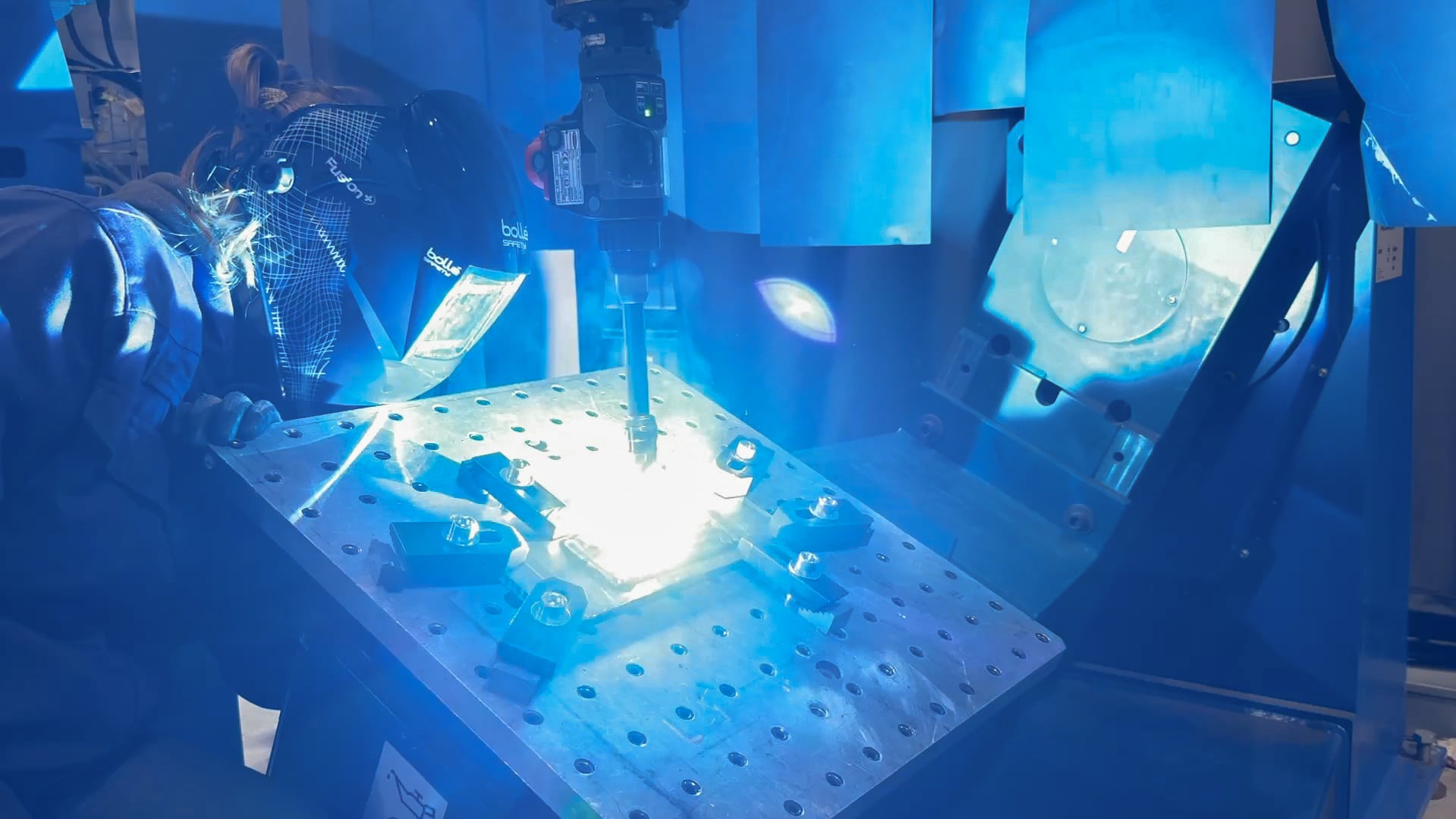
Automation of composite and metalworking processes
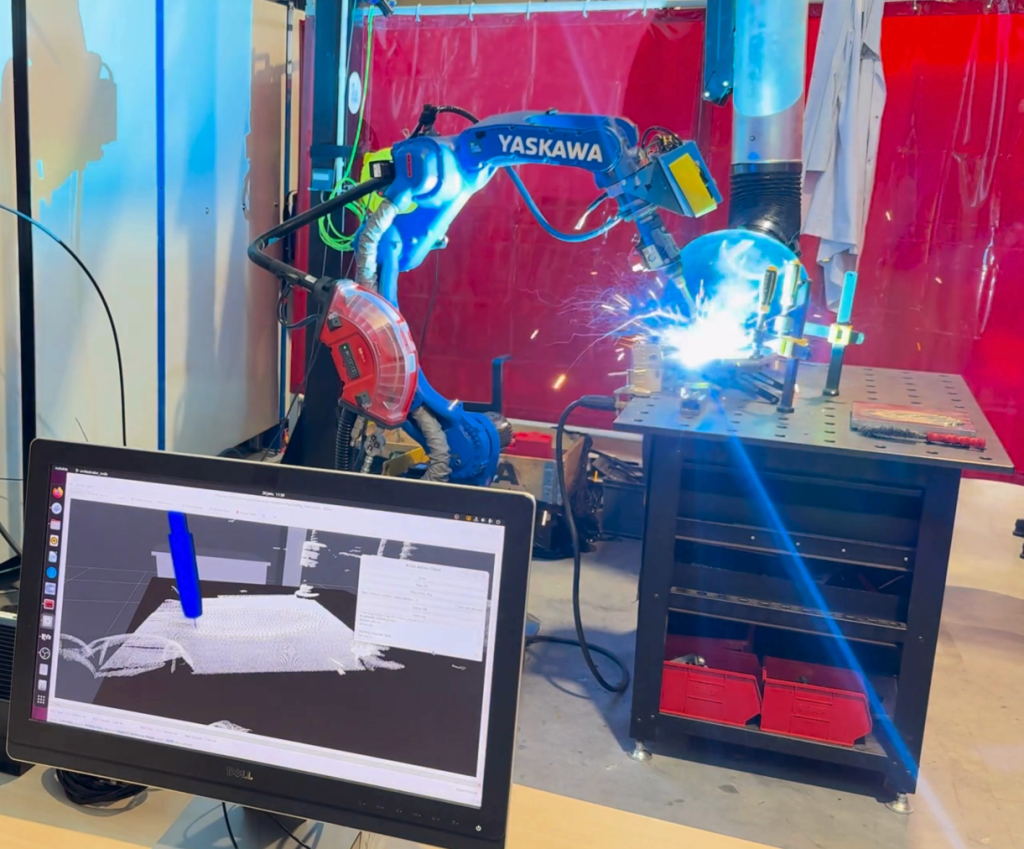
To automate composite and metalworking processes, our work combines robotisation with process control.
It takes into account variations in parts, materials and production conditions. Real-time control solutions enable, in particular, the adjustment of process parameters and the automatic correction of behavioural deviations, thereby ensuring quality despite industrial uncertainties. The handling of deformable objects is another area of research, involving specialised tooling, deformation models, perception systems and force control.
Automatic programming
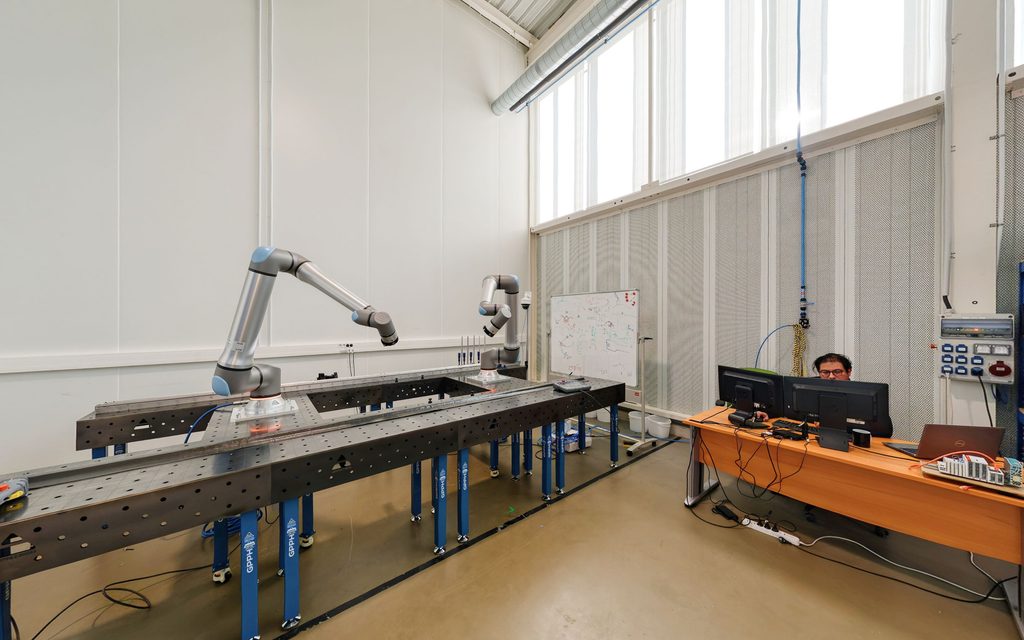
Automatic programming facilitates the deployment of robots for high-variety, low-volume production runs.
In this context, the team is developing methods to analyse CAD data, reconstruct surfaces and locate parts. This information is used to generate tool paths and robot trajectories. The trajectories take into account the robot’s kinematics, the process and the working environment.
Precision compliant robotics
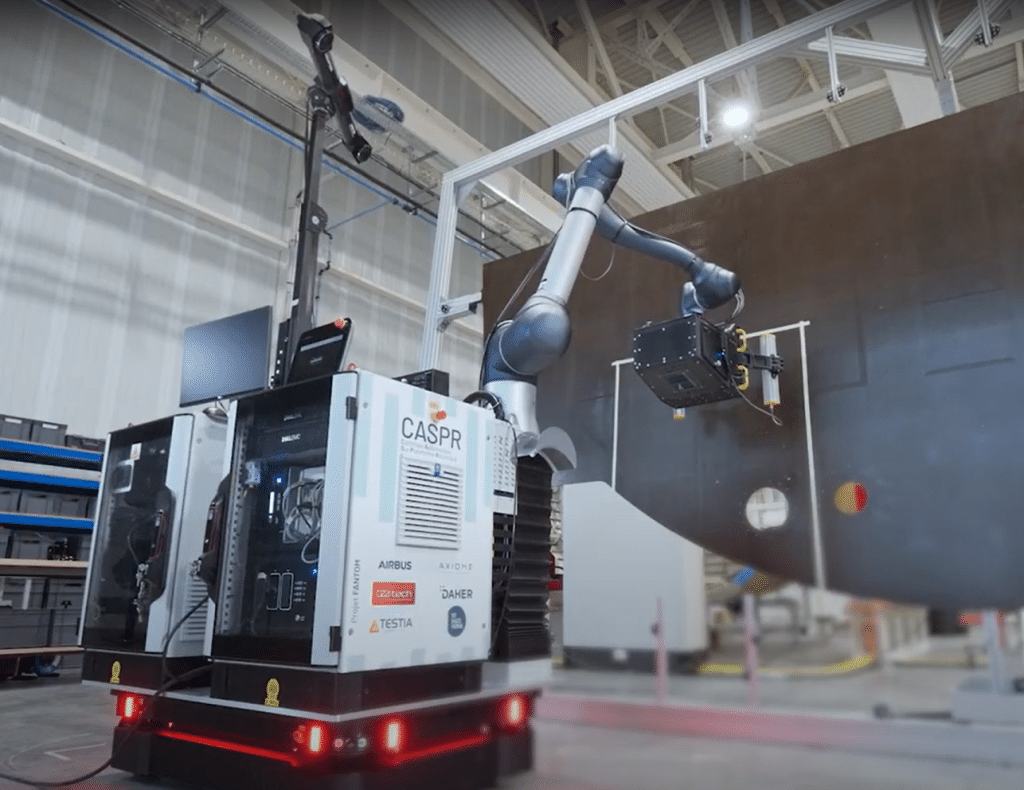
How can the accuracy of robotic systems be assessed and improved over large areas?
The solutions developed at IRT Jules Verne focus on the development of methods, control systems and tools that meet the cost and time requirements of industrial environments. The research utilises metrological measurement techniques to control a robotic system, as well as the modelling and identification of robotic systems for their control and the generation of trajectories.
Visual servoing
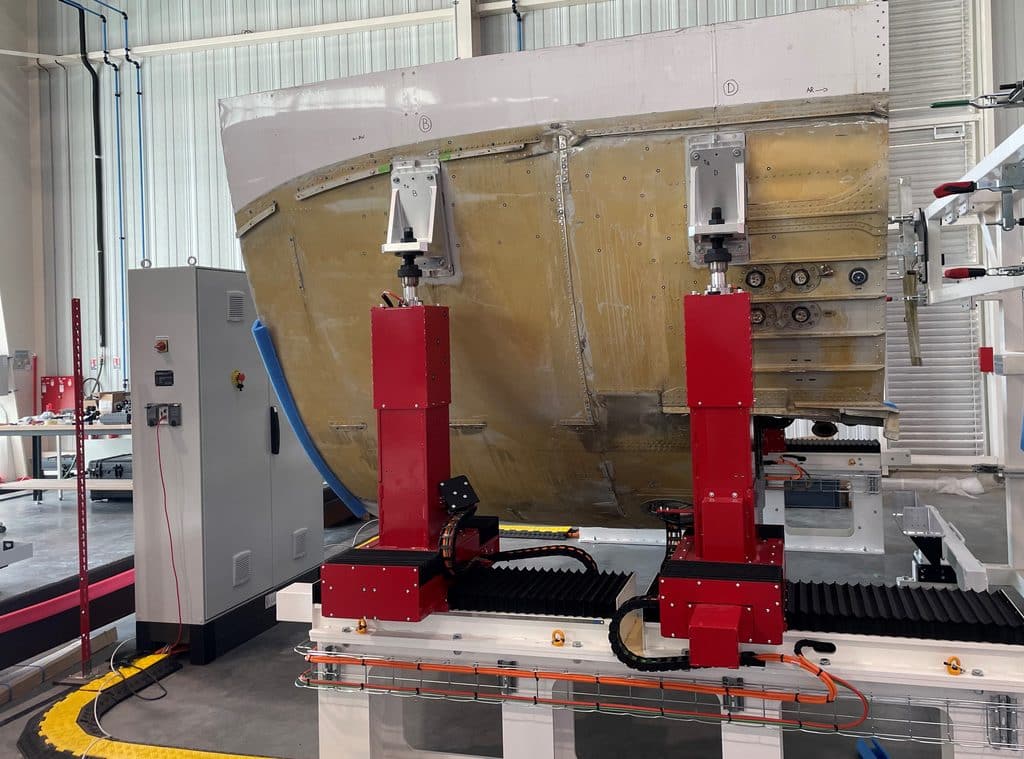
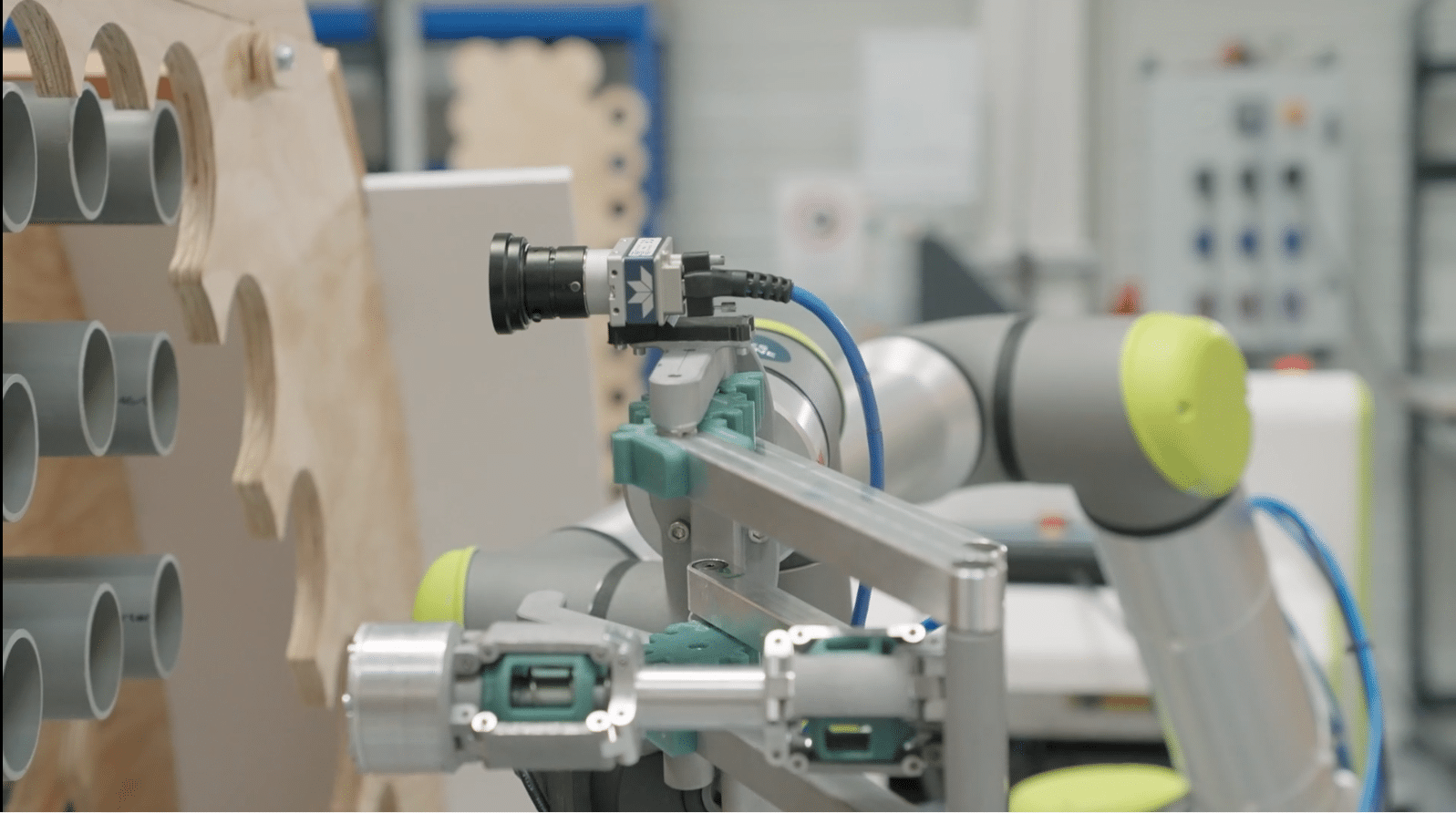
Visual servoing, or vision-based control, involves positioning two objects relative to one another with precision and without collision, using data from visual sensors.
The technological solutions developed detect known geometries or complex three-dimensional shapes to adjust robot movements in real time using local measurements. For example, visual guidance is a relevant technological solution to the challenges of large-scale assembly in the aerospace and shipbuilding industries, helping to compensate for the flexibility of parts and tooling.
Cable-driven parallel robots
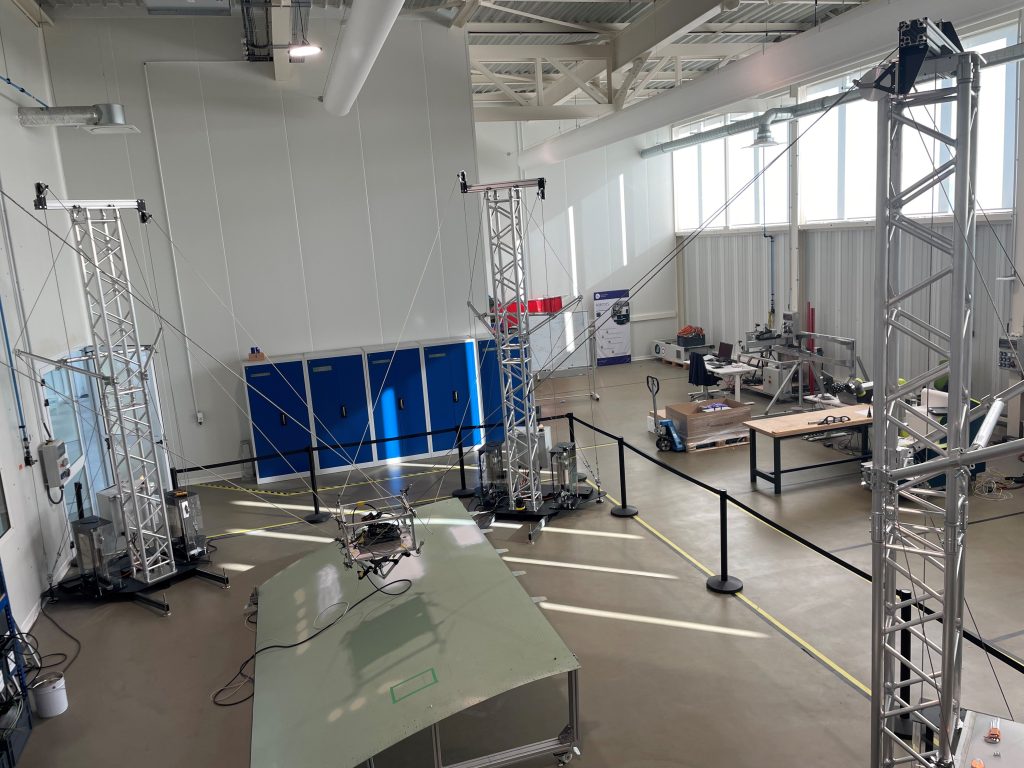
Parallel cable-guided robots is an innovative XXL technology that enables tools to be moved across large workspaces.
With a parallel cable-guided robotics platform that is the first of its kind in France, the IRT Jules Verne is working, amongst other things, on the automation of tedious or dangerous tasks within large workspaces and in complex environments. Applications include the construction and civil engineering sectors, as well as the nuclear industry.
Our main equipment dedicated to industrial robotics and cobotics
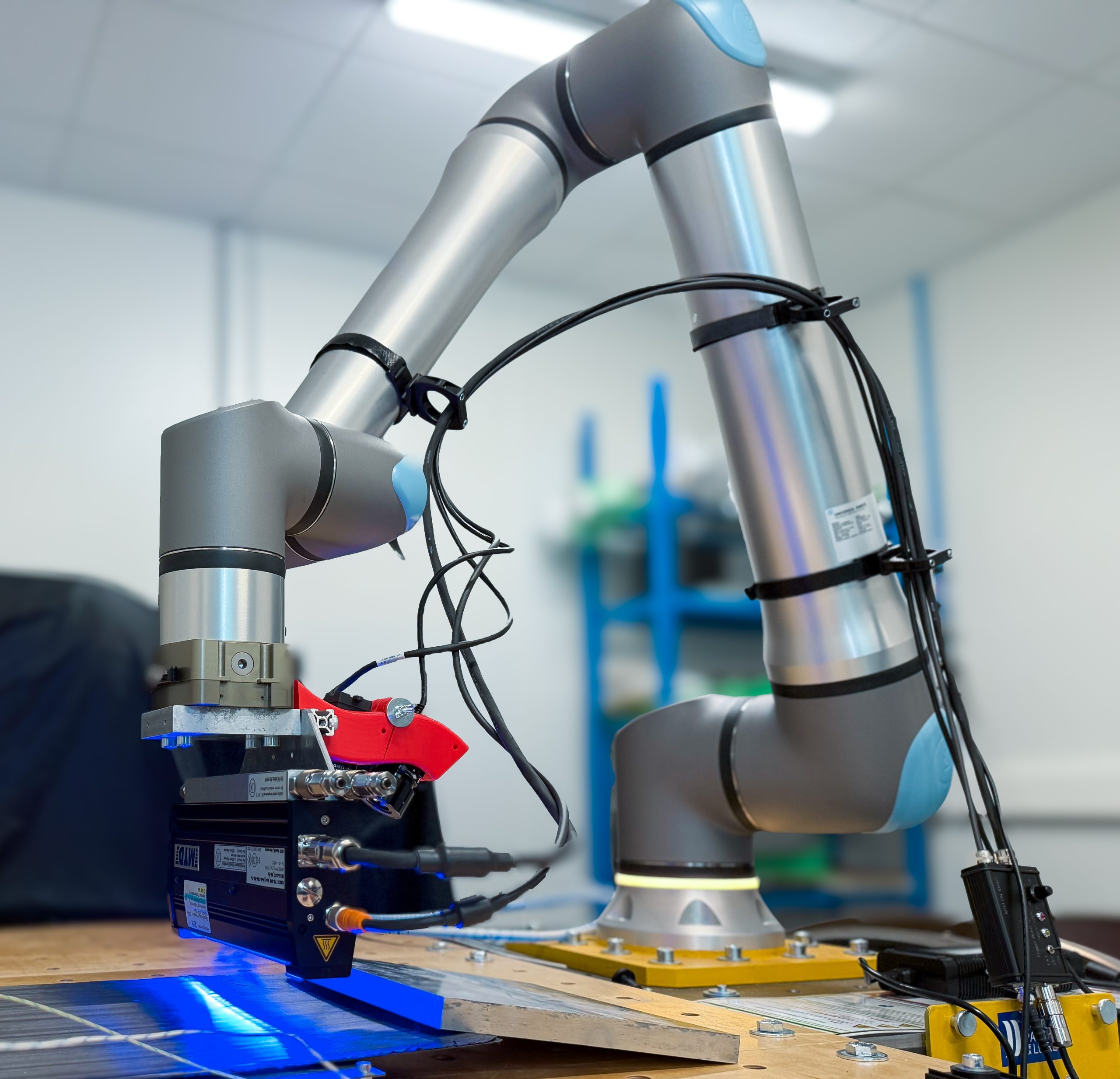 IRT Jules Verne's robotics workshops cover an area of 300 m²
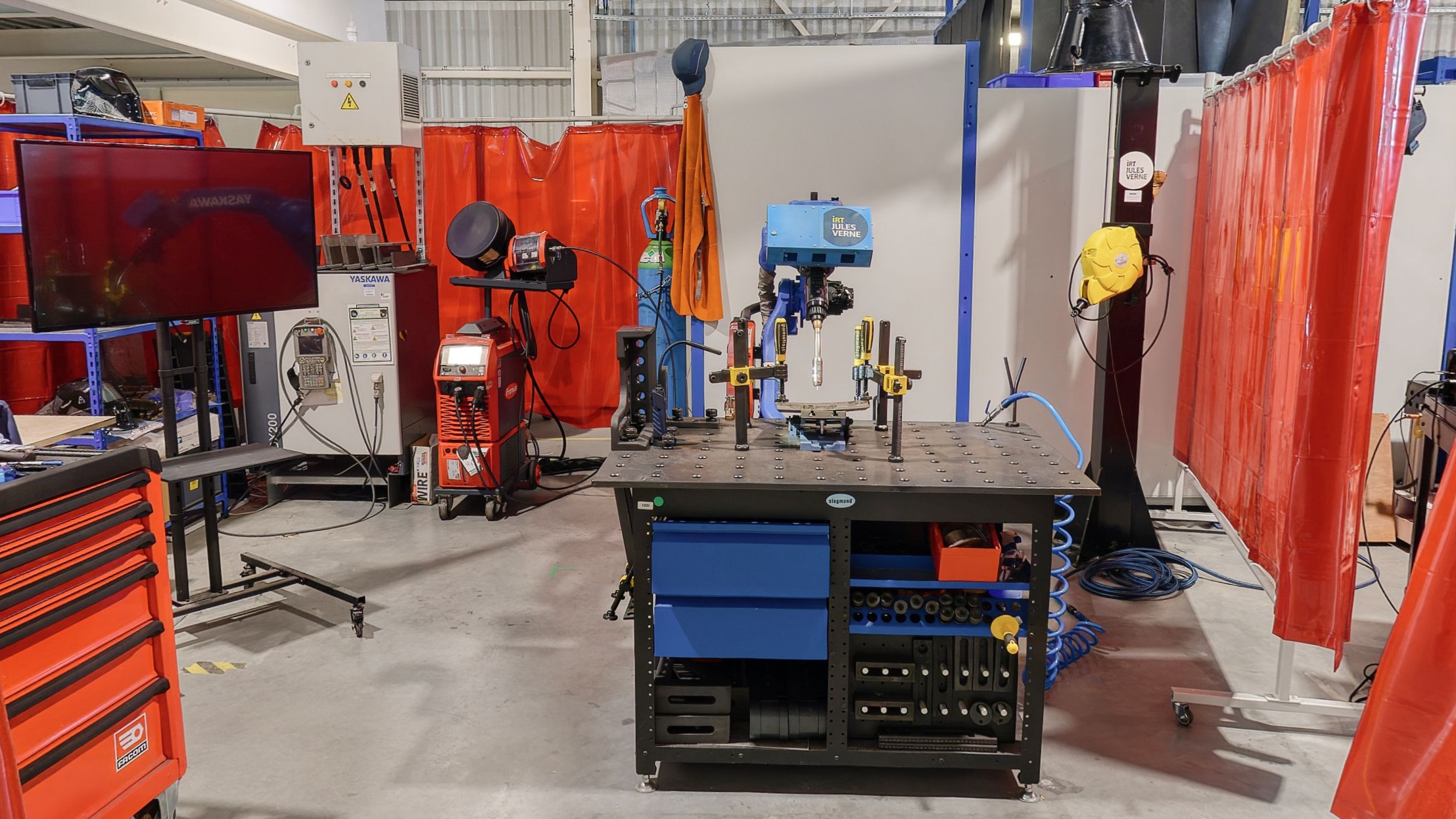 They house 28 industrial robots and cobots
- Cobotic arms
- Welding robots
- Omnidirectional mobile bases
- 3D measurement solutions
- Parallel cable robotics
Take a virtual tour of our technology platforms
Ongoing theses on robotics and cobotics
-
 Johan BERRIER GONZALEZ Matisse, INRIA, Université de Rennes
Shaping carbon fibre fabrics using vision-based control
-
 Mohamed Abdelmalek BOUCHERIKA PHF, LAMIH, Université Polytechnique Hauts de France
Robust shaping of deformable objects using visual guidance in the form of a quasi-LPV polytopic model
Examples of R&D projects focused on industrial robotics and cobotics
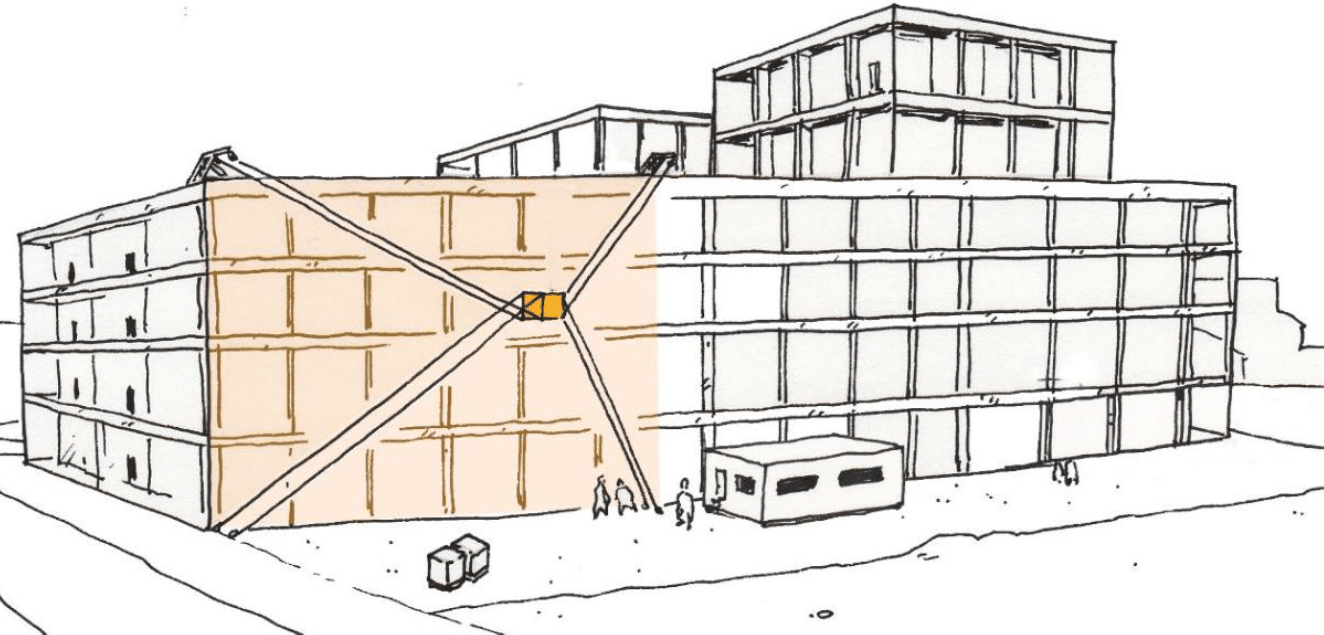 Developing Cable-Driven Parallel Robots to Automate Operations in Large Industrial Spaces
The TITANBOT project is developing a new generation of Cable-Driven Parallel robots to automate complex tasks in the construction, nuclear and industrial sectors.
Explore the case study
Developing Cable-Driven Parallel Robots to Automate Operations in Large Industrial Spaces
The TITANBOT project is developing a new generation of Cable-Driven Parallel robots to automate complex tasks in the construction, nuclear and industrial sectors.
Explore the case study
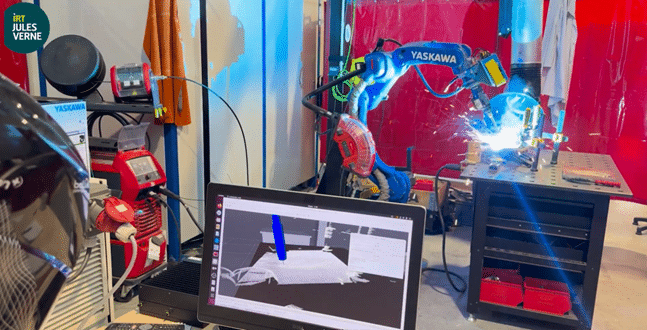 Developing a robotic welding strategy for the nuclear sector
For Framatome, IRT Jules Verne mobilized its robotics and metal processes teams to evaluate the robotic WAAM technology for stainless steel hardfacing, combined with 3D scanning detection.
Explore the case study
Developing a robotic welding strategy for the nuclear sector
For Framatome, IRT Jules Verne mobilized its robotics and metal processes teams to evaluate the robotic WAAM technology for stainless steel hardfacing, combined with 3D scanning detection.
Explore the case study
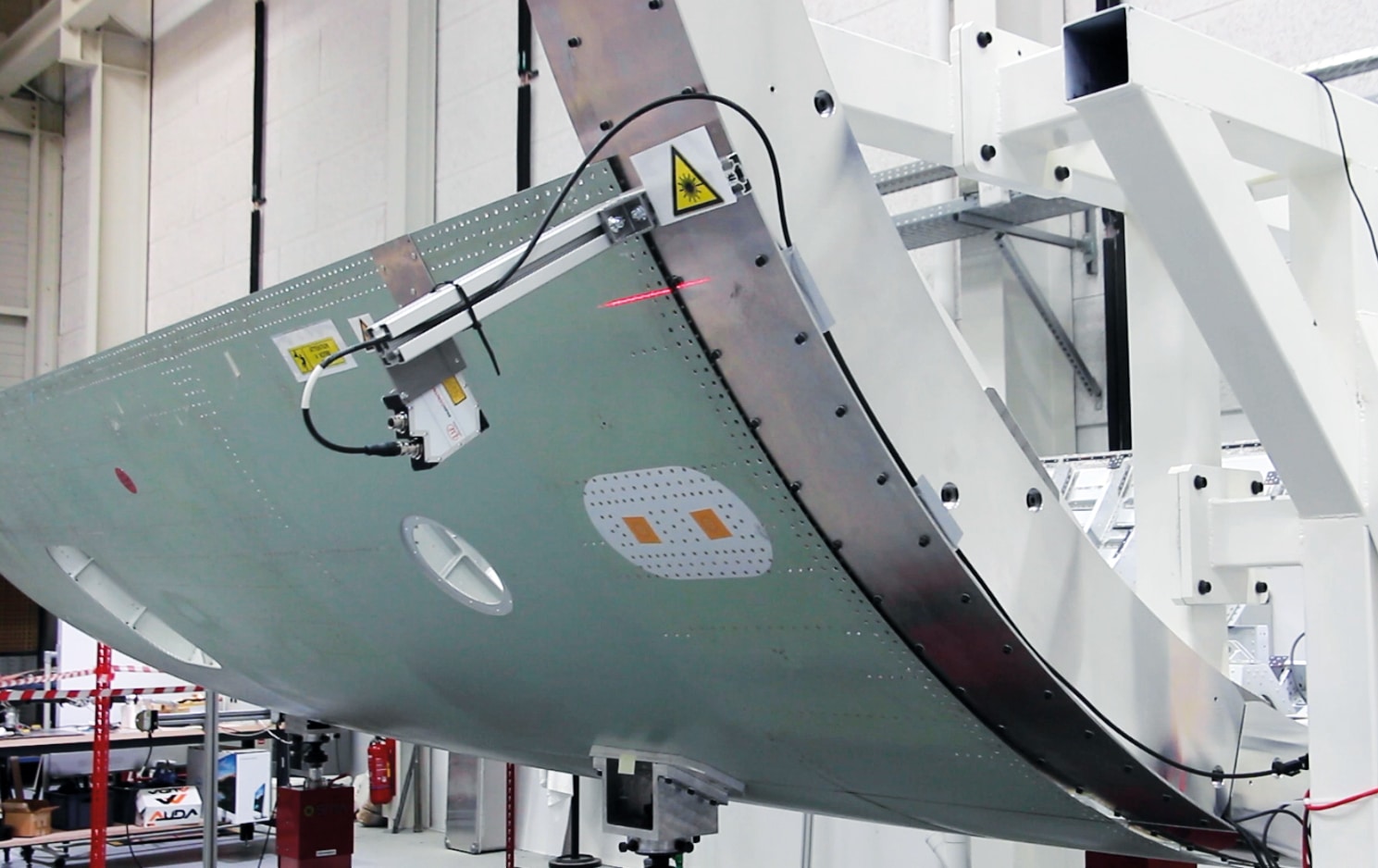 Automating the Precise Assembly of Large Structures with Continuous Servo Control
HAPPY and HAPPY2 projects develop lightweight and flexible positioners, driven by local or global measurements, to handle and position large parts in the aeronautics and naval defense industries.
Explore the case study
Automating the Precise Assembly of Large Structures with Continuous Servo Control
HAPPY and HAPPY2 projects develop lightweight and flexible positioners, driven by local or global measurements, to handle and position large parts in the aeronautics and naval defense industries.
Explore the case study
They trust us






Our goal is to innovate so that robotics can perform effectively where industry is most demanding: in situations involving variability and complexity, and in evolving environments that require flexibility. I believe in robotics that adapts to the factory to meet industrial production rate requirements, and that takes into account the operators, the ergonomics of their workstations, and their safety.
Our other areas of technological expertise.
- Composites Improve the performance (cost and throughput) of manufacturing processes for complex, lightweight and large structures.
- Metallic Industrialize additive manufacturing technologies (DED-fil and AFSD) and automate welding assembly (Arc and FSW) by improving productivity and quality.
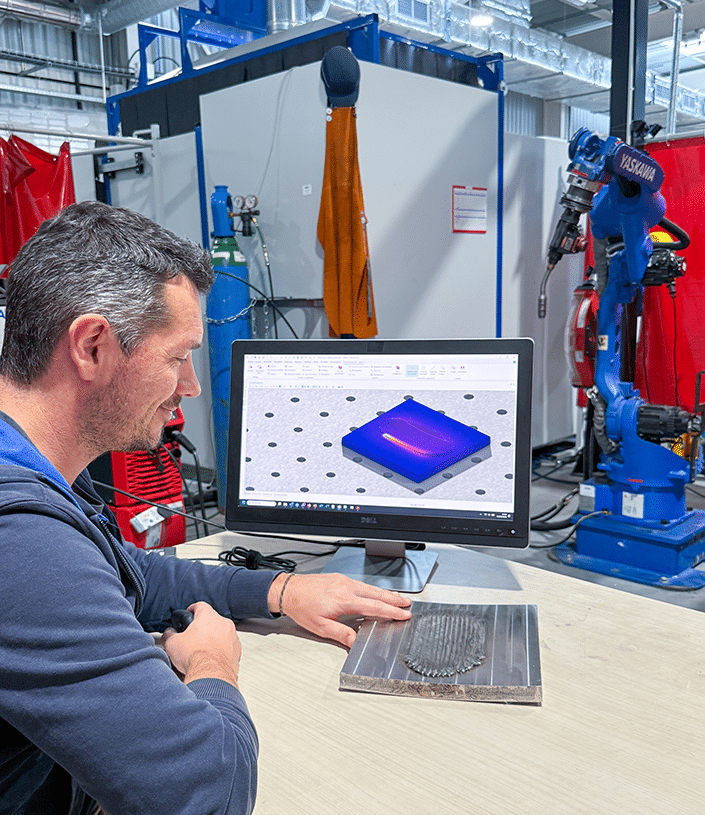
- Modelling & Simulation Providing reliable data to facilitate decision-making and reduce the time and cost of process development
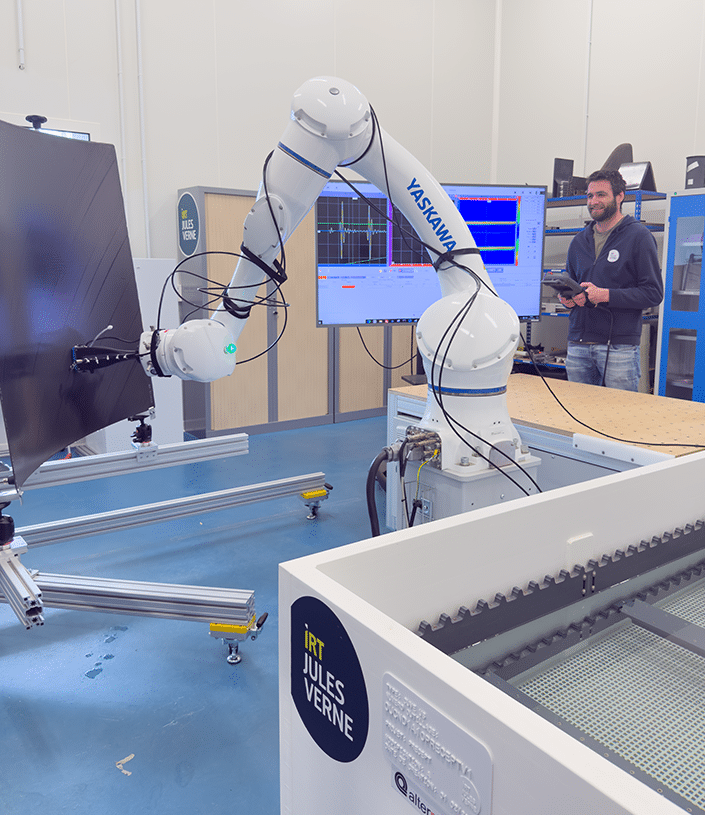
- Monitoring & process control Develop non-destructive testing of critical parts and monitor manufacturing processes to reduce production costs.