
Automating the Precise Assembly of Large Structures with Continuous Servo Control
HAPPY and HAPPY2 projects develop lightweight and flexible positioners, driven by local or global measurements, to handle and position large parts in the aeronautics and naval defense industries.
 With
With





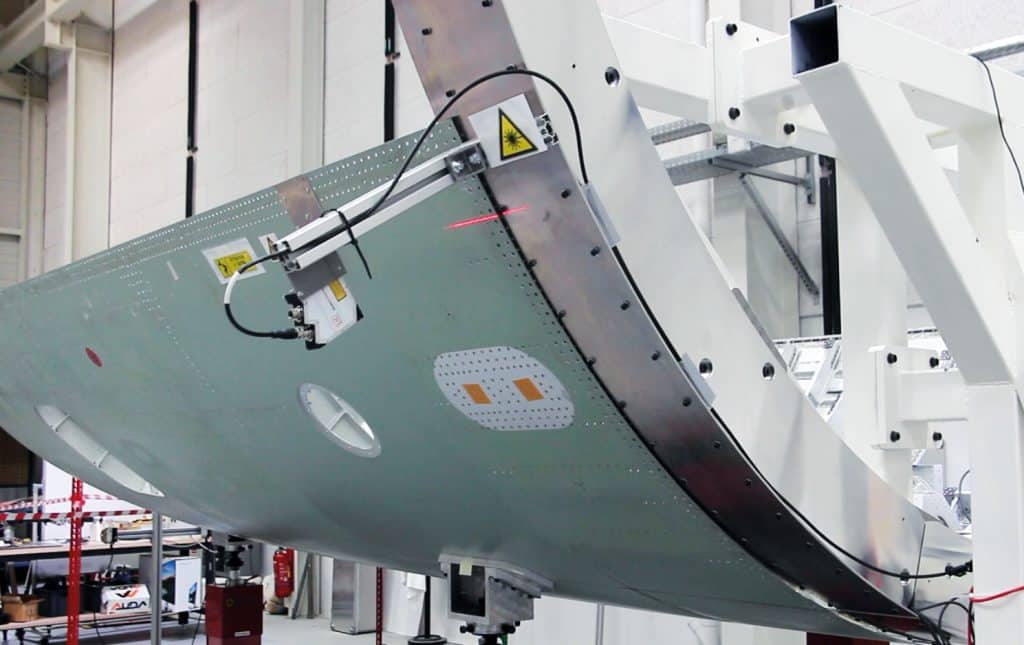
- Launched in June 2018, the HAPPY project aimed to develop and evaluate a concept for an aerostructures assembly line that is flexible with regard to product variants and speed variations. The system is based on lightweight and flexible positioners, which can be embarked on mobile bases and controlled by continuous servo control based on local or global measurements.
- HAPPY2, conducted from 2022 to 2025, extends this work to optimize the control laws and test them on more complex use cases in aeronautics and naval defense. The closed project has a budget of €2,774k over three years.
The industrial challenges of the HAPPY & HAPPY2 projects
Rapid market changes and the demand for customized products require more flexibility in the means of production. In aeronautics, assembly lines must be able to adapt to speeds and variants while limiting the constraints associated with heavy equipment and fixed tools.
- Provide flexibility with regard to product speeds and variants.
- reduce the intensive use of overhead cranes, which have been identified as bottlenecks in aeronautical assembly workshops;
- eliminate the use of tools anchored to the ground;
- Consider flexibility, stress, and deformation of parts and tooling during assembly.
- Accurately automate the handling and positioning of heavy parts.
- Test the technology on multiple interfaces and on more complex aeronautical and naval use cases.
In naval defence, continuous servo control is also an opportunity to standardise production methods, horizontally reference two large elements and eliminate a turning operation after pointing.
Technologies developed for automated assembly
Both projects developed and then enriched an assembly architecture based on mobile positioners, control laws and several measurement means.
- development of a control law compensating for the flexibility of parts and tooling based on continuous local measurements;
- use of cameras for the tenon / screed use case;
- use of laser profilometers for the case of orbital junction;
- adaptation of the control law to the control of the twisting of a part from a global metrology means;
- taking into account forces and deformations in order to optimize control or check the condition of the output parts;
- simultaneous servo control on multiple interfaces;
- combination of sensors, including profilometers, cameras, and eddy current sensors;
- remove markers from parts and detect smaller bores or other remarkable geometric primitives;
- comparison of 3D plane and circle detection methods with stereo and GPU system, as well as model-based 3D tracking.
- development of a visual servo with priority management to align one bore through another in the case of wing use;
- development of an algorithm for processing profilometer data to assist the operator when docking ferrules.
Project results & industrial impacts
HAPPY has validated the principle of continuous servo control on two aeronautical use cases. The demonstrator was then transferred to the Airbus Atlantic site in Montoir-de-Bretagne for an evaluation of performance in real conditions.
- development of a lightweight and modular solution, compatible with the "clean shopfloor" requirements of aeronautics;
- assembly times announced to be about ten times faster than those practiced in the aeronautics industry;
- experimental validation of the minimization of forces during twisting, before and during assembly;
- development of a marker-free visual servo solution for the post/clevis junction;
- development of a bore alignment solution for the wing use case;
- development of profilometer data processing for ferrule docking with operator assistance.
The final results of HAPPY2 are presented as promising and allow us to envisage applications on several technological bricks: simultaneous servoing on several interfaces, combination of various sensors and detection of smaller or different geometric primitives.
“The HAPPY project is a genuine R&T project that will enable us to move towards fully automated aircraft structure assembly. We called on IRT Jules Verne as part of this project to develop more flexible systems, reduce assembly times as much as possible, and ultimately create more efficient production lines for the future.”Find out more
Industrials perspectives
Continue validations in aeronautics
Additional work is underway with Airbus to test other types of sensors for other types of assembly. The solutions developed could be used for the assembly of the wing on the central wing box and, in the longer term, for the assembly of large sub-assemblies of the central fuselage of future programs.
What's next? preparing for the transfer to naval defence
For the naval case, the work aimed at the sizing and costing of a semi-automated assembly solution with an integrator, in order to prepare for the transfer of developments to the Indret site.
You might find this content of interest.
 Expertise
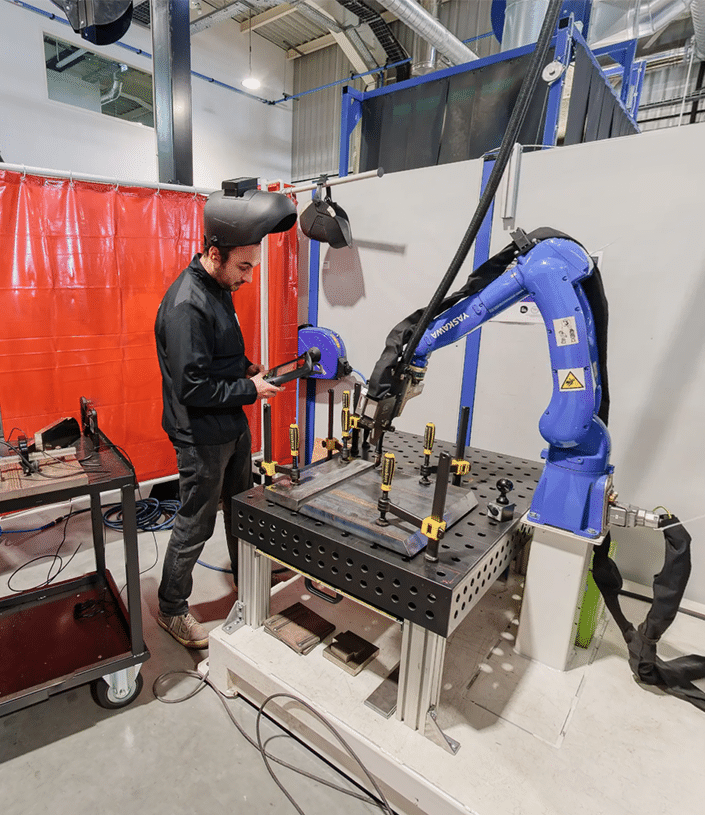
Robotics & Cobotics
Automating processes and optimising the deployment of robots in complex industrial environments
Discover this expertise
Expertise
Robotics & Cobotics
Automating processes and optimising the deployment of robots in complex industrial environments
Discover this expertise
 Offre
France 2030 collaborative R&D projects led by IRT Jules Verne
Find out more about this offer
Offre
France 2030 collaborative R&D projects led by IRT Jules Verne
Find out more about this offer
 Sector
Aeronautics
Find out more about this course
Sector
Aeronautics
Find out more about this course
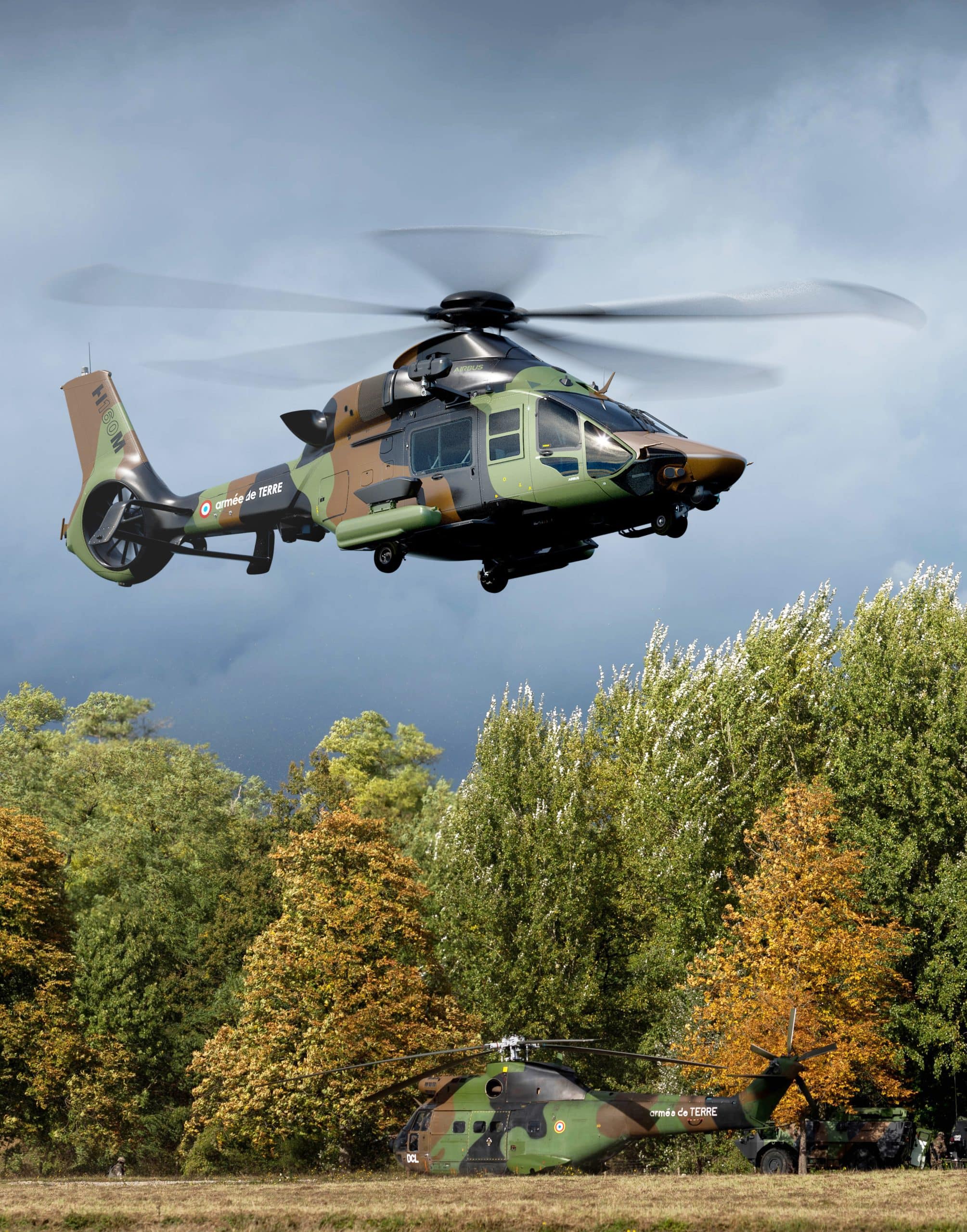 Sector
Defence
Find out more about this course
Sector
Defence
Find out more about this course
Explore more success stories.
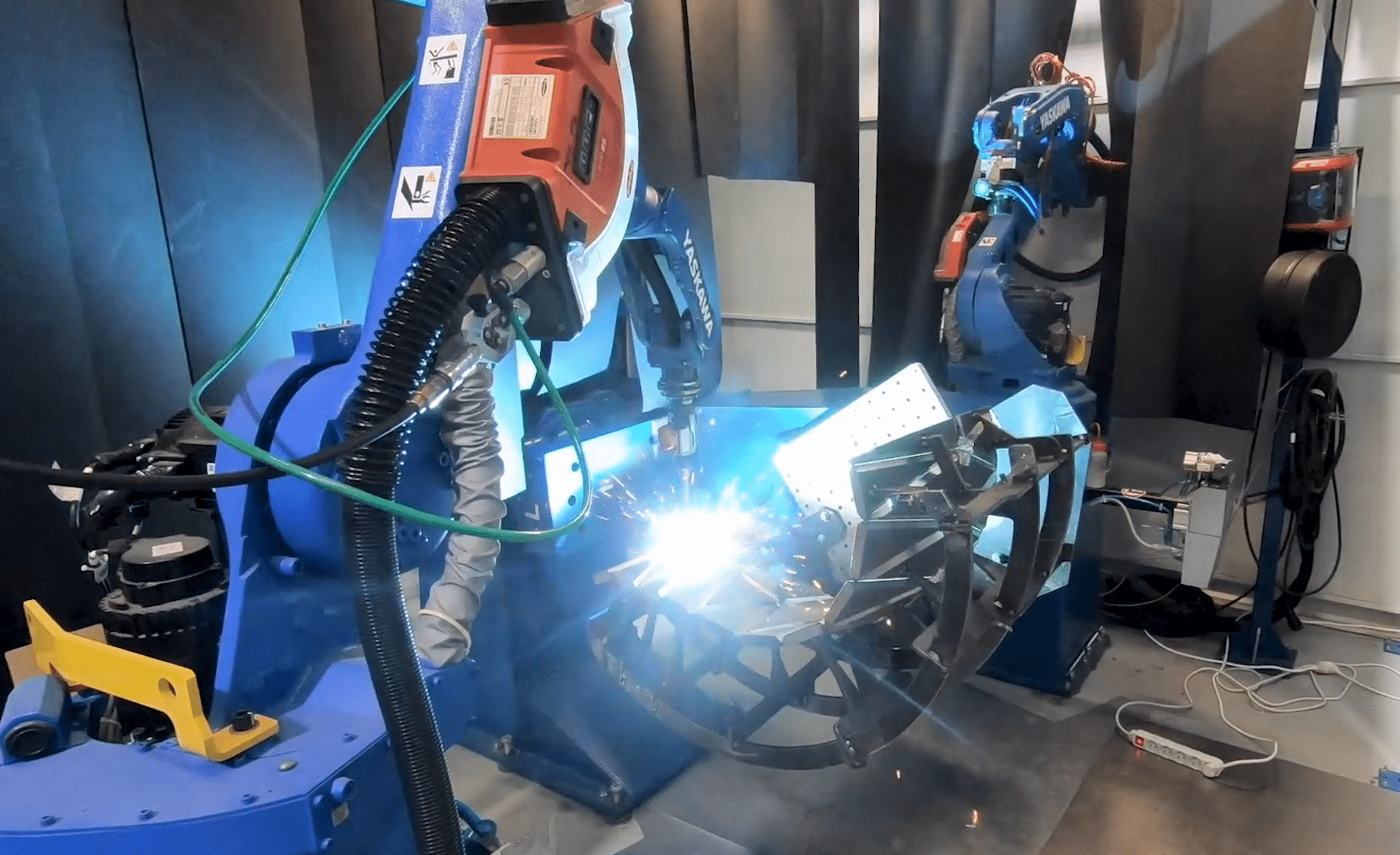 France 2030 Project
Developing large-scale INVAR® tools without the need for foundry
The ARWEN project combines paver assembly, robotic welding and WAAM additive manufacturing to produce mold blanks for the draping of aeronautical composite materials.
Explore the case study
France 2030 Project
Developing large-scale INVAR® tools without the need for foundry
The ARWEN project combines paver assembly, robotic welding and WAAM additive manufacturing to produce mold blanks for the draping of aeronautical composite materials.
Explore the case study
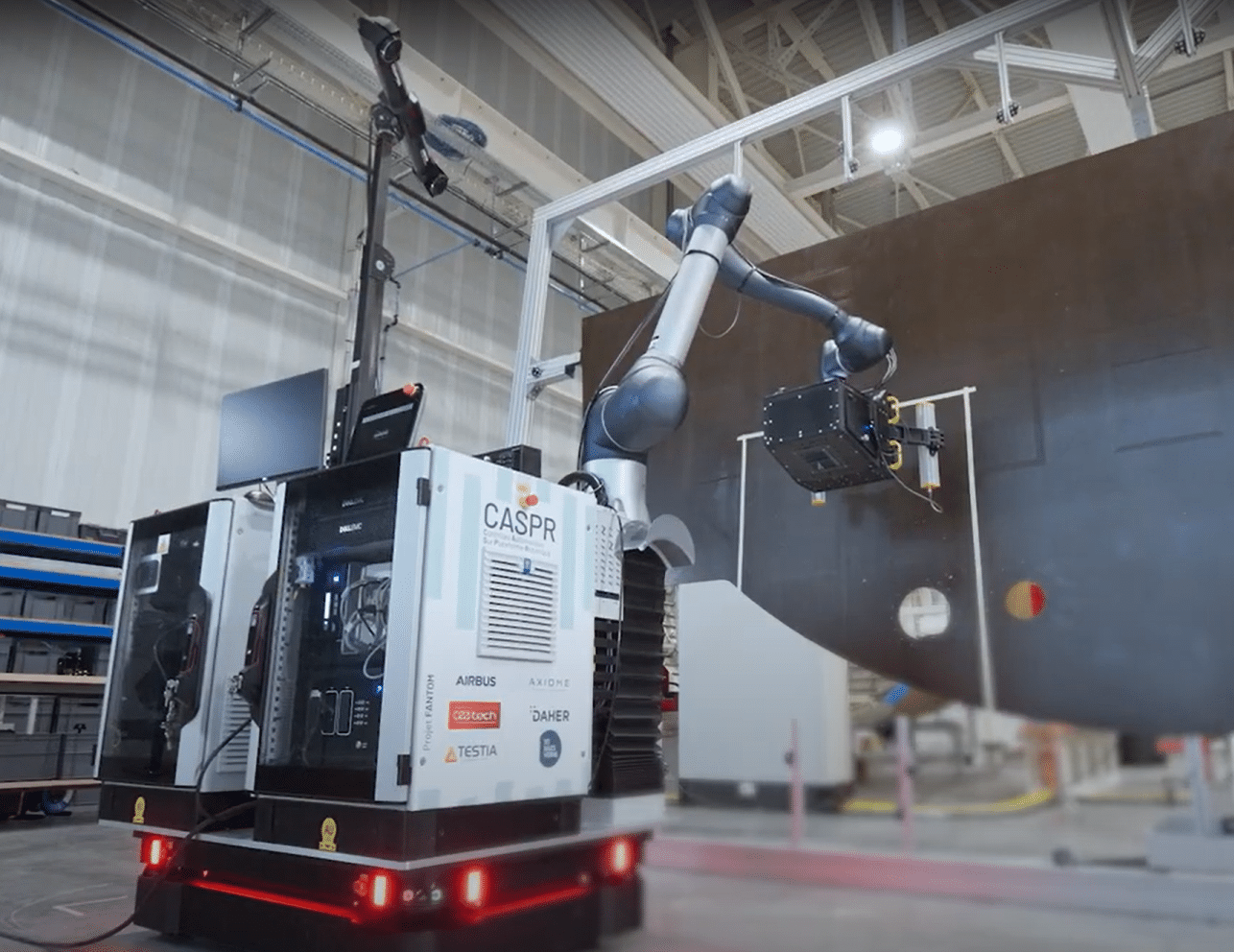 France 2030 Project
Automating the non-destructive testing of composite parts with an intelligent robotic platform
The FANTOM project is developing a flexible and automated non-destructive testing platform to make the inspection of composite parts more reliable and to support the digital continuity of production lines.
Explore the case study
France 2030 Project
Automating the non-destructive testing of composite parts with an intelligent robotic platform
The FANTOM project is developing a flexible and automated non-destructive testing platform to make the inspection of composite parts more reliable and to support the digital continuity of production lines.
Explore the case study
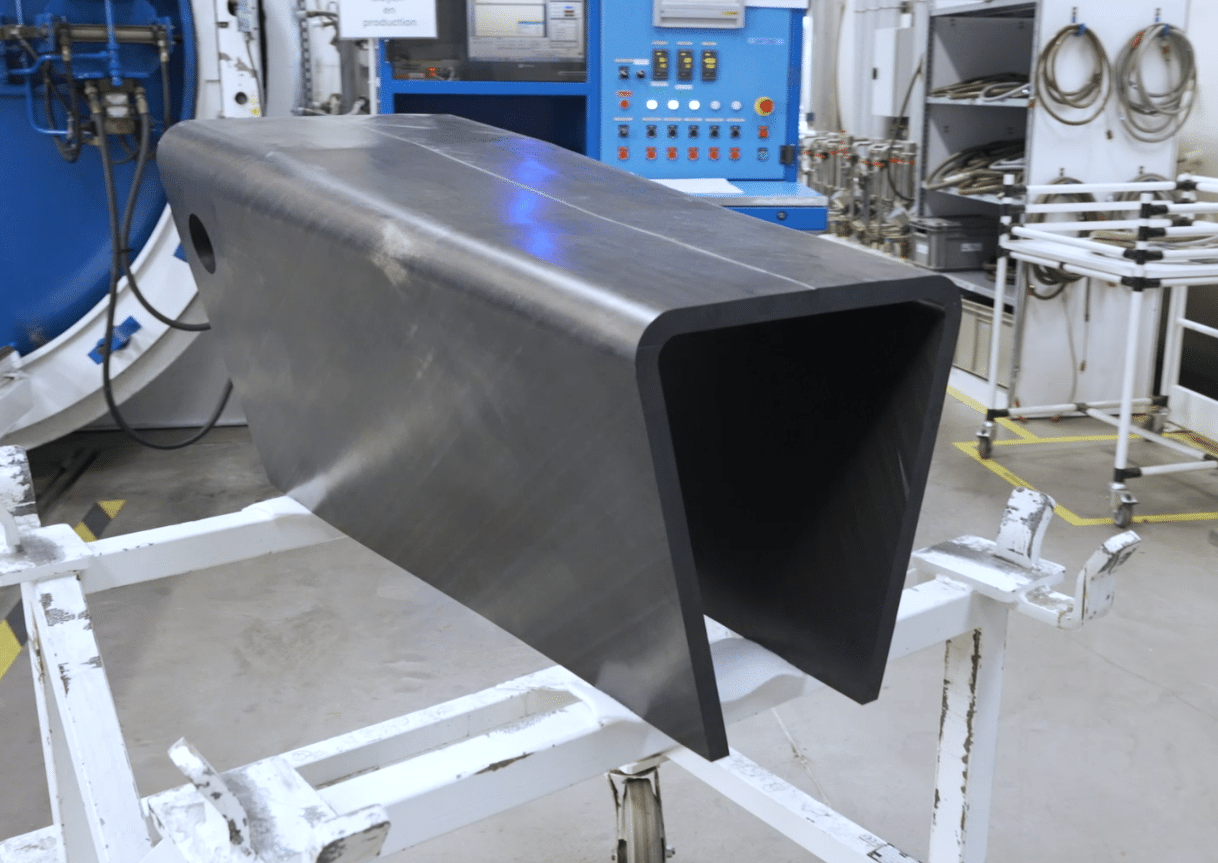 France 2030 Project
Developing the manufacture of high-thickness thermoplastic composite parts for aeronautics
The MATCH project develops innovative manufacturing, simulation and machining processes to produce high-performance, robust thermoplastic composite parts adapted to the requirements of the aeronautics industry.
Explore the case study
France 2030 Project
Developing the manufacture of high-thickness thermoplastic composite parts for aeronautics
The MATCH project develops innovative manufacturing, simulation and machining processes to produce high-performance, robust thermoplastic composite parts adapted to the requirements of the aeronautics industry.
Explore the case study