
Automating the non-destructive testing of composite parts with an intelligent robotic platform
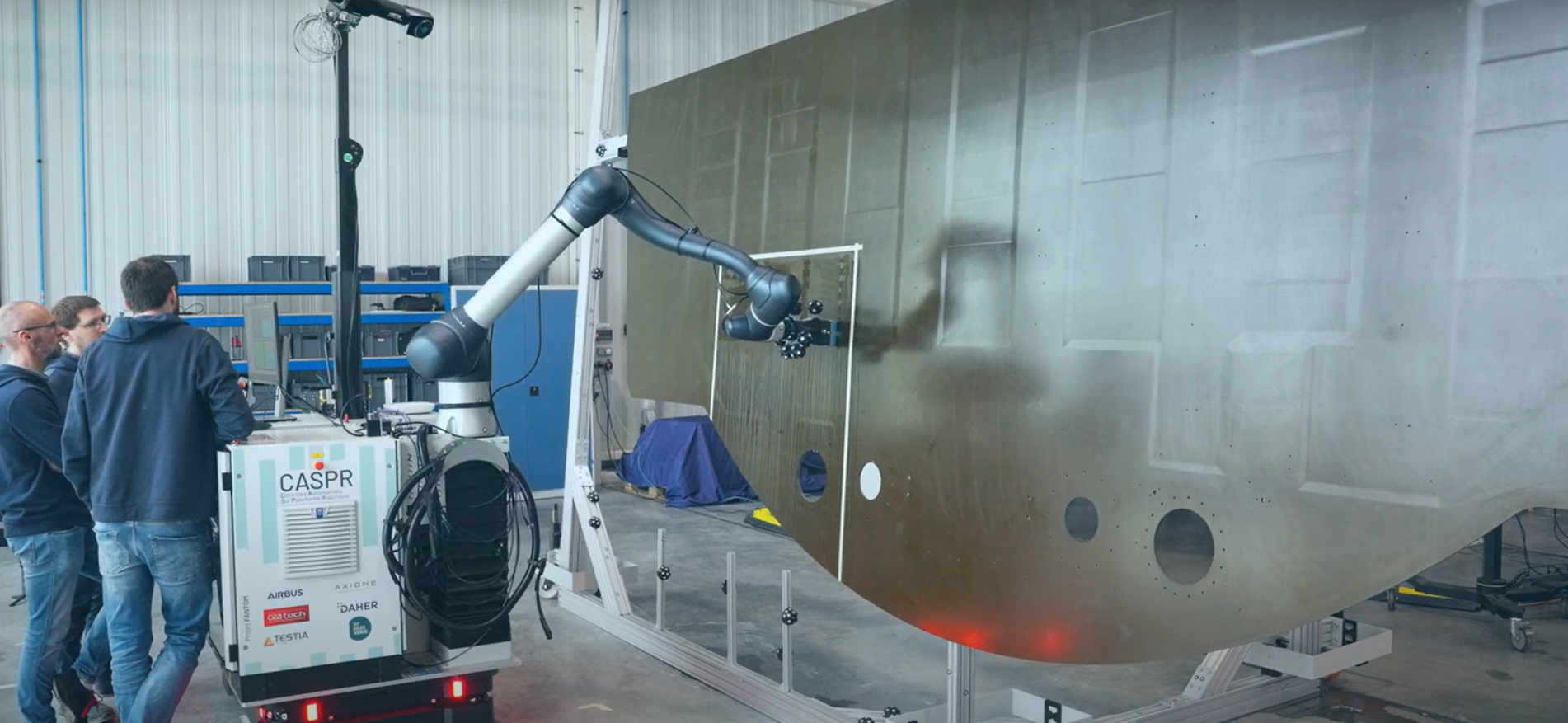
The FANTOM project is developing a flexible and automated non-destructive testing platform to make the inspection of composite parts more reliable and to support the digital continuity of production lines.
 With
With





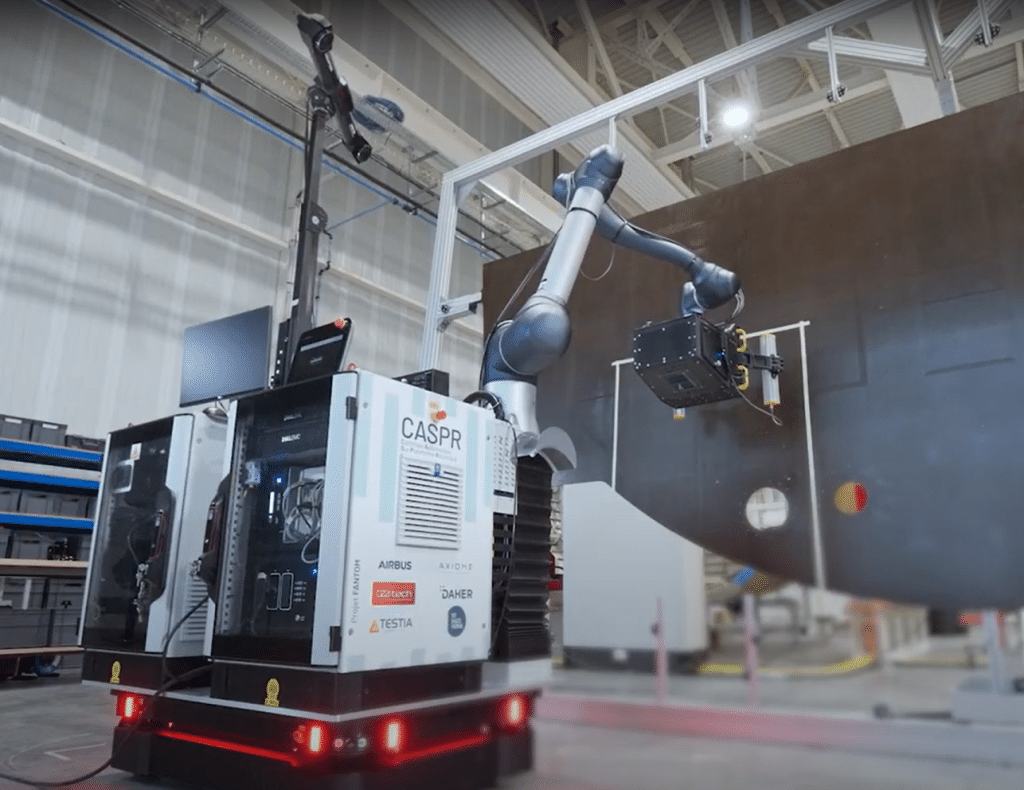
- Led from 2022 to 2025 by IRT Jules Verne with Airbus, Daher, Axiome, CEA LIST and Testia, the FANTOM project aimed to develop a robotic non-destructive testing (NDT) platform capable of carrying out automated, flexible inspections integrated into production lines.
- By combining robotics, ultrasonic testing, visual inspection by artificial intelligence and data fusion, the project aims to improve the reliability of inspections, facilitate their analysis and contribute to the digital continuity of industrial processes.
The industrial challenges of the FANTOM project
Dans l'industrie aéronautique, le contrôle non destructif est indispensable pour garantir l'intégrité des structures composites. Pourtant, les opérations In the aerospace industry, non-destructive testing is essential to ensure the integrity of composite structures. However, control operations still present several industrial challenges:
- Time-consuming and costly inspections.
- Significant human and material resources.
- Increasingly complex part geometries.
- The need to improve the flexibility of control operations.
- The need to integrate inspections directly into production lines.
- The challenge is to facilitate data analysis while maintaining quality and safety requirements.
Faced with these needs, the FANTOM project aims to make control operations more agile thanks to a robotic platform capable of adapting to industrial constraints.
Technologies developed for robotic non-destructive testing
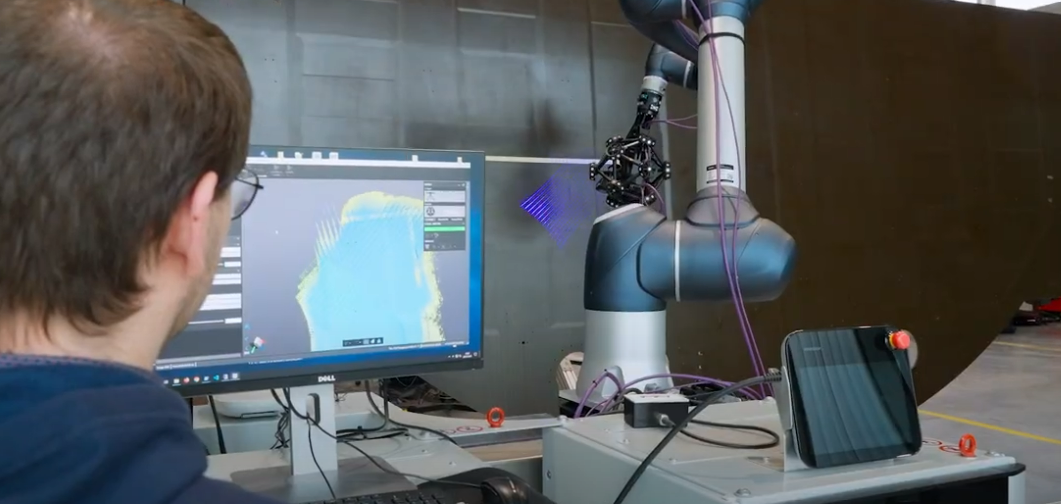
The FANTOM project has made it possible to design a mobile platform integrating several complementary non-destructive testing technologies:
Integration of the platform into a digital continuity logic allowing a visualization of inspections in real time.
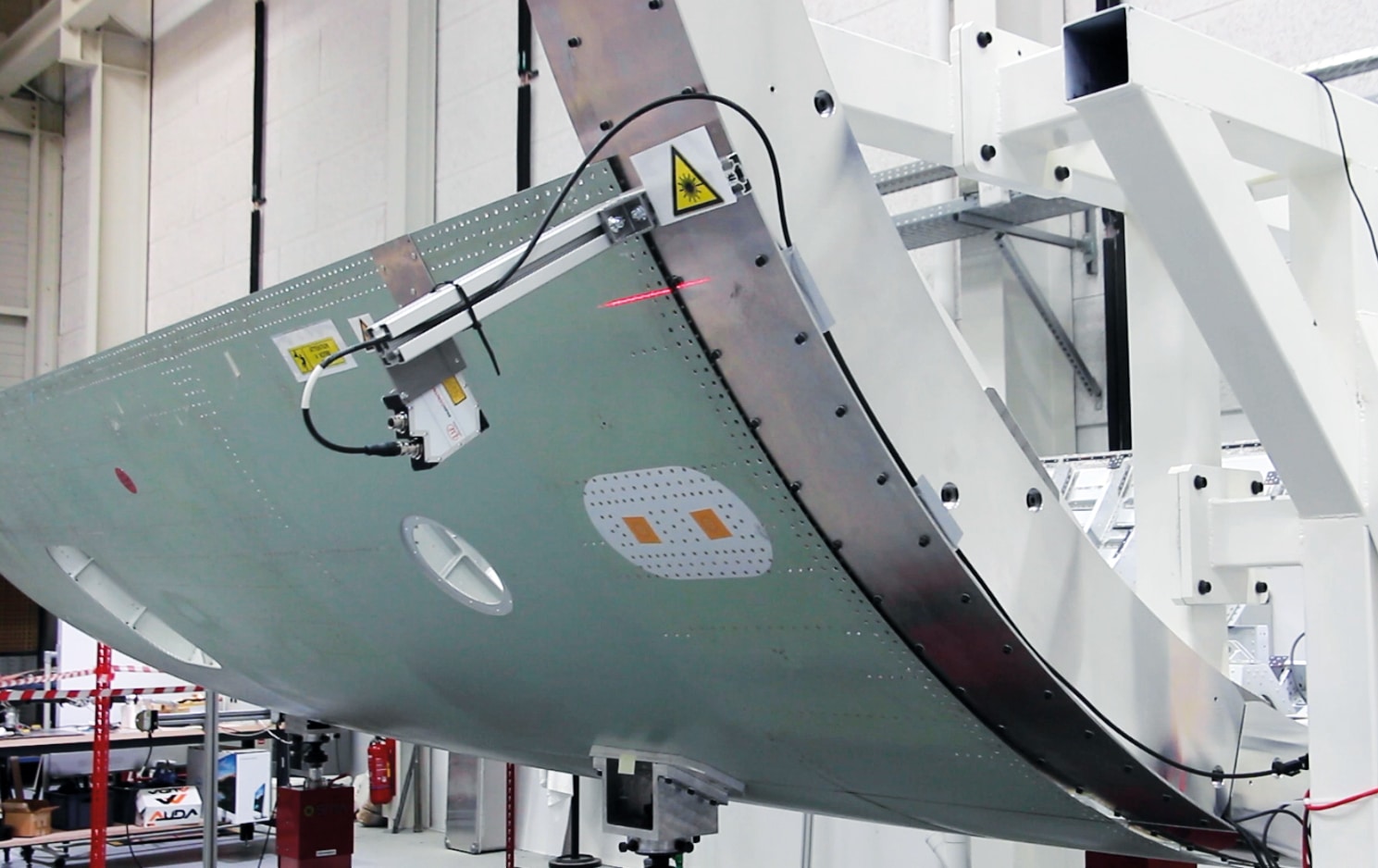
Automation of inspection paths thanks to a 3D geometric mapping of the part.
Optimized positioning of the ultrasonic probes based on the actual geometry of the parts.
Development of an ultrasonic end-effector with low water consumption to automatically inspect the central areas as well as the edges of the parts.
Development of visual inspection effectors capable of automatically detecting different surface defects using machine learning algorithms.
Centralization and combination of data from the various controls in the NDTkit software to facilitate overall analysis.
Project results and industrial impacts
The FANTOM project demonstrated the feasibility of a robotic platform capable of automating non-destructive testing operations on composite parts.
The work carried out made it possible to:
- optimize the positioning of the probes thanks to the automatic adaptation of control paths;
- Develop ultrasonic testing capable of inspecting central areas such as the edges of parts.
- Automate visual inspection with artificial intelligence
- Combine several control methods to improve diagnostic reliability.
- Prepare for the integration of non-destructive testing into the production lines of the factory of the future.
The project's results pave the way for a new generation of robotic non-destructive testing systems capable of meeting the needs of current and future industrial processes.
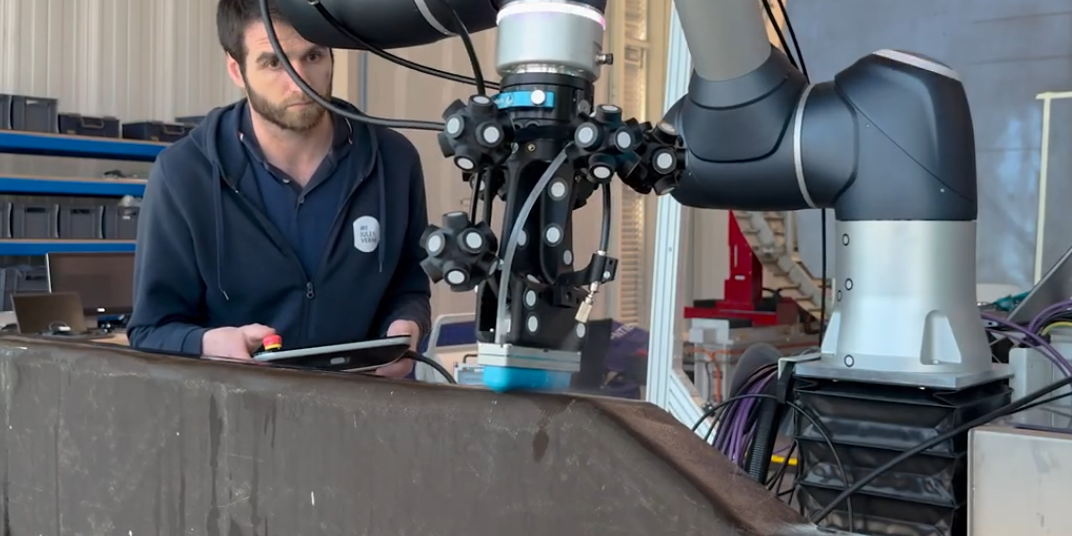 US inspection
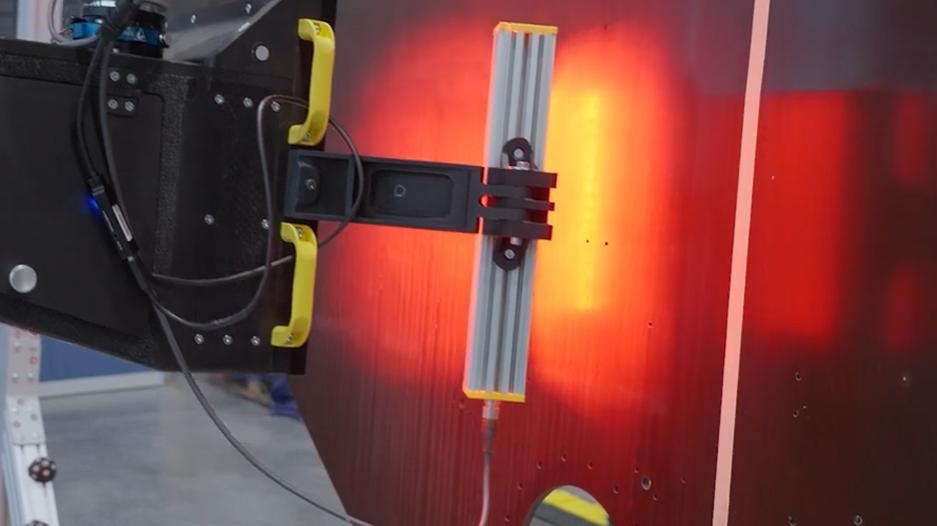 Visual inspection
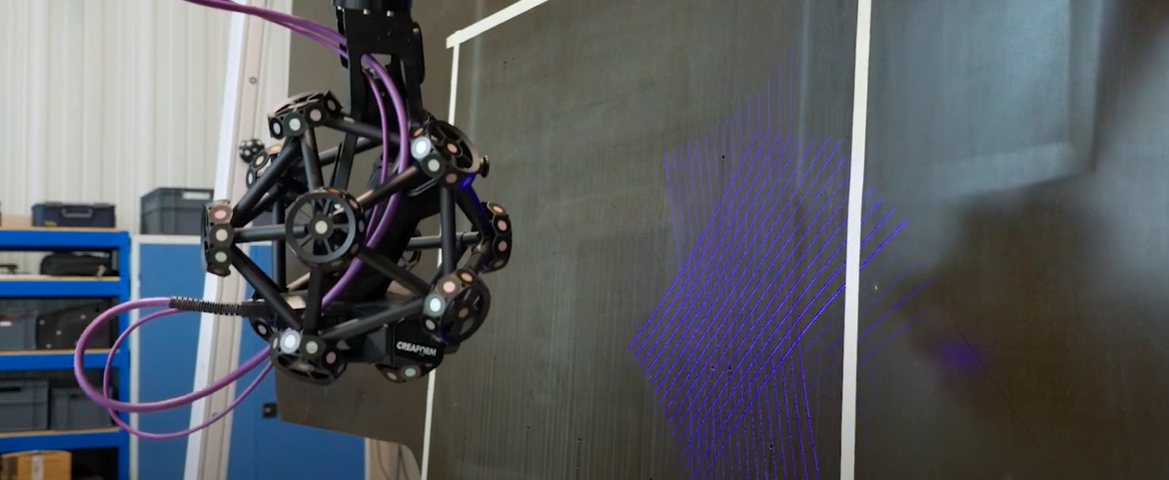 Geometric inspection
 NDT
NDT
 Robotic NDT Platform
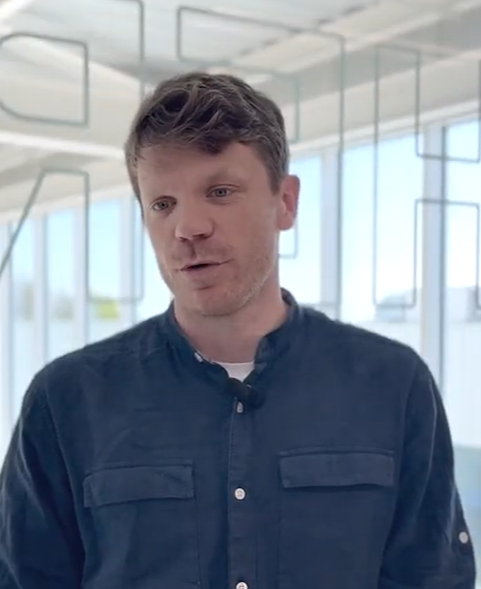
“In the future, industrial companies will have access to a flexible platform that combines the benefits of different data acquisition solutions. This will provide a more reliable assessment of the material integrity of the parts being inspected.”Find out more
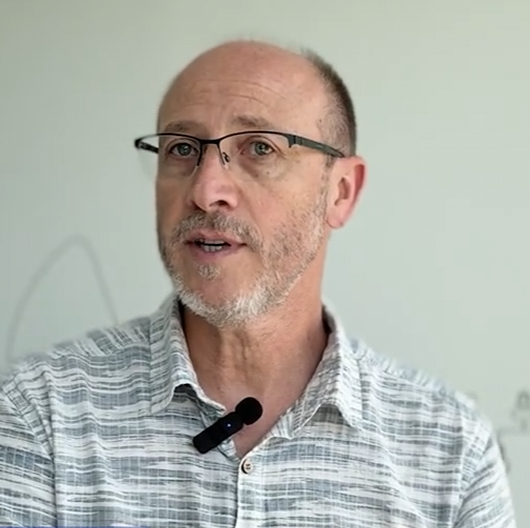
“Thanks to these developments, it will be possible to offer more flexible inspection solutions that require fewer manual operations.”Find out more
The industrial perspectives of non-destructive testing
Designed to meet the needs of the aerospace sector, the FANTOM platform has the potential to adapt to other industrial sectors.
The technologies developed can be deployed to meet specific needs in several areas: naval & energy
What's next? Towards the industrialization of the technologies of the FANTOM project
The developments made within the framework of the FANTOM project pave the way for a new generation of robotic non-destructive testing solutions that are more flexible, automated and integrated into industrial processes.
The adaptability of the platform makes it possible to envisage its deployment on new use cases and in different industrial sectors.
You might find this content of interest.
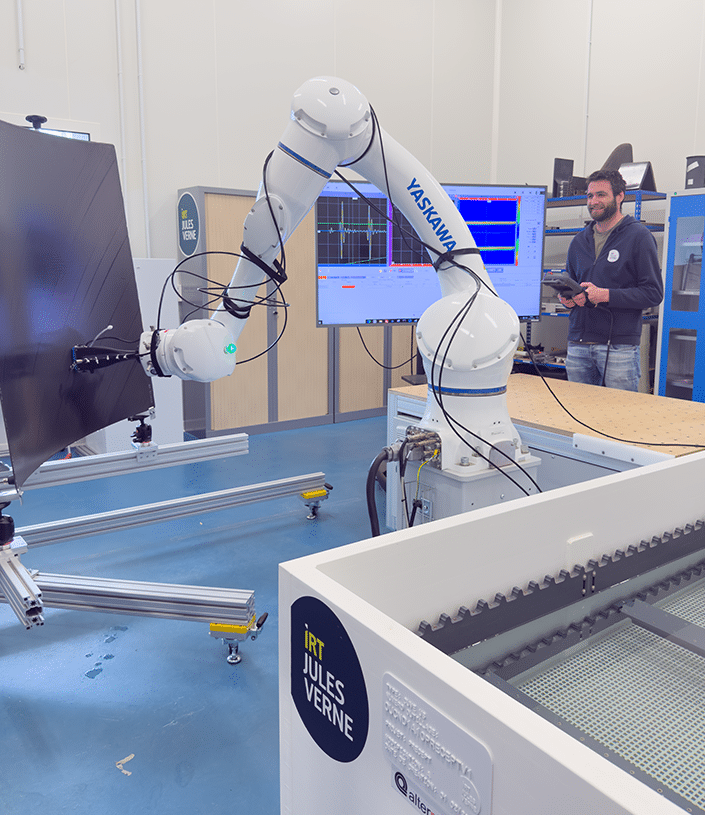 Expertise
Process monitoring, inspection and control
Develop non-destructive testing of critical parts and monitor manufacturing processes to reduce production costs.
Discover this expertise
Expertise
Process monitoring, inspection and control
Develop non-destructive testing of critical parts and monitor manufacturing processes to reduce production costs.
Discover this expertise
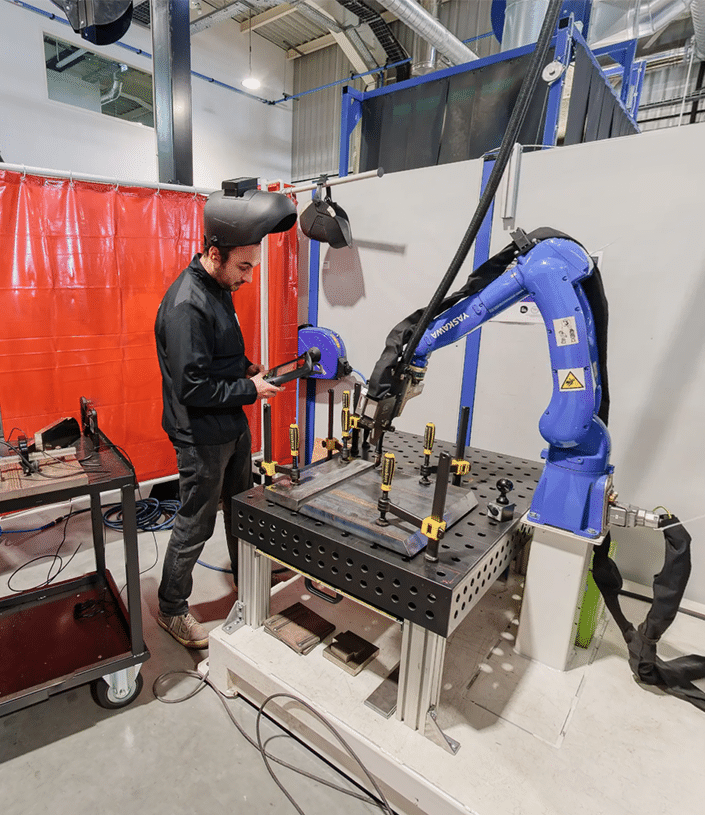 Expertise
Robotics & Cobotics
Automating processes and optimising the deployment of robots in complex industrial environments
Discover this expertise
Expertise
Robotics & Cobotics
Automating processes and optimising the deployment of robots in complex industrial environments
Discover this expertise
 Offre
France 2030 collaborative R&D projects led by IRT Jules Verne
Find out more about this offer
Offre
France 2030 collaborative R&D projects led by IRT Jules Verne
Find out more about this offer
 Sector
Aeronautics
Find out more about this course
Sector
Aeronautics
Find out more about this course
Explore more success stories.
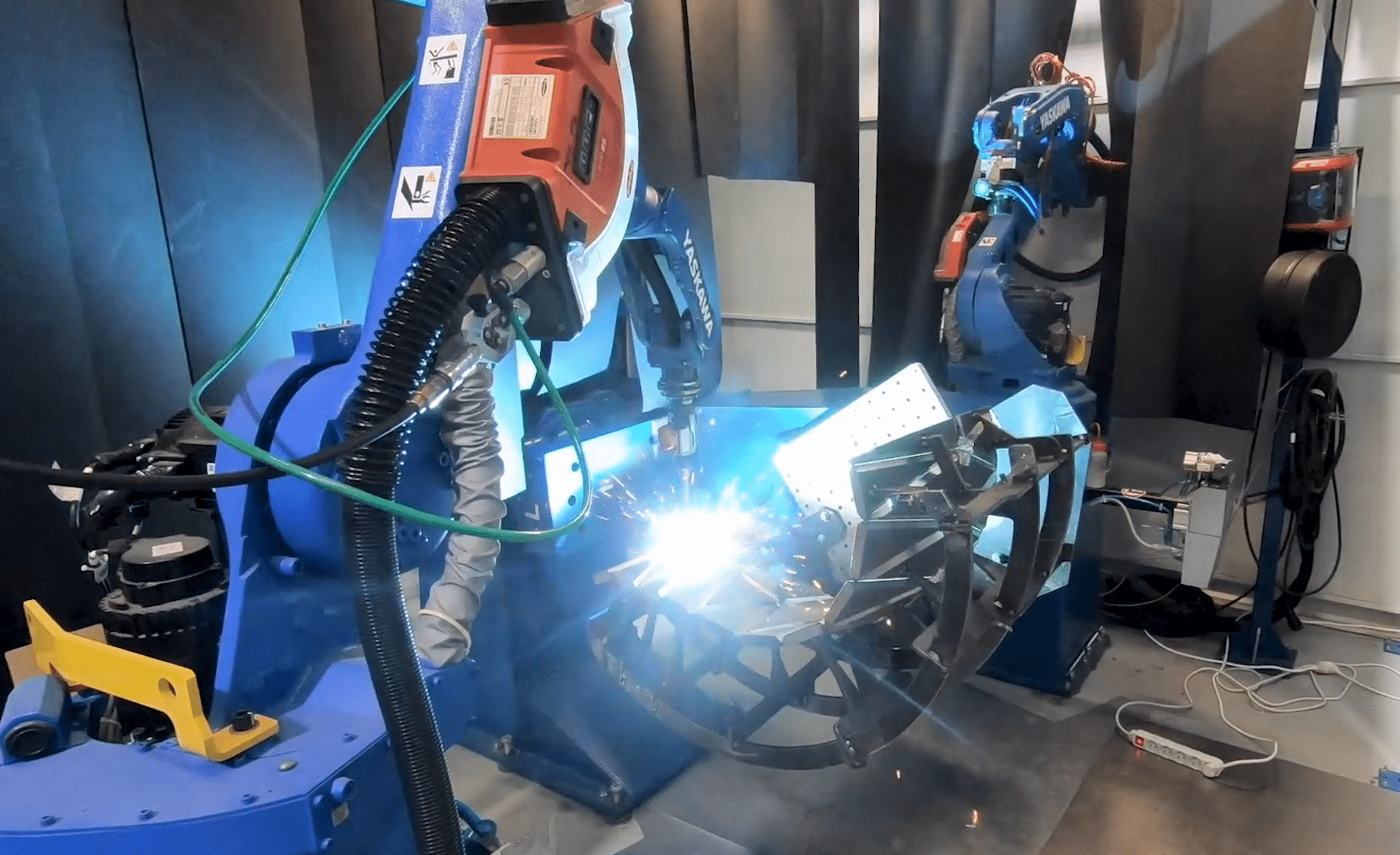 France 2030 Project
Developing large-scale INVAR® tools without the need for foundry
The ARWEN project combines paver assembly, robotic welding and WAAM additive manufacturing to produce mold blanks for the draping of aeronautical composite materials.
Explore the case study
France 2030 Project
Developing large-scale INVAR® tools without the need for foundry
The ARWEN project combines paver assembly, robotic welding and WAAM additive manufacturing to produce mold blanks for the draping of aeronautical composite materials.
Explore the case study
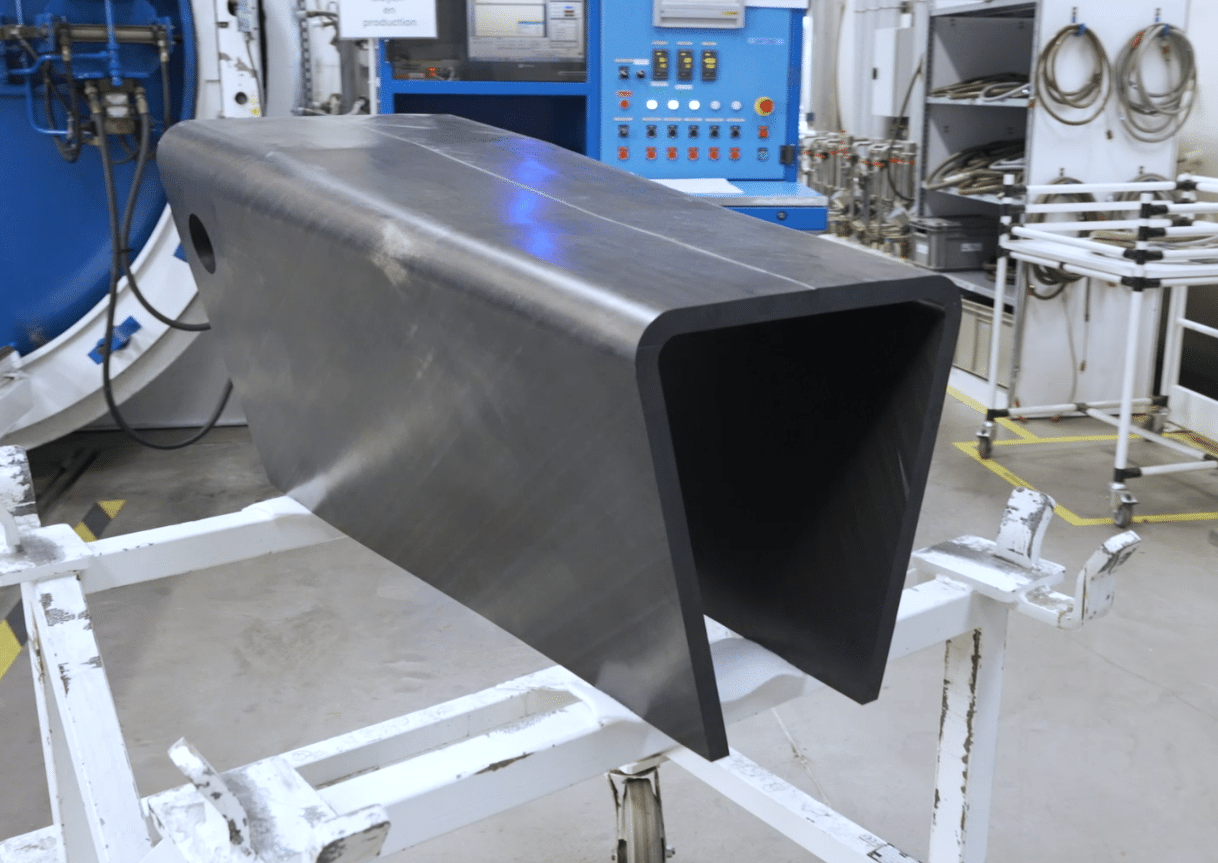 France 2030 Project
Developing the manufacture of high-thickness thermoplastic composite parts for aeronautics
The MATCH project develops innovative manufacturing, simulation and machining processes to produce high-performance, robust thermoplastic composite parts adapted to the requirements of the aeronautics industry.
Explore the case study
France 2030 Project
Developing the manufacture of high-thickness thermoplastic composite parts for aeronautics
The MATCH project develops innovative manufacturing, simulation and machining processes to produce high-performance, robust thermoplastic composite parts adapted to the requirements of the aeronautics industry.
Explore the case study
 France 2030 Project
Automating the Precise Assembly of Large Structures with Continuous Servo Control
HAPPY and HAPPY2 projects develop lightweight and flexible positioners, driven by local or global measurements, to handle and position large parts in the aeronautics and naval defense industries.
Explore the case study
France 2030 Project
Automating the Precise Assembly of Large Structures with Continuous Servo Control
HAPPY and HAPPY2 projects develop lightweight and flexible positioners, driven by local or global measurements, to handle and position large parts in the aeronautics and naval defense industries.
Explore the case study